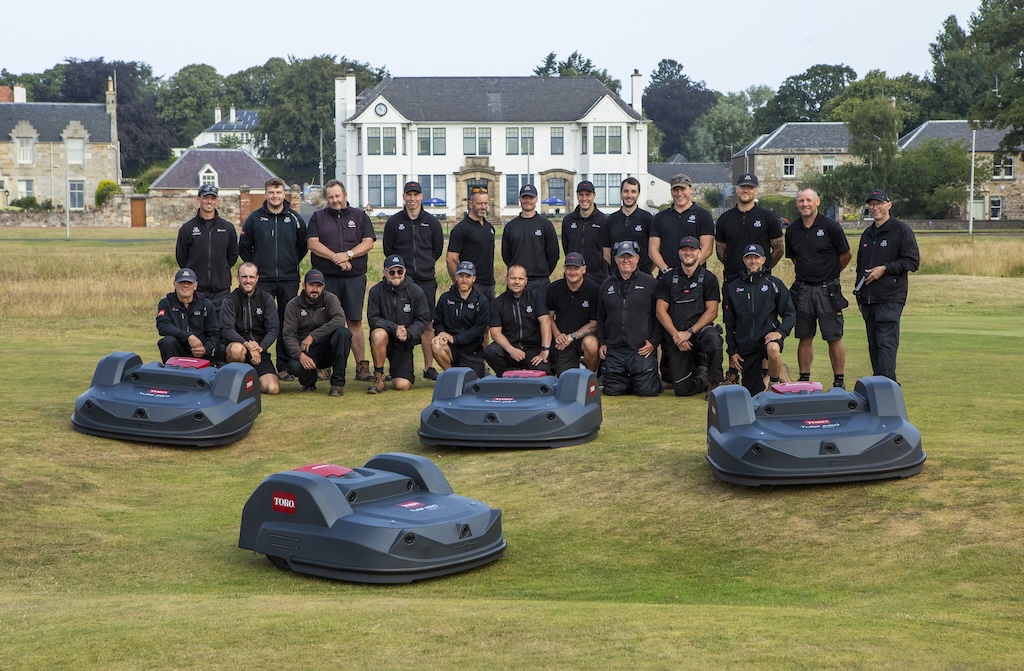
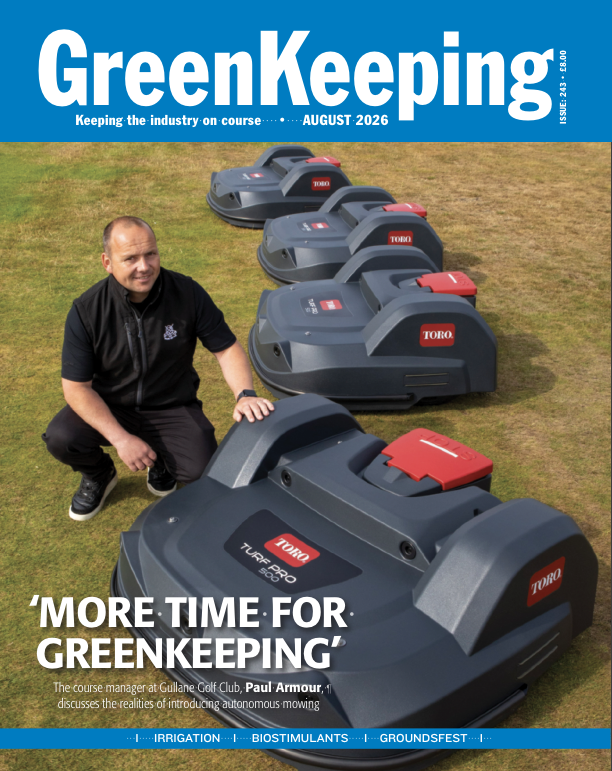
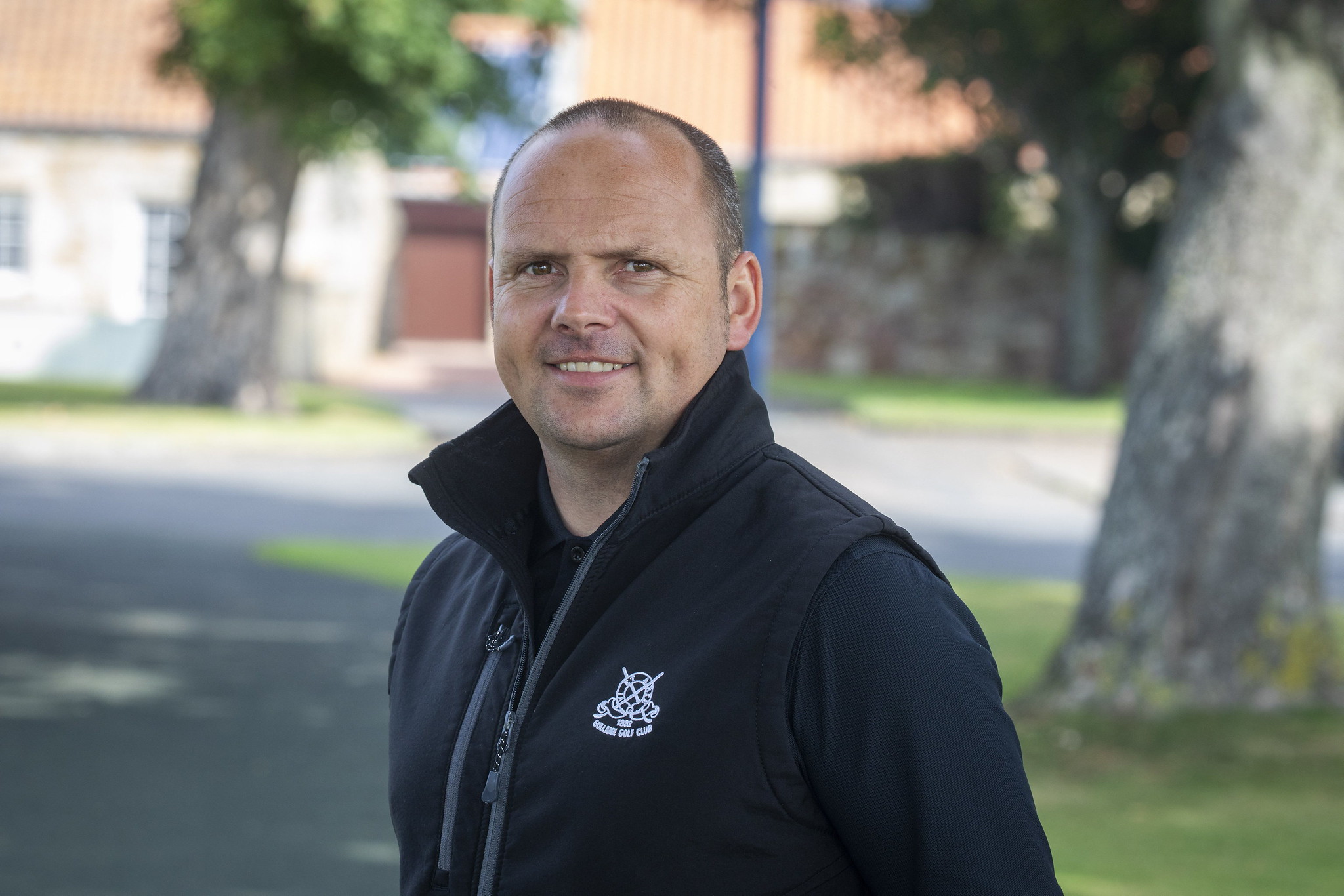
Paul Armour, course manager at Gullane Golf Club in East Lothian, discusses the realities of introducing autonomous mowing, how his team responded and why he believes the technology will be a familiar sight on golf courses in the years ahead.
There’s been a quiet revolution in the UK greenkeeping industry since robotic mowers came onto the market; widespread adoption, proven labour savings and sustainability gains show this isn’t a passing trend – it’s a long-term structural shift in how turf is managed and is reshaping what greenkeepers do.
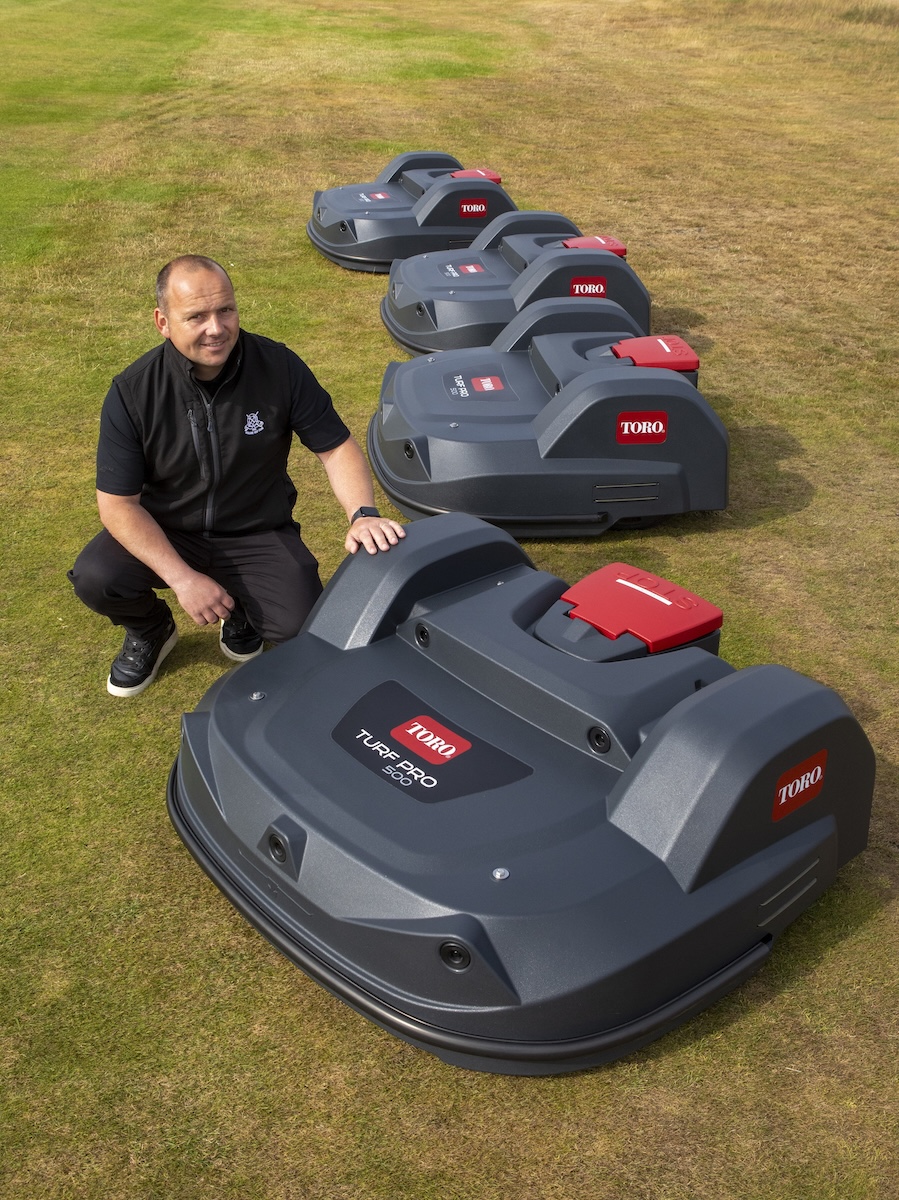
Since introducing four autonomous fairway mowers earlier this year, Paul Armour, course manager at Gullane Golf Club, estimates the four new Toro Turf Pro 500 mowers have recovered between 30 and 40 labour hours each week during the growing season.
The technology has not reduced the need for staff. Instead, it has allowed the team to spend less time carrying out repetitive mowing operations and more time focusing on the detailed work that golfers notice most.

How long have you been using autonomous mowers?
We introduced four autonomous fairway mowers in April. Prior to that, we trialled a single unit on two fairways towards the end of last year, which delivered promising results. Following discussions with Reesink Turfcare, we expanded the programme to four machines covering a total of 16 fairways across the course.
What prompted you to explore autonomous mowing technology?
Over the last few years, we’ve seen more autonomous solutions entering the market. Through our partnership with Toro, we worked closely with Reesink to trial the technology. The primary drivers were labour efficiency, reducing machine traffic on the course, lowering fuel consumption and decreasing maintenance requirements.
What are the biggest operational benefits you’ve seen so far?
The time savings have been significant. The mowers operate overnight, typically from 9:00pm until 9:00am, so golfers rarely see them in operation. Staff arrive in the morning to find the fairways already prepared.
In addition to that I’ve been pleased to notice lower fuel consumption, reduced servicing requirements and a more efficient use of staff time.
How are the mowers controlled and scheduled?
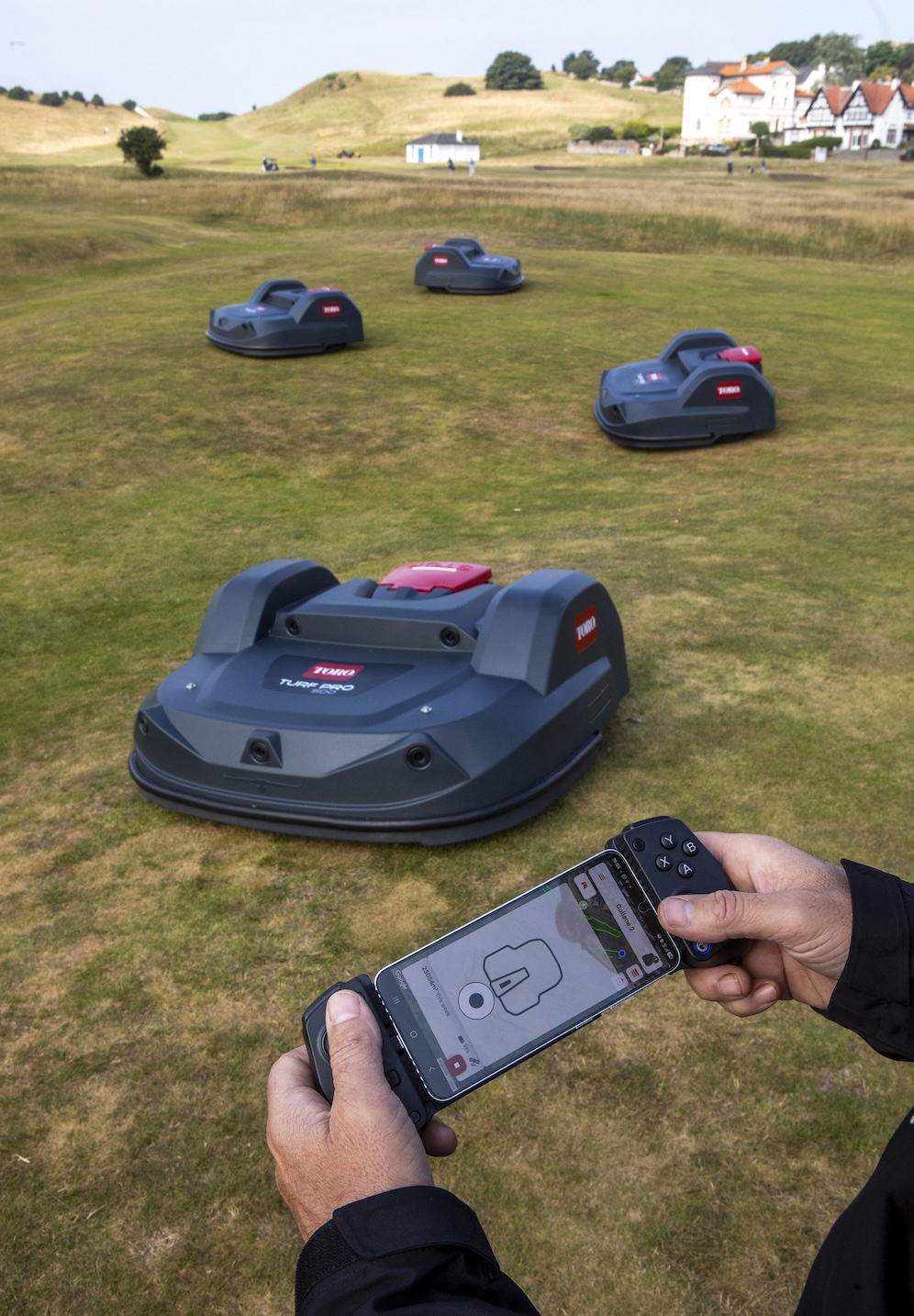
Everything is managed through an app. After a period of testing, we determined how long each fairway takes to mow depending on the mowing pattern and direction. Once those timings were established, we programmed the schedules accordingly. The system can be managed remotely via a smartphone, tablet or PC.
How did your team react to the introduction of autonomous mowing?
Initially there were concerns that the technology might replace greenkeeping roles. We were very clear that this was not the case.
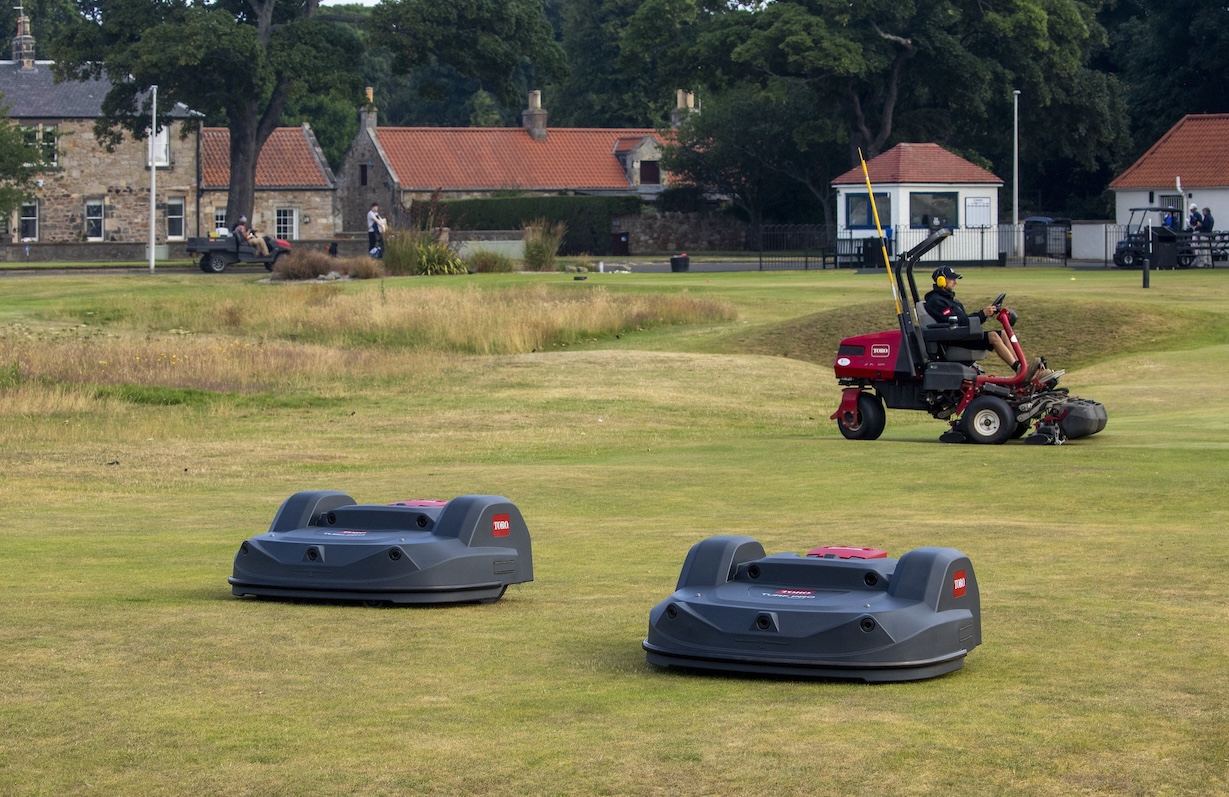
In reality, the technology allows us to redeploy staff to more detailed and valuable tasks rather than spending 30 hours a week sitting on a mower. We are still actively looking to recruit more staff and, on a site with three golf courses, there is never a shortage of work.
How did you reassure staff about the new technology?
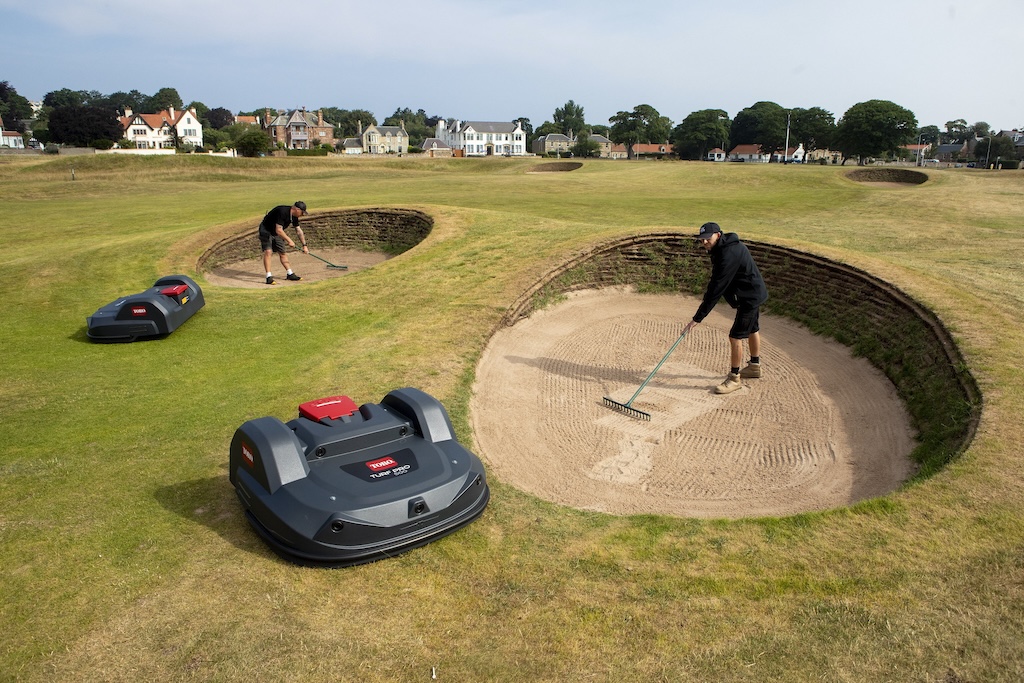
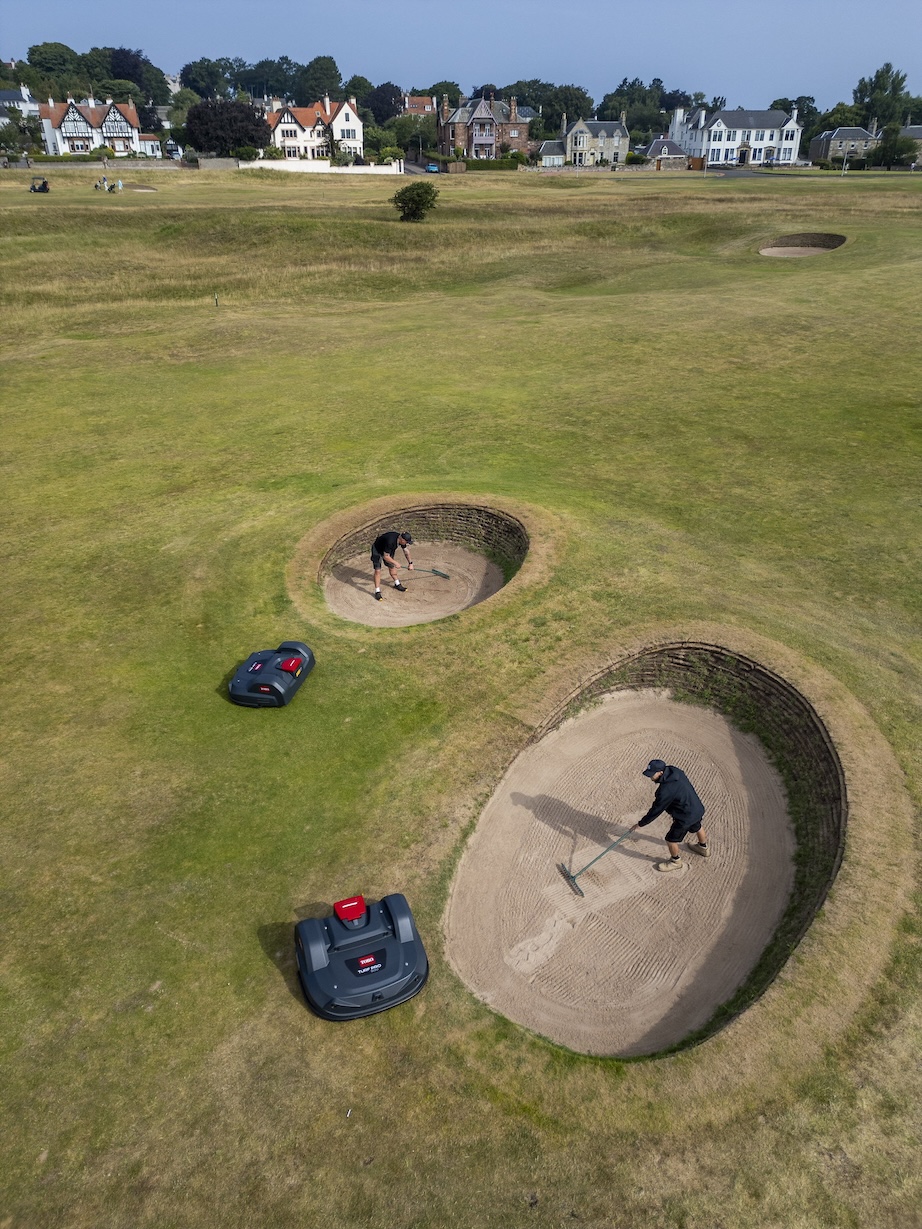
We held presentations explaining both the advantages and limitations of the technology. We emphasised that autonomous mowing would free up time for higher-value activities such as hand mowing, bunker maintenance, trimming around irrigation heads and general course presentation and detail work.
Once the team saw the machines in operation, they embraced them. Several staff members now take responsibility for checking, cleaning and monitoring the units each morning.
What infrastructure was required before installation?
The preparation was relatively straightforward. Working with Lee Rowbotham, GeoLink and Digital Specialist at Reesink Turfcare and Mike Turnbull, Branch Manager at Reesink Scotland, we identified locations where electricity was already available.
There, we installed outdoor power points and created suitable bases for the charging stations. Currently, we have four charging locations positioned at the driving range facility, the maintenance compound, the irrigation pump house and on existing on-course facilities.
How long did installation and setup take?
The mowers were delivered and, with support from the Reesink team, mapped and commissioned within approximately 10 days.
After that, the process mainly involved refining schedules and making minor adjustments to optimise performance.
How has performance and reliability been?
Overall, the experience has been very positive. Like any new technology, there was a learning curve involving mapping and signal setup, but support from Reesink has been excellent. A dedicated group chat allows us to get quick answers whenever issues arise, and any questions have been dealt with promptly.
In terms of performance, the most significant is the efficiency – we estimate that the four autonomous mowers save between 30 and 40 labour hours per week during the growing season.
Beyond labour savings, the club is already seeing additional operational benefits. These mowers are rotaries not cylinders, yet the quality of the cut is very good. Patterns are very easy and can be programmed with just a couple of clicks in the apps.

Have the autonomous mowers improved course management around residential areas?
Absolutely. Some of the fairways they maintain are adjacent to houses where there are restrictions on operating machinery before 7:00am.
Because the autonomous units work overnight, those areas are already cut before staff arrive, eliminating the need for early morning operations in sensitive locations.
What do you see as the biggest long-term benefits of autonomous mowing?
The two biggest benefits are labour efficiency and reduced operating costs.
When it comes to labour efficiency, the golf industry continues to face recruitment challenges. Autonomous mowing allows existing staff to focus on tasks that genuinely require human expertise and attention to detail.
The fact that these machines eliminate fuel costs and reduce maintenance requirements helps to lower overall operating expenses.

How does sustainability fit into the decision?
Sustainability is a major part of the strategy. The golf club has recently installed solar panels, which now provide approximately 80 percent of electricity requirements during the summer months. The autonomous mowers, along with other electric maintenance equipment, are powered using this renewable energy.
In addition, we’ve noticed reduced fuel consumption, lower carbon emissions, reduced machinery traffic on the course and returning grass clippings to the turf rather than collecting them.
Are you monitoring the impact of returning clippings to the fairways?
Yes. It will take time to gather meaningful data, but we are interested in understanding the long-term effects on turf health, organic matter levels, surface firmness and fertiliser requirements. At this stage, the fairways maintained by the autonomous units appear at least as healthy as those cut by conventional machines.
Are the autonomous mowers being used anywhere other than fairways?
Yes. We have started mapping turf nurseries, semi-rough areas and practice facilities. Currently, our capacity is limited by having only four units, but we expect to expand their role over time.
Do you believe autonomous mowing is the future of golf course maintenance?
I do. If someone had suggested this technology ten years ago, I would have been sceptical. However, the industry is changing rapidly, and embracing innovation is becoming essential.
I believe autonomous mowing will become increasingly common across golf courses as clubs seek greater efficiency, sustainability and flexibility in how they deploy their teams.
How does this fit into the club’s broader strategy?
It aligns closely with our wider goals around sustainability, efficiency, and continuous improvement. Over the last year, we have delivered on plans to install solar panels and expand our fleet of electric equipment. The autonomous mowers are part of a broader commitment to making decisions that benefit the golf course, the golf club, the environment and our staff.
The objective is to continue moving the operation forward while maintaining the highest possible standards of course presentation and performance.

Technology
Ultra precise navigation via GNSS RTK technology allows the Turf Pro to mow a consistent pattern with minimal overlap. The mobile app allows the operator to remotely control the robot, or fleet of robots, start or stop the machines at any time from anywhere, receive alerts, create schedules and automate certain processes. Settings such as working perimeters, no-go zones, mowing patterns, cutting height and transport paths are all easily customisable.
The range includes the 200, 300 and 500 models to cover a range of working areas. The smallest and newest addition to the range is the 200 model which is designed for more confined, tighter landscaped areas and has a maximum working area of 7.4 acres/30,000m². The 500 model covers the largest area – 18.5 acres/75,000m² – and there is a sloped version for venues on undulating, hilly land.