
Water has become the defining sustainability issue for golf in England. Prolonged dry spells, rising temperatures and mounting pressure on public supply have left clubs facing a regulatory requirement and a reputational test at the same time.
As of August 10, 71.3 percent of England was in drought, according to the National Drought Group, with 45 million people living in an affected area and more than 27 million under restrictions on their water use. Nowhere in the country remained in normal status. Many clubs are already operating under temporary use bans that limit how mains water can be used on the course.
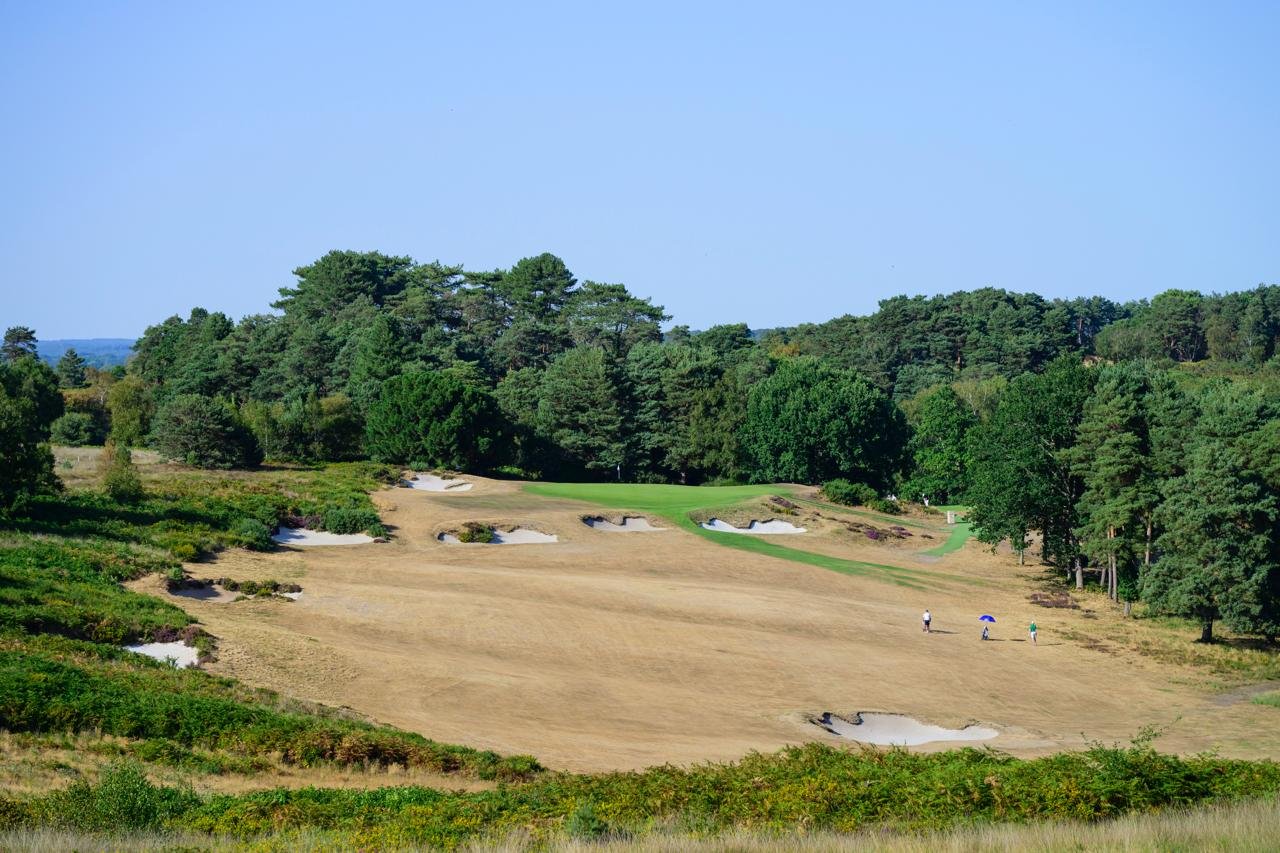
What a temporary use ban actually allows
Temporary use bans – hosepipe bans – do apply to golf courses. They cover sporting grounds and recreational facilities, restricting mains potable water to the most essential playing areas only.
Permitted: greens and teeing areas.
Not permitted: fairways, approaches, rough, ornamental grass around the clubhouse, and landscaping or decorative planting.
Wording varies slightly between water companies, but the principle is consistent: mains water sparingly, and only where it is genuinely necessary. Restrictions can change at short notice, and supply boundaries do not follow county lines — parts of Hampshire currently sit under two different companies’ bans. Check your own supplier’s guidance rather than assuming a regional position.
BIGGA has urged clubs to stay in close contact with their water companies and to prepare for disruption.
The next rung: business restrictions
No non-essential use ban is currently in force anywhere in England – but two companies are now moving towards one, and clubs should plan accordingly.
Southern Water has applied to Defra for a drought order and an accompanying non-essential use ban covering Hampshire and the Isle of Wight, with a decision expected by the end of August. Anglian Water, which serves seven million customers across eastern England, has said business restrictions are its “next available option” and something it is planning for.
A non-essential use ban is a different instrument to a hosepipe ban: it targets businesses rather than households. The uses it can prohibit include operating a mechanical vehicle washer, cleaning vehicles, cleaning non-domestic premises and windows, and filling non-domestic pools. For a club, that reaches into the maintenance facility – machinery wash-down after cutting is among the activities caught.
No such ban has been imposed anywhere in the UK since 2006.

A structural problem, not a seasonal one
The pressure is not only weather-driven. Under the Environmental Targets (Water) (England) Regulations 2023, England has legally binding national targets to reduce demand on public supply:
- a 20 percent reduction in water put into public supply by 2038
- a nine percent reduction in total business water consumption by 2038
- a 15 percent reduction by 2050
Golf clubs sit within the business community covered by those targets. Reducing reliance on mains water and investing in alternative sources has moved from good practice to regulatory expectation.

Where clubs can start
England Golf has made water one of three priority areas in its Sustainability Drive 2025–2030, with commitments set out for the governing body, for clubs and facilities, and for golfers and volunteers. The shared objective is long-term water resilience.
Its Water Security Toolkit, published earlier this year, is designed as a practical starting point: assessing current use, planning for restriction, and evaluating alternative sources including boreholes, reservoirs and rainwater harvesting.
The R&A’s Golf Course 2030 water portal offers further guidance and case studies from across the UK and beyond, and the governing body has renewed its call for clubs to use it in light of current conditions.
England Golf continues to work with the Environment Agency, water companies, BIGGA and other partners on guidance for clubs. Some Environment Agency detail is still awaiting sign-off, but the core principles are already actionable:
- use mains water only where permitted
- reduce consumption wherever possible
- plan for alternative sources
- communicate clearly with golfers about course conditions
That last point matters more than it sounds. Clubs that explain in advance why fairways are browning tend to have an easier time of it than those that wait to be asked – and with the sport’s water use scrutinised during every drought, being able to demonstrate restraint has a value beyond the agronomic.

A shared responsibility
Water security is not a greenkeeping problem or a club management problem. It runs across the whole game, from governing bodies to individual golfers, and it is not going away: this is England’s third drought in five years, after 2022 and 2025.
Clubs that invest in resilient infrastructure, adopt water-smart practices and keep pace with the regulations will continue to thrive as supply tightens. Those that treat each dry summer as an anomaly will find the ground shifting beneath them.
Sustainability is no longer a distant concept for golf. It is here, and it is already shaping how the sport operates.
Meanwhile, Stourbridge Golf Club has said that its golf course will remain closed for the time being, after it was hit by a wildfire.