
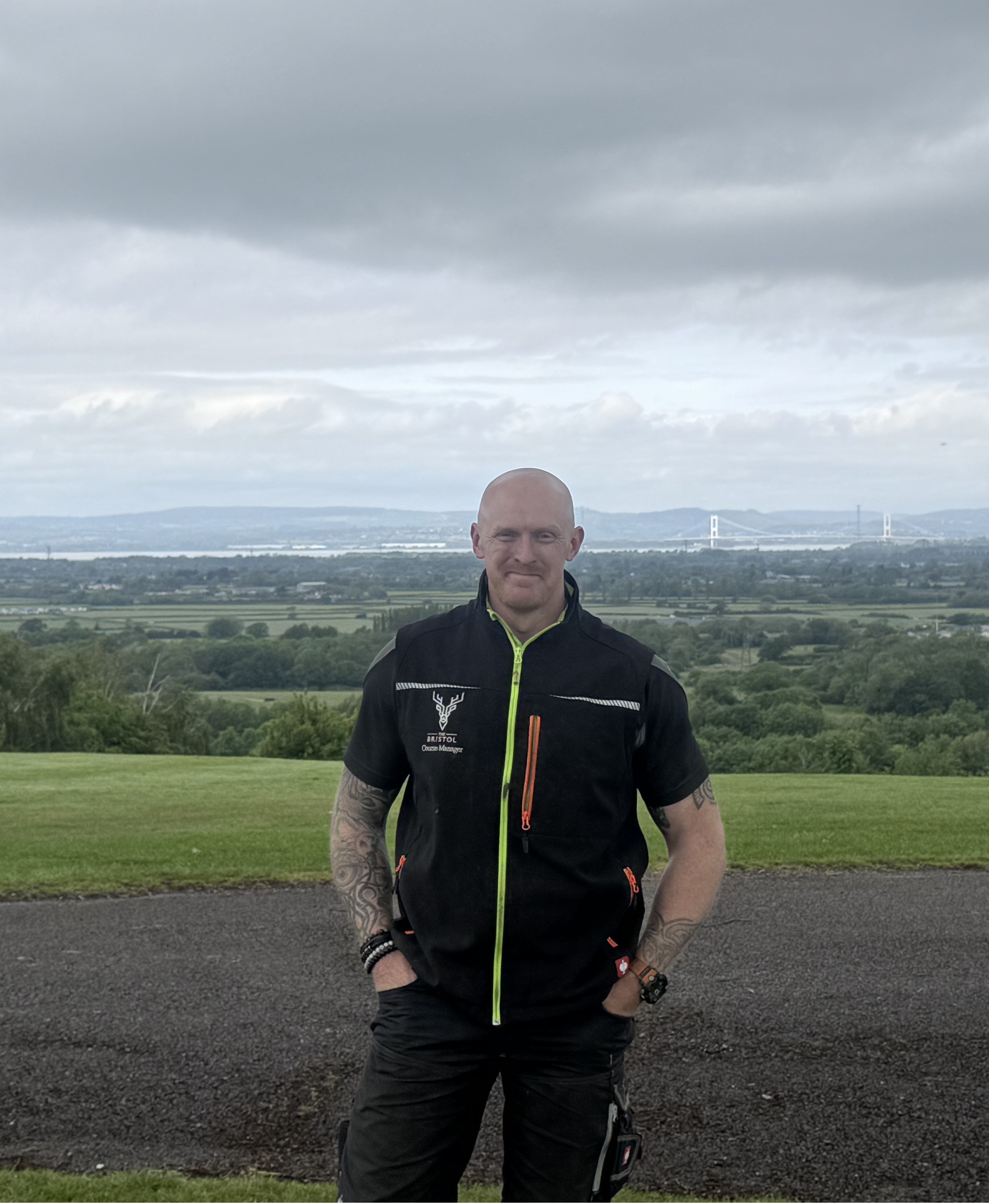
The course manager at The Bristol Golf Club, Dave Taylor, takes us through his average day.
What time do you arrive at the club and what is your morning routine?
I arrive at the club at around 4.30am to open the main gates. From there I’ll head to the compound driving through the course, checking for any anomalies that may have occurred overnight such as irrigation, wildlife, fallen trees and so on.
Once in my office, I’ll quickly double check the weekly planner for upcoming events and set about morning and afternoon tasks for the team, ready for our morning meeting at 4.55am. Here jobs are handed out and I’ll share information about the days golf, weather conditions and anything else I feel is important to pass onto the team.
How many people are there in your team and do you share tasks?
I am responsible for a team of eight – seven greenkeepers and one range assistant. I am a big believer in sharing the tasks and responsibilities across the whole team and always rotate jobs the best I can in relation to the different skill and experience levels of the lads. Some of the team have been here for 25 years, and another just a few months, but I always encourage on the job training so that we maximise versatility across the team.
How do you motivate your colleagues?
I always try and motivate the team by passing on the constructive feedback that we regularly receive from golf operations, corporate golf days and societies. Also, another key motivation is the encouragement of further educational opportunities which we can offer them. Outside of work we are fortunate to have close relationships with the local Bristol sports, including football, rugby, ice hockey and basketball and have access to game day tickets that we try to attend.
What aspects of your job give you the greatest satisfaction?
Some of the greatest satisfaction I get from my role is the responsibility of passing on my experience and knowledge to fellow team members and seeing them take the knowledge and make decisions based on what I have taught and set as our standard. Regardless of whether it is always the right decision, it is the thought that they have used their initiative and done what they feel is best. Across the 180-acre site, I cannot see everything all at once and I rely heavily on the team I have to feedback information about what they see and any issues that may have occurred.
And the least satisfaction?
The most disappointing thing I find is that sometimes all the hard work that we put into the product is not always respected by guests. This then, unfortunately, spoils the experience for others who really do respect our work and can sometimes bring the whole experience down.
Have you attended any courses recently, and if so, what did you take away?
I have not attended any courses since the back end of last year, but a few of my guys went to BTME. I always encourage them to let me know if there’s anything they want to attend and I do try my best to let them go.
What is your favourite season of the year and why?
The easy answer is always spring because you start to see the course come back to life again after difficult winter periods. It’s always astonishing that, regardless of how much persistent rainfall you can have – which limits mechanical maintenance – with a few weeks of dryness you can get back out there and re-establish cutting lines and definition within a very short time. I actually also really enjoy the winter months, and project work we conduct in all aspects. In season, much of our work relies on you and a machine, whereas in winter, we pull back together as a team on different projects across the course and ultimately improve the course ready for the next season.
Are you witnessing evidence of climate change and, if so, how has your job had to adapt to changing weather patterns?
Absolutely. The last five years I have seen a noticeable shift in the conventional seasons as we know it – warmer autumns, wetter winters, delayed springs and longer prolonged hotter / drier summers. With these clear changes, it has been important to manage the expectations of what we can achieve when, ultimately, we are at the mercy of something we have no control over. But what we do have control over is being more proactive and adjusting the working methods we conduct. Just because we did something for many years one way, does not mean we need to continue that if we see clear evidence that it is not the right time anymore. You have to live with what you are dealt now, knowing what has come before and make the best judgement on what you think is best. Does it always work out right? No – but you can then use that and move on to make a better decision next time.
Have you had to overcome any course issues with disease and / or pests?
For a while we really suffered with leather jacket damage, with root degradation and subsequent pest pecking on the surfaces. Again, being more proactive with chemical applications in the autumn months has helped but also adjusting cultural practices like aeration operations during the laying cycle and reducing the size and frequency of this to not leave the greens open for extended periods where it could help them with laying of eggs. Employing that strategy over the last few years, we have seen satisfactory results with reduced damage but, like I always say, what works one year does not guarantee the next, but it is a good guide.
What seed mixtures and / or cultivars do you use for your greens, tees, fairways and roughs?
We are planning in the future to bring back yearly overseeding to the greens which I stopped as I found that, at the time, the surfaces weren’t ready in terms of the thatch levels we had. We have worked hard on this and found that it wasn’t that the percentage of the thatch was high, more the contrary, it was very low.
On our tees we use J 4Turf50 from Johnsons Sports Seed, which combines 50 percent diploid and 50 percent tetraploid ryegrass and, over the last two years, we have seen significantly less in the way of dollar spot as well as reducing the need for high inputs on the tees.
With a growing focus on sustainability, do you deploy any sustainable practices in the management of your course?
Over the last 12 months, and more significantly recently, we have started leaving more areas to grow up and become more natural. This was to reduce the time spent on rough cutting and with the substantial increase in red diesel price compared to 12 months ago it has been well worth doing! We also have seen a larger population of animals around the course hunkering down in these spots like swans, rabbits and muntjacs. Over the last two years we have been adding more wildflower areas around the course for aesthetic and wildlife purposes and had great feedback from all regarding more colour around the course. This is something that each year we will keep adding to. With lots of scrub clearance under our woodland trees conducted in winter months, the large and dense population of our bluebells has been a massive success and helps with that early season colour splash around the course.
What are the technological developments that you feel have been the most important in your career to date?
We now have so much more technology at our disposal to collect data and analyse what we are doing in real time, and over extended periods, which helps us to adjust our management accordingly. This data driven agronomy alongside getting out there and looking at the product you are producing has really driven course standards to a new level which we are all trying to achieve regardless of course status and budgets. We all do this job for the love of what we can produce and these tools give us the knowledge of what is going on and where we can improve.
Do you use social media professionally and what do you think this contributes to the industry?
I do not personally use it myself, but the club does and we try and share photos and comments regarding what is going on on the course across all platforms. In general, social media is a great tool not only for self-promotion but also the insight you can gain from seeing what is going on at other golf courses. This can create good food for thought regarding different ways of doing a particular job, but also can be a good way to express views and receive constructive responses to issues they may be facing. In the depths of the winter, you can sometimes feel like you are the only course getting consistent rain and having to make hard decisions on closing the course or implementing restrictions. Seeing other courses doing the same thing can just brighten your mood knowing you are all making those hard choices for the better, together.
How would you improve the greenkeeping industry?
I feel the hardest thing regarding the perception of our industry is how in depth we go with everything we do day to day to manage the course. From the outside, people think we have the best job in the summer cutting grass (and they are right) but I always try and take it upon myself to give a little more information about what we do over a 12-month period.
What advice would you give to a young greenkeeper starting out today?
Look, learn, listen and ask. In this modern day of greenkeeping we cover such a large variety of roles, and that for a new trainee can be daunting. But I would always remind them that everyone started in the same way. You’ll make mistakes, you will have days when you feel you’re not cut out for this but stick to it and put yourself forward for as many training opportunities as you can. Sit with your course manager and just ask them about anything that may have taken place recently that you are not sure off. From my perspective, it gives me great pleasure to pass on and share information in an easily digestible way. If only 25 percent of what has been said to them sticks, then that is already a 25 percent improvement from when they knocked on the door to ask the question.
How do you spend your leisure time?
Most of my leisure time will be spent with family on days out or just relaxing at home. We all work to live, and my perceptions of that work life balance changed the moment my daughter was born. We do everything we do so that we can go home and have that quality time with family and friends and in a world that can always seem like doom and gloom just remembering why we do what we do and who we do it for is especially important.