
Having first worked in the greenkeeping industry as a fresh-faced teenager and been a member of The K Club’s team at the 2006 Ryder Cup, it’s fair to say that Damien Coleman crammed a lot into his early years in golf. In 2008, he embarked on a new challenge as golf superintendent at Golf at The Hawthorn and is now playing a leading role in one of Irish golf’s most exciting projects this year.

Your journey into greenkeeping began at an early age, working on a small course in Killarney before progressing to some of Ireland’s most prestigious setups. Looking back, what first drew you to the craft and when did you realise it would become your life’s work?
My oldest brother is the golf course superintendent at Dromoland Castle. He gave me my first experience working on a course when I was 13 years old. Those first few summers, it was very much just a job that I loved. But it was only when I got closer to university age that I saw an opportunity to enter this industry on a full-time basis and so pursued my career in the greenkeeping sphere. I completed a four-year Bachelor of Science degree in turfgrass science at Myerscough College in Lancashire, graduating in 2008.
My final exam in college was on Friday, May 16, I began working in Galway Bay three days later and have been here ever since.
From studying turfgrass science to working at the K Club during the 2006 Ryder Cup, your early career was shaped by exposure to elite tournament conditions. How did those formative experiences influence your standards and ambitions as a superintendent?
I remember standing at the opening ceremony of the Ryder Cup in 2006 with a few colleagues who were like me and in their early 20s, and we were all thinking that this was going to be the highlight of our careers. Thankfully, we all went on to achieve as good, and sometimes better, things afterwards, but it was an amazing time to be part of such an event in Ireland.
Being involved in a tournament so early on gave me an example of what is expected at that level in terms of playing surfaces, the presentation of a course and what is needed to set up a course for such an event.

You’ve been part of the Golf at The Hawthorn team since 2008 and stepped into the superintendent role at just 25. Having seen the course evolve over nearly two decades, how would you describe that journey — both for the course itself and for you personally?
It’s such a cliche to say that I’ve seen the ups and downs, but I really have. When I started in 2008, it was at the back end of the Celtic Tiger, probably the biggest economic boom the country of Ireland has seen. Golf was booming, everything was booming and then, all of a sudden, the worldwide economic crash happened and golf was one of the first things to suffer.
It was a difficult period for us immediately after that, and what I learned from those years was how to maintain a golf course on a shoestring budget. It came full circle again with the economy getting better and then the coronavirus pandemic came. Since then, though, we’ve been riding that wave of golf popularity, and I think now is a good time to be opening a golf hotel because golf in Ireland is really thriving.
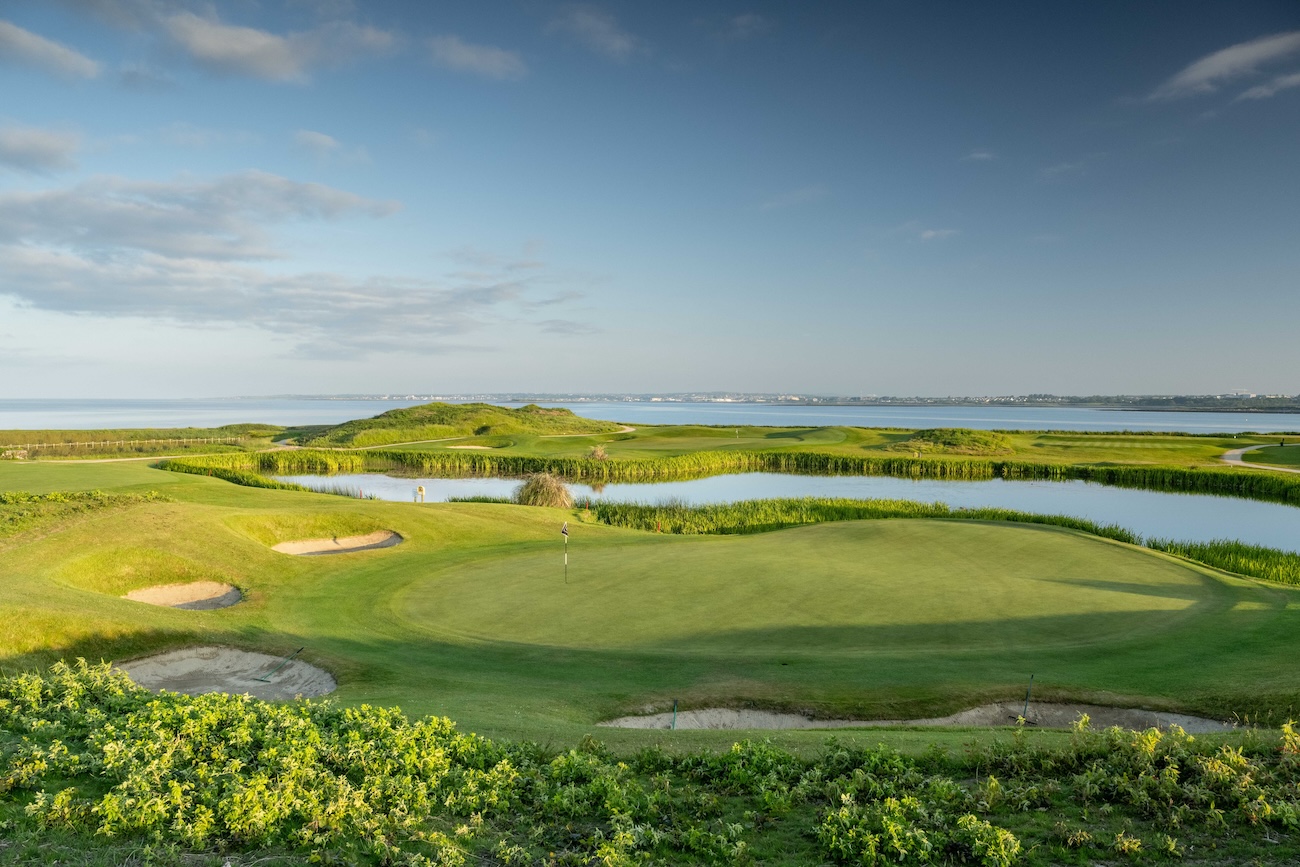
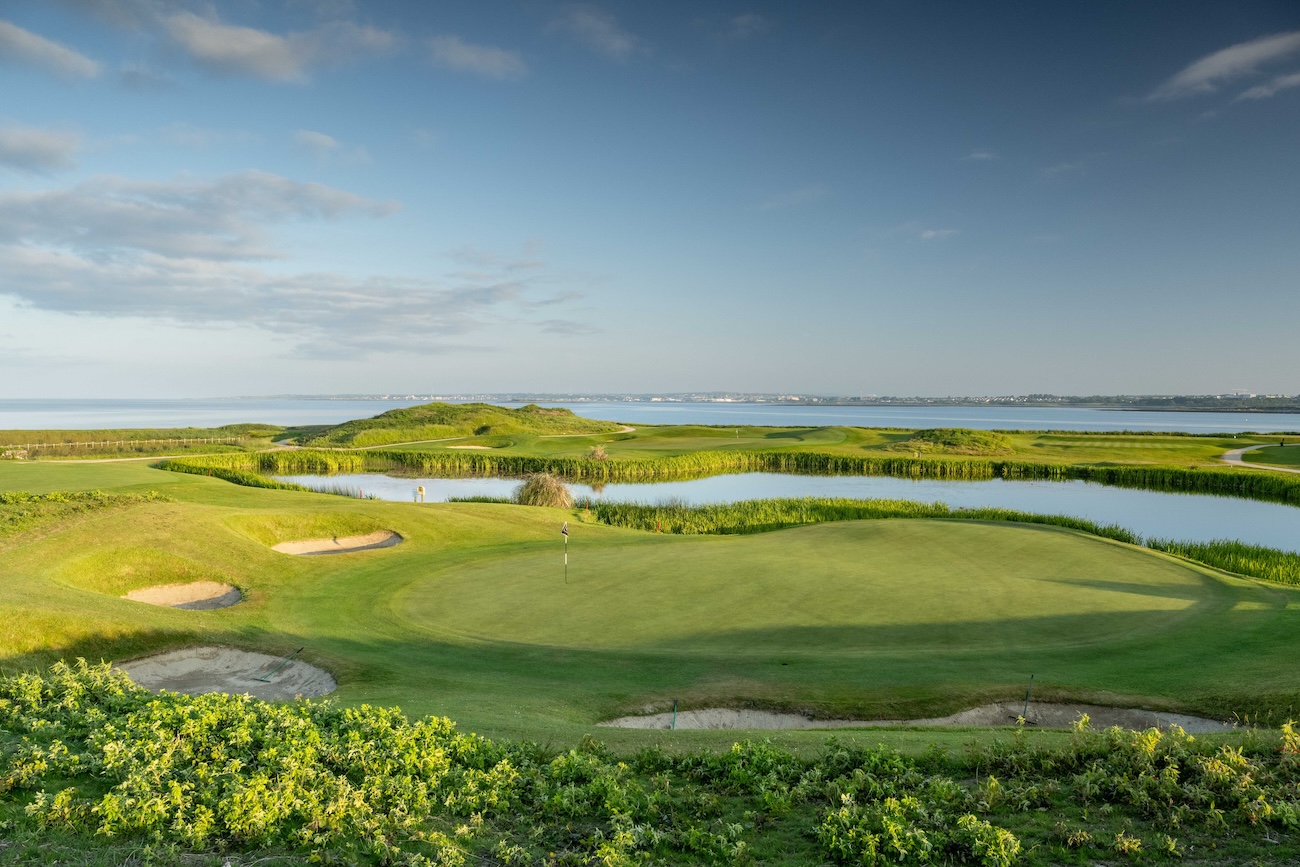
For me, the last 20 years haven’t felt like work. There are tough days for sure, but everyone has those, and I’m very lucky to work at a site that I believe is one of the best locations in Ireland and is blessed to have some of the finest golf vistas around.
The most valuable thing for me that I’ve taken from the last two decades, has been the people I’ve been fortunate enough to work with and the connections I’ve made. I’ve seen this golf course improve in all areas but that has only been made possible because of the people working alongside me. Our greenkeeping department is like a machine, our team is the engine driving it, I just happen to be doing the steering.
You’ve witnessed significant change here, particularly with the recent investment and the arrival of The Hawthorn by Galway Bay. What has it been like to be part of the transformation?
To see The Hawthorn hotel nearly completed is amazing, and it will be something to be really proud of. For more than 18 years, I have been looking at a derelict building that couldn’t be transformed into a hotel due to the knock-on effects of the worldwide financial crash. There are not many of us left here that can remember when the initial building was put in place, so it is great to have witnessed the transformation firsthand.
What are your hopes for how Golf at The Hawthorn will be perceived in the years ahead – particularly as part of a wider luxury resort destination?
When it comes to a golf resort, it’s vital that there is a regular flow of visitors. The business prospers on the back of the hotel, and the golf course benefits from that. From a career point of view personally, and it’s a long-term goal that I’ve always had, I would love to host a big professional golf event here. One of the lessons I’ve taken from working at so many prestigious golf tournaments has been the logistics around running such an event. I would be confident enough as a result to apply this knowledge in hosting such a tournament here. I think I’ve been fortunate enough to complete maybe ten or 15 golf tournaments now at this stage, and I’d love to see the top players in the test themselves around our venue.

Do you have plans to be involved in more tournaments as a volunteer? Of course, the Ryder Cup at Adare Manor is not too far away now?
My name is certainly in there for it! I’m also hoping to be involved in some capacity at the Walker Cup in Lahinch in September and I’d absolutely love to do an Open Championship – that’s the next one for the bucket list for me.
The ongoing bunker project is a significant undertaking, with a large portion of bunker surface area being removed. Can you talk us through the thinking behind the work and how it will ultimately improve playability and enjoyment for golfers?
At the outset, we had 126 bunkers on the golf course. Just to maintain the bunkers in a calendar year was costing more than ten percent of our labour budget on the golf course. That was to maintain an area that was less than one percent of the total surface area of the golf course. We have significantly reduced that number now, with 59 bunkers remaining.
That will allow us to present bunkers that are much better in terms of not only how they look and present but also how they play.
As a result, the experience that we offer golfers is going to improve dramatically.
The expectation of the modern-day golfer is very high and that brings its own pressures. To be able to have bunkers that fall into the expectation of those golfers makes my job a bit easier.
Sustainability, of course, has become a key talking point in the greenkeeping industry over the last decade. Can you talk to us a little bit about some of the practices you have integrated and how much change there has been in your time at Golf at The Hawthorn.
Sustainable practices are always something that we are looking to work on and grow across the golf course. In the first three months of this year, we’ve applied 1,000 tonnes of sand to the golf course. By simply changing our sand supplier to one that is closer to our location, we have drastically reduced our Tier 3 carbon emissions by 9,323kg of CO2, with 9,045 less kilometres of haulage and roughly 3,479 less litres of diesel being consumed by delivery trucks.
When we look at pesticides, these are always a good example because they are very relatable and one that people can understand quite easily. We have endless amounts of pressures on the golf course in terms of climate, pests, weeds and so on, and those pressures lead to issues on the golf course that sometimes require pesticidal treatment.
When it comes to disease management on greens, In the past, and certainly back when I started here, the easy thing to do would have been just to spray what’s called a fungicide. It’s a form of pesticide that protects the grass against disease. When I started here, we would have applied approximately 18 to 20 of those fungicides in a year. These are both extremely expensive and quite harmful to the environment.
Over the years, we have introduced grasses to the golf course that are more tolerant to disease and, bit by bit, we’ve been able to reduce our pesticide use. So those 18 to 20 fungicides in 2008 have now been reduced to just three last year, and we can see the benefit because the grass on the greens is much more able to fend for itself.
The environmental practices that we have implemented extend to the work on habitats across the golf course and their encouragement. Back in 2020, our directors commissioned a bird survey on the golf course. I remember noting that there were, surprisingly, no skylarks found, a bird that was once prevalent across the golf course with its natural habitat being the long areas of rough around the golf course. Over the years, we would have cut back a lot of the golf course based on feedback from golfers finding it too difficult and had not factored in the impact this was having on the skylark. We ended up in a situation where large areas of the golf course were being mown, even though a very low percentage of golfers were entering these areas during play. To alleviate this, we started reintroducing long grass areas or tall rough in areas that we felt were out of play. After three or four years, and to our delight, the skylark returned and started nesting on the golf course again which was fantastic.

Maintaining a course on Ireland’s Atlantic coastline brings its own unique challenges — from wind and salt exposure to ever-changing weather conditions. How do you work with, rather than against, the elements in shaping the course?
I always try to use the weather to my advantage as much as possible. There are several different tasks that we carry out on the golf course from a greenkeeping point of view where the weather can be used to our advantage. For example, rainfall has recently been quite abundant for all of us, let alone those that work in and based industries like us. We would often use this rainfall to aid us after the application of granular fertilisers or products to the golf course that need to be washed or broken down in moisture.
Given our location on the Atlantic Ocean, we also experience vast periods of sustained wind. We utilise this to our benefit in setting up the golf course. Being able to move pin positions or tee markers with respect to the wind direction, or indeed its strength, allows us to set up a much-varied golf course day to day. For example, on our par-three fourth hole, one could be hitting a pitching wedge today and a seven-iron tomorrow from the same spot. That’s what I think makes it unique and that’s what the wind does. I think it helps us from that point of view that it’s not a mundane, same old golf course where it’s the same club all the time, it really is different every day.


With the opening of The Hawthorn by Galway Bay, the course becomes part of a fully integrated resort experience. How important is that connection in attracting international golfers and elevating the destination as a whole?
The key for me is the experience. The experience for every guest and visitor starts at the entrance, part of that experience is our five-star hotel and everything it has to offer. We have a superb team looking after our hotel who will ensure that experience and expectation is surpassed by each guest and visitor.
My responsibility will be the experience on the golf course, and I want to make sure that aligns with that of the hotel and that we maintain a consistency of offering across the site from beginning to end.
Opening this May, The Hawthorn by Galway Bay is a new five-star destination set along the Wild Atlantic Way, overlooking Galway Bay. For more information or to plan your stay, visit http://www.thehawthornhotel.ie,
or to book a tee time, visit www.thehawthornhotel.ie/golf
