
David Blair, course superintendent at Aphrodite Hills Resort, has been on a 20-year greenkeeping odyssey, working across four continents before settling in Cyprus three years ago. It’s been a journey of learning and discovery, building knowledge and skills at courses around the world. He discusses his career path, working at the US PGA Championship and the exciting times ahead at Aphrodite Hills Resort.

What got you into greenkeeping?
I grew up playing golf every day and always dreamed of turning professional. But when I realised I wasn’t quite good enough, I started looking at other ways to stay involved in the game. In 2005, I had a chat with the head greenkeeper at Wishaw Golf Club near Birmingham. That conversation changed everything. I began working there as a teenager and quickly found a real passion for turfcare and working outdoors. I enjoyed the variety, the science behind plant health, the machinery and the satisfaction of preparing a course for play. It never felt like work. I genuinely looked forward to each day. The club owners were incredibly supportive and encouraged me to study at Myerscough College.
That opened my eyes to the broader world of greenkeeping and set me on the path I’m still on today.

You’ve worked all over the world – give us a flavour of the different experiences.
I always wanted to travel, so I started by heading to Australia to work at The Australian Golf Club in Sydney, a Jack Nicklaus design. It was a big step up for me, a larger team, a top-tier course and my first experience working with warm-season turf.
After returning home to complete my Level 3 at Myerscough College, I wasn’t ready to stop. Brad Sim, who had moved from The Australian to Cape Kidnappers in New Zealand, helped me line up my next role. I flew out for six months and joined the team on this stunning Tom Doak design, perched on the cliffs. The setting was incredible, and again, I had the chance to learn new turf types and practices.
That six-month plan quickly turned into two years. I applied for The Ohio Program and secured a placement at Quail Hollow Club in the US, flying straight from New Zealand. I arrived just before the Wells Fargo Championship and was immediately thrown into PGA Tour standards, grandstands, tournament prep and all the pressure that comes with it.
Over 18 months, I soaked it all up. I learned from a team striving for excellence and got hands-on experience with small construction projects, including building a new short game area. Each step expanded my knowledge and shaped how I approach turf management today.
How was it returning this year for the US PGA Championship?
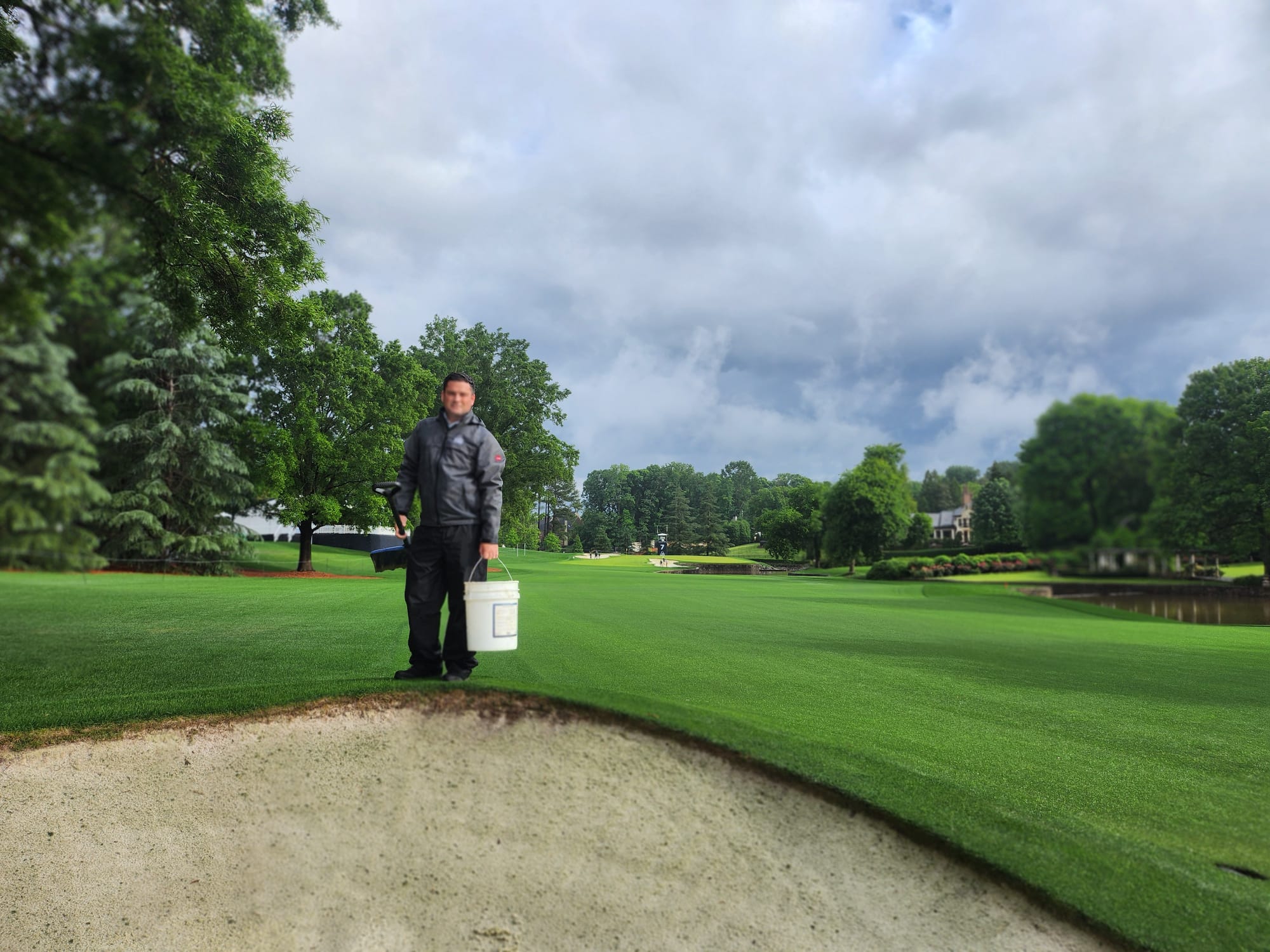
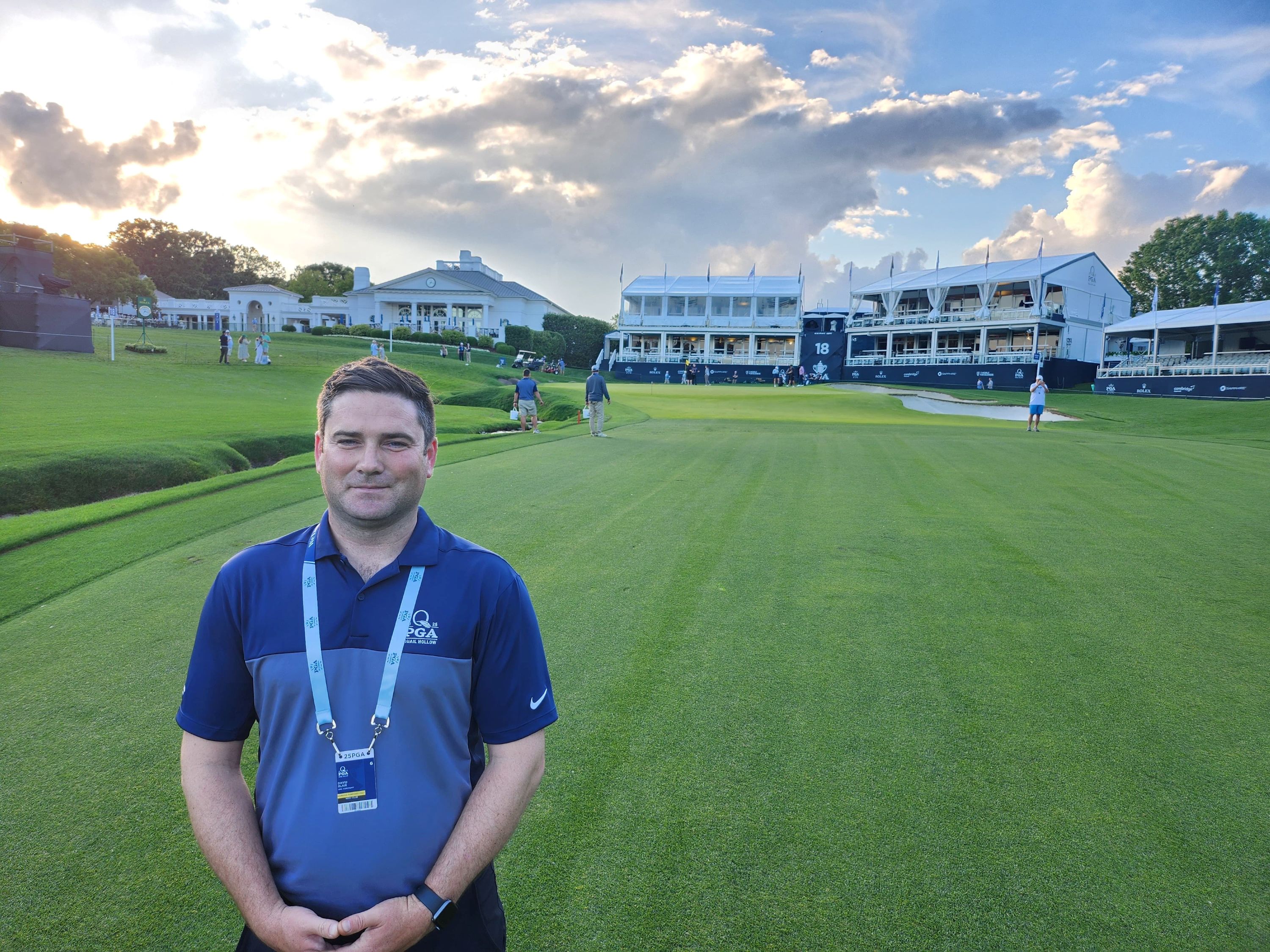
It was emotional and incredibly rewarding. I was warmly welcomed back by Tom DeLozier, the general manager, and Keith Wood, director of green and grounds. Walking into the same maintenance facility, now as an experienced superintendent, brought a real sense of pride.
Supporting the team during a major championship gave me a new level of respect for the scale, planning, and pressure involved. Ten years had passed since my internship, and the course had seen major investment, re-grassing of greens, rebuilt bunkers, reworked holes and extensive tree removal to make space for grandstands and access roads.
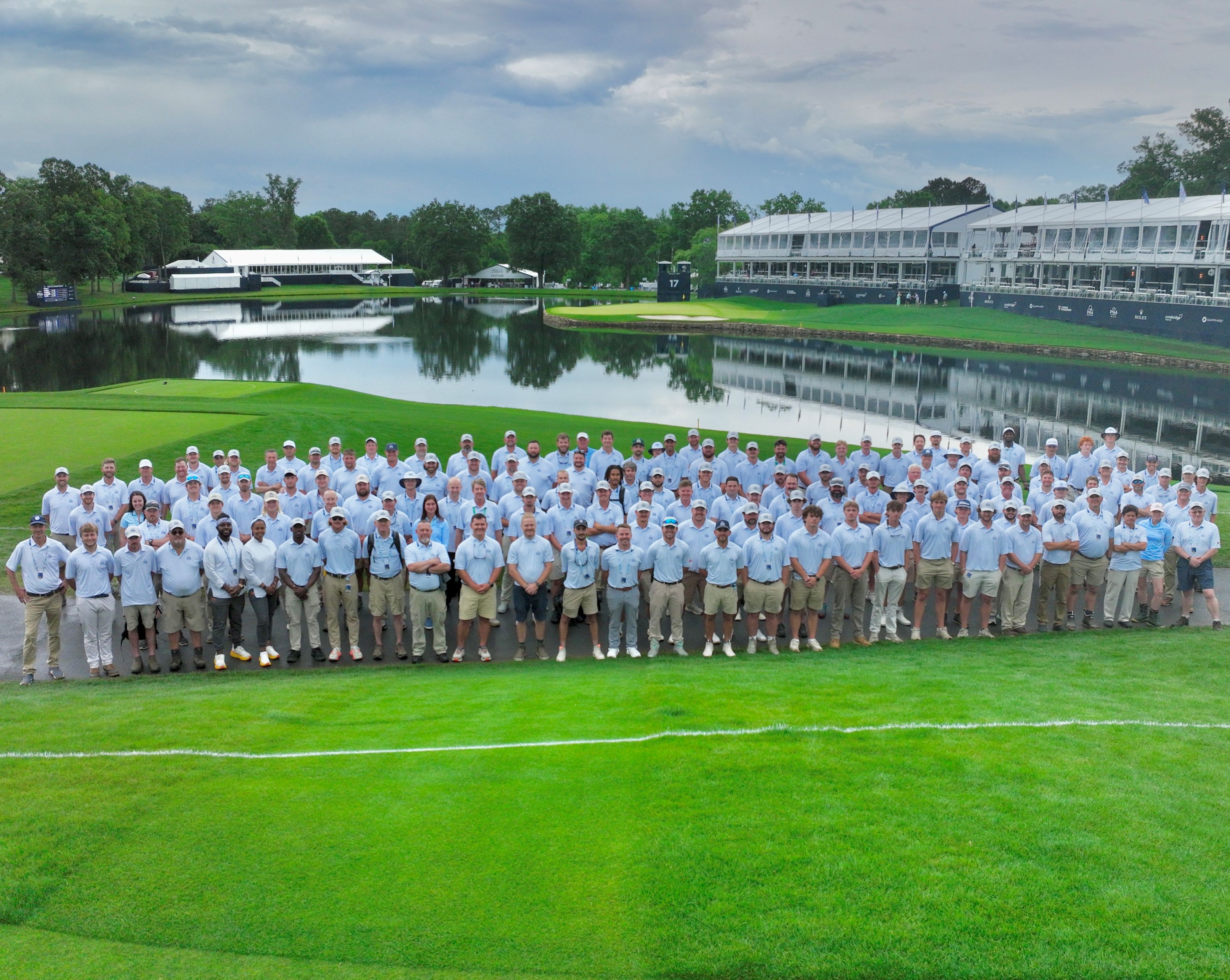
The level of detail expected at any tournament is high, but for a major, every aspect is scrutinised. It’s a huge team effort. Quail Hollow’s 40 full-time staff were joined by 90 volunteers. Working alongside a fellow intern, we were responsible for cutting holes on the front nine, a task we took great pride in. Heavy rain on the Monday meant we were all out shovelling and repairing bunkers. Everyone pitched in. That sense of teamwork made a long week fly by.
These experiences are valuable, and I try to pass them on. Over the last two years, we’ve sent team members from Aphrodite Hills to the British Masters at The Belfry. It’s a great way for them to learn, grow, and gain a wider perspective. Here, from ownership down, there’s a real commitment to developing people.
The next move after Quail Hollow was back in the UK and the JCB Club. What did that involve?
After Quail Hollow, I returned to the UK and joined the team at the JCB Golf & Country Club. I’d been involved in small construction projects before, but this was on a completely different scale.
I came in during the construction phase and became part of the grow-in team. It was an incredible experience to watch the course take shape, from bare soil to a world-class facility.
I learned a lot about construction techniques, shaping, drainage, and the level of detail required at each stage. Most of all, it taught me patience — building something that lasts takes time, care, and a clear vision.
The global journey moved on from there to the Maldives and then the Middle East – what were the unique challenges you experienced?
In 2017, I joined Troon and took on a role at Velaa Private Island in the Maldives. It wasn’t a traditional golf course, more of a luxury short-game facility with nine tees surrounding a central set of greens. Guests had full freedom to play from any tee to any green, which made it unique and fun.
Living on the island created a strong sense of community, and I met some incredible people including footballers, royals and even presidents. But it wasn’t without challenges. Everything had to be imported, fertilisers, tools, machinery. With no local suppliers, forward planning and equipment maintenance became critical.
From there, I moved to Royal Greens in Saudi Arabia, again with Troon. It was a big step up from managing a small island crew to leading a team of 40, most of whom didn’t speak English. Luckily, our foreman spoke five languages and helped translate daily briefings to a multinational team.
We shared the same paspalum turf as the Maldives, but the scale and pressure were much higher. In just three years, we hosted nine professional tournaments. That level of intensity combined with the cultural shift and the Kingdom’s ambitious Vision 2030 made it one of the most exciting and challenging roles I’ve had.
If there’s another superintendent out there who’s hosted nine events in three years, I’d love to swap stories.
These roles led you to Aphrodite Hills Resort. With significant investment in projects to transform the resort, how exciting is it to be part of this project?
I’ve been at Aphrodite Hills for nearly three years, and it’s an incredible time to be here. The ownership is forward-thinking and fully committed to investing across the resort.
On the golf side, we’ve already completed a first-class starter hut and have upgraded the driving range, which now features the first TrackMan technology in Cyprus. This summer, we’re launching a full bunker reconstruction across four phases. We’ve partnered with DuraBunker, CapillaryFlow and PQ Construction, top names in the industry to future proof our bunkers for long-term performance and playability.
But the investment goes beyond golf. The gym, spa, and sports hub will all undergoing major renovations. The goal is clear, a consistent premium experience across the entire resort.
Every improvement on the course feeds into the bigger picture, supporting the resort’s brand, attracting repeat tourism, and strengthening real estate value. What we do on the ground reflects the identity and ambition of the entire resort.
Sustainability is also a key consideration particularly in Mediterranean regions – what initiatives are Aphrodite Hills looking at?
Sustainability is at the core of everything we do at Aphrodite Hills, especially in a Mediterranean climate where resources are limited.
Water management is a top priority. We conduct annual irrigation audits, upgrade controllers and even small changes like replacing sprinkler nozzles help improve efficiency. Currently, 25 percent of our irrigation water is treated sewage effluent (TSE), with the rest from reservoirs. We’re also exploring a long-term back-up solution through desalination.
Turf and landscape strategy plays a big role. We’re reducing turf areas to save water and resources, while enhancing out-of-play areas. This not only lowers maintenance inputs but also improves the course’s natural aesthetics.
Energy use is being addressed with photovoltaic panels now installed on the irrigation pump station, the maintenance facility, the spa and the clubhouse, all contributing to reduced energy consumption.
Technology and innovation are part of our future planning. We’re actively trialling autonomous and robotic mowing systems to lower emissions, reduce noise and optimise labour.
Waste reduction is ongoing. We’ve already cut single-use plastics by 80 percent, and we’re in the process of our third GEO Certification renewal since 2019.
We see sustainability not as a separate initiative, but as a way of working smart, efficient, and future focused.

How have your previous roles prepared you for Aphrodite Hills?
Each role I’ve had has added a new layer of experience from technical skills and agronomy to team leadership, budgeting and innovation. Aphrodite Hills brings together premium resort expectations with the environmental challenges of the Mediterranean. It’s a mix I was well prepared for.
My journey started in the UK on traditional parkland courses, where I learned the value of detail, seasonal management and consistency. In Australia, I faced hot, dry conditions and worked with warm-season turf for the first time. New Zealand brought rugged, windswept coastal exposure at Cape Kidnappers, a world-class Tom Doak design. In the US, Quail Hollow set a new bar for high performance and tournament readiness. Then came the Maldives, salt air, extreme humidity and limited resources, followed by the deserts of Saudi Arabia, where I led large teams and helped deliver Golf Saudi’s ambitious vision.
Each place sharpened my understanding of turf, climate, and expectations. But above all, I’ve always focused on people, building culture, supporting others and developing strong teams.
Now at Aphrodite Hills, I see a course with visual impact, playability, and character. A place where guests leave with a lasting memory. I feel excited about what we’re building here.
Having seen so many top venues around the world, Aphrodite Hills feels truly special.