Basingstoke Golf Club’s course manager Jake Field discusses climate change, water management, creeping bentgrass, technology, sustainability and his ambition to establish the Hampshire club among England’s top 100 courses.

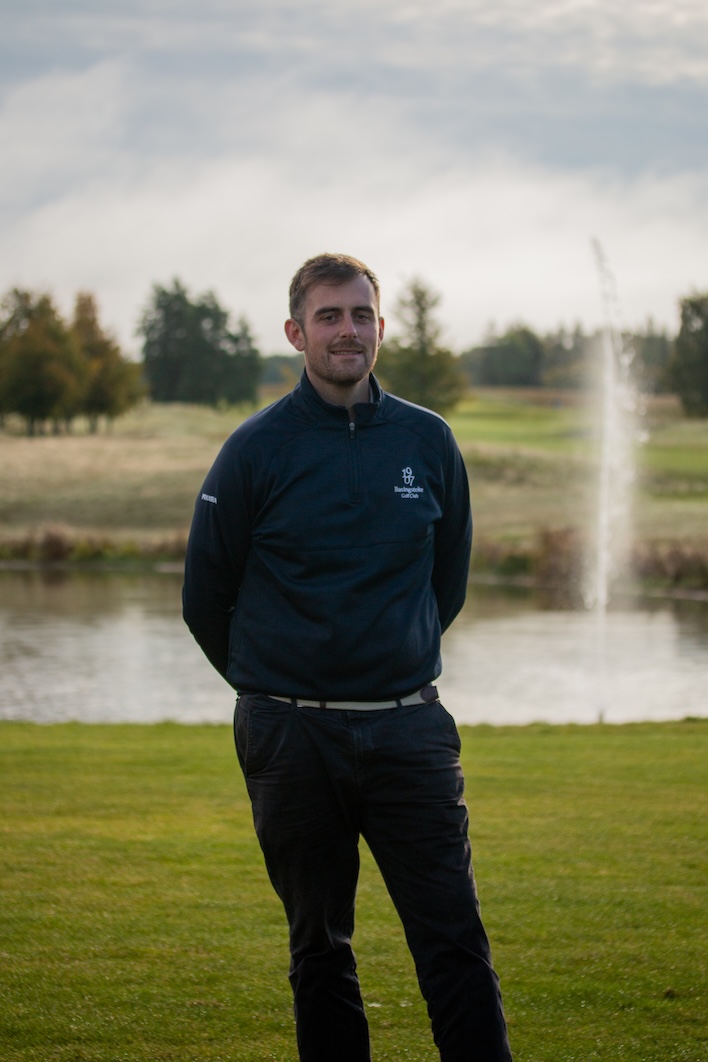
With Basingstoke Golf Club entering an exciting new chapter following its major redevelopment, course manager Jake Field is focused on establishing the course and building a greenkeeping operation capable of delivering high standards in an increasingly unpredictable climate.
The club’s new championship course, built on chalk downland, features creeping bentgrass greens, a full tee-to-green irrigation system and a number of sustainability initiatives. The club officially opened the redeveloped facility earlier this year following a £20 million transformation.
Field’s own career has taken him from Yorkshire to Sweden and the United States, experiences which have shaped his approach to course management and presentation.

How did you first get into greenkeeping?
I grew up passionate about sport and originally wanted to play professional rugby. I started playing golf when I was 13, which is considered quite a late start these days, with children often beginning at six or seven.
Quickly, I fell in love with being outdoors and being around golf; greenkeeping became a natural route for me. In my final year at school, I applied for some work experience at my local golf club in York, where I was a member, after spending two weeks working with the team, I completely fell in love with it.
When I realised I wasn’t going to reach the level required to become a professional golfer, greenkeeping naturally felt like the best next step for me. I still try to play every seven to ten days when I can, although I don’t play anywhere near as much as I used to.
What did you take from your time spent working overseas?
Sweden was an important part of my career. I spent three years there working with creeping bentgrass greens, and they were probably some of the best putting surfaces I have ever experienced.
Alongside this, Sweden also had long-standing restrictions and bans around certain pesticides and fungicides, meaning you had to think differently about disease and pest management, being creative and looking at alternative ways of managing the turf.
A lot of the techniques I saw there are now beginning to emerge across the United Kingdom, so that experience has proved extremely valuable.
I also spent around 18 months in the United States at Harbour Town Golf Links, working through two RBC Heritage tournaments (2015 and 2016) as well as volunteering at the Tour Championship at East Lake.
The biggest thing I took from the US was the attention to detail. PGA Tour venues are so precise and that is something I have tried to bring into my own teams.
You cannot necessarily transfer all of the agronomy from the US directly into the UK because the climates are so different, but the standards of presentation certainly translate.
How concerned are you about climate change and what it means for UK golf?
The UK climate is becoming increasingly difficult for turf management. We have already experienced some very challenging conditions, including a cold, dry spring this year which made establishment and growth particularly difficult. However, we must start accepting that this is the new normal for UK greenkeeping.
There is also a membership issue. Golf courses aren’t always going to be lush and green. Managing the members’ expectations and educating them to understand that and accept that a healthy, sustainable golf course may look different during periods of drought.
Water management must therefore be a major part of your strategy?
Absolutely. Basingstoke is built on chalk, which gives us fantastic drainage and excellent winter playability, but it also means the site dries very quickly in summer.
We are at quite high altitude in Hampshire, and we have a constant wind, so evapotranspiration can be significant.
Fortunately, the club was forward-thinking when the course was constructed and built two reservoirs on site for water abstraction.
That means we are not fully reliant on mains water, where as many golf clubs are. We also have a full irrigation system from tee to green.
This year we have reduced fairway irrigation to the absolute minimum. We are really using water to keep the grass alive and dormant rather than trying to make the fairways lush and green.
The fairways are holding some moisture and retaining life, but currently they are certainly not green.
I think the wider industry needs to think seriously about winter water storage. If clubs can capture and store more of the excess rainfall we get through the winter, they can then draw upon those reserves during increasingly dry summers.
For our own tournament preparations, we are planning to be more conservative with fairway irrigation during May and June next year so we can build up our water reserves ahead of the Boys and Girls International next August.
What has your experience with creeping bentgrass taught you?
My experience in Sweden gave me a real appreciation for what creeping bentgrass can provide.
It is probably up there with the best putting surfaces you’ll ever play on, but it is not a low-maintenance option. You need regular verticutting and brushing, along with a heavy and consistent topdressing programme.
The big advantage is its performance in drought conditions compared with Poa annua.
Poa is common on UK greens, but it can really struggle during dry summers. Creeping bentgrass gives us much more resilience.
It also has very good winter disease resistance. It doesn’t grow particularly much during the colder months, but it holds up well against the diseases we commonly see in winter.
For me, it’s a great all-rounder, and the feedback from members and visitors about the quality of the greens has been consistently positive.
What sustainability initiatives have you introduced at Basingstoke?
We have introduced zero-maintenance fescue rough areas in out-of-play zones. That reduces inputs and maintenance hours, while also improving the ecological value of those areas.
We have seen wildlife return very quickly, which has been fantastic. Despite the amount of construction work that has taken place in recent years, we are seeing hares, deer and plenty of other wildlife across the course.
We are also looking at introducing wildflower meadows.
Personally, I like colour and visual variety on a golf course, so that’s something I’d like to develop. The club has installed solar panels, and we are getting close to being able to run almost entirely on solar power.
We are also expanding the machinery fleet with a strong focus on sustainability and reducing the carbon footprint of the greenkeeping operation.
Our irrigation system is another important part of that, as it allows us to monitor precisely how much water is being applied across the course.

How much does technology influence your day-to-day decision-making?
A lot. We use daily evapotranspiration readings to understand how much moisture the course is losing. The objective is to replace what has been lost rather than simply irrigating because it is a particular day of the week.
We are also using machinery tracking software, which monitors the fleet and tells us when servicing or maintenance is required.
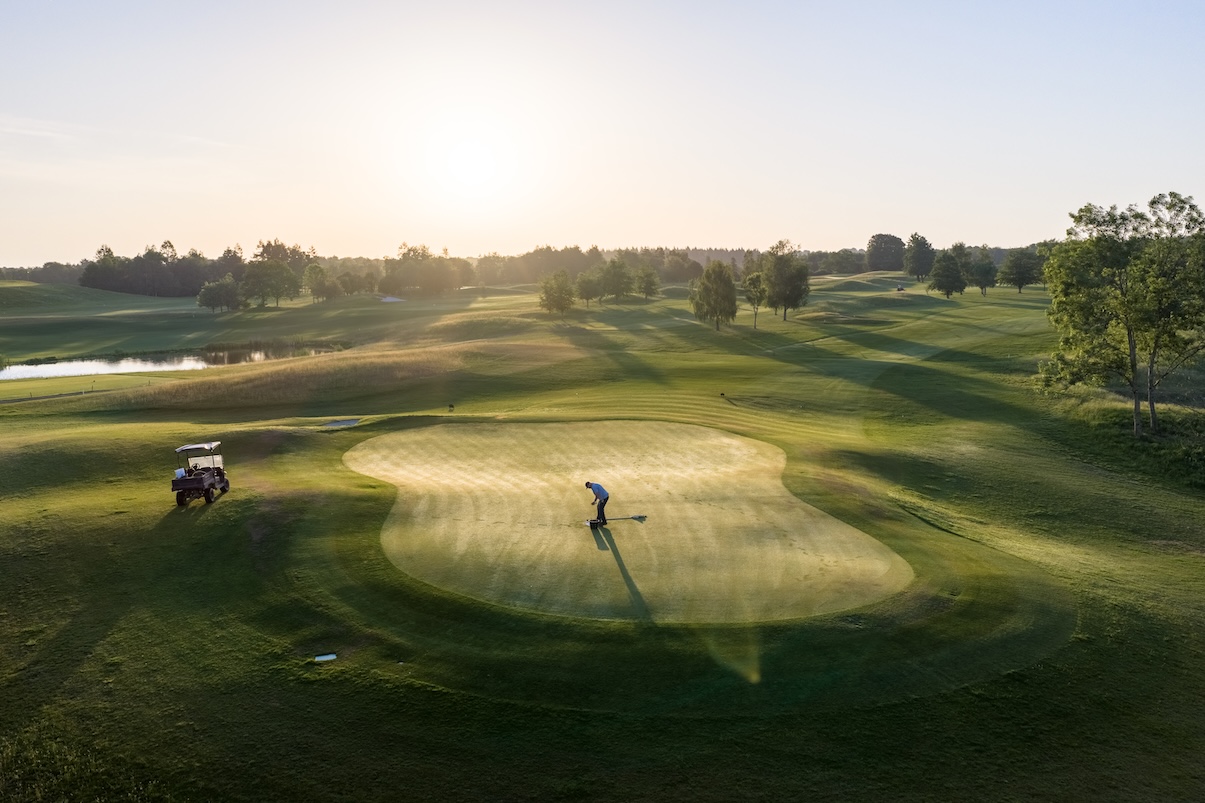
Autonomous mowing has been introduced across all our practice facilities, and it has been fantastic. The equipment can operate independently and deliver a consistent standard without somebody having to manually operate the machine every time.
Most importantly, it frees up the team to concentrate on other jobs.
We are also looking at further management software which could improve the operation. Technology is valuable, but it has to support the greenkeeping team rather than replace good judgement.
How do you balance consistency with the demands of major competitions?
Our normal cutting programme is consistent. We have set days for fairways, tees and greens, bunkers are raked daily and hole locations are changed regularly.
Currently, we are cutting less frequently because the turf is under stress from the drought.
Our major renovation work is based around soil testing. We assess the soil profiles and identify areas that require targeted treatment, working closely with our agronomy partners at Turfgrass.
When we have a major competition, we increase the frequency and standard of presentation.
The philosophy here is that the course should always be about seven to ten days away from being presented at its very best for a major event. That gives us confidence that we don’t need to dramatically change our approach when a competition comes around.
How are you preparing for the upcoming Boys and Girls International?
We are nearly a year away from the tournament, so planning is already underway.
We are going to reach out to the wider greenkeeping community to recruit volunteers for tournament week. I think that can be a fantastic opportunity, particularly for young and aspiring greenkeepers, to experience what goes into preparing for a major event.
We will also be working with machinery suppliers and trade partners for additional equipment support. We are encouraging suppliers to get involved with catering too, whether that’s breakfasts or snacks for the team and volunteers.
I want to make a big deal of the event for the greenkeeping team and make it a memorable experience.
The course set up itself will be collaborative. We will work with the tournament directors from England Golf, provide our advice and listen to their requirements.
I want the course to be tough. These are elite junior players, and I think difficult conditions can help them develop their course management and decision-making. You only have to look at The Open and how firm, fast conditions can create a completely different test.
What are your ambitions for Basingstoke?
The ambition is to establish Basingstoke as a top 100 golf course in England, both for our members and for visiting golfers.
We want to raise the profile of the club and attract more visitors, and the board is very, very ambitious.
There is a clear long-term investment mindset, and I believe that investment will pay off over the next five years.
When I joined, the course was still in a juvenile state. There were areas where the turf was thin, but we saw significant improvement through May and June.
Getting that turf coverage established across the site has been a big win in a relatively short period.
Finally, what has been the most rewarding part of your career?
Without question, seeing people I have mentored progress through the industry.
Some of the people I worked with in Sweden have gone on to become deputy course managers and course managers in Dubai and America.
That is probably the most rewarding thing in my career so far.
We have two new apprentices who joined the team this year and watching them develop is incredibly rewarding. We have got experienced people in the team who can pass their knowledge on, and the apprentices are already picking up maintenance tasks quickly.
For me, developing people is a huge part of being a course manager.
And if you ask me my favourite day of the week, it’s Friday. You see the cumulative work of the whole team and, usually, the course is looking its best going into the weekend.
That is when you really appreciate what everyone has achieved during the week.