
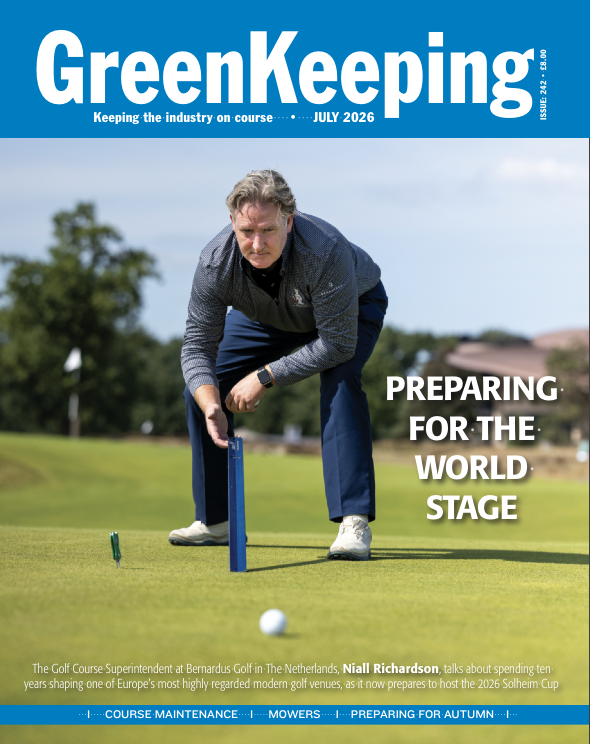
As Golf Course Superintendent at Bernardus Golf in The Netherlands, Niall Richardson has spent the past 10 years helping shape one of Europe’s most highly regarded modern golf venues. With the club now preparing to host the 2026 Solheim Cup, he reflects on the course’s evolution, the principles behind its agronomy programme and the details around delivering exceptional conditions on a daily basis.

Bernardus is now recognised as a leading modern championship venue. From an agronomy and course presentation perspective, what are the key characteristics that define the course?
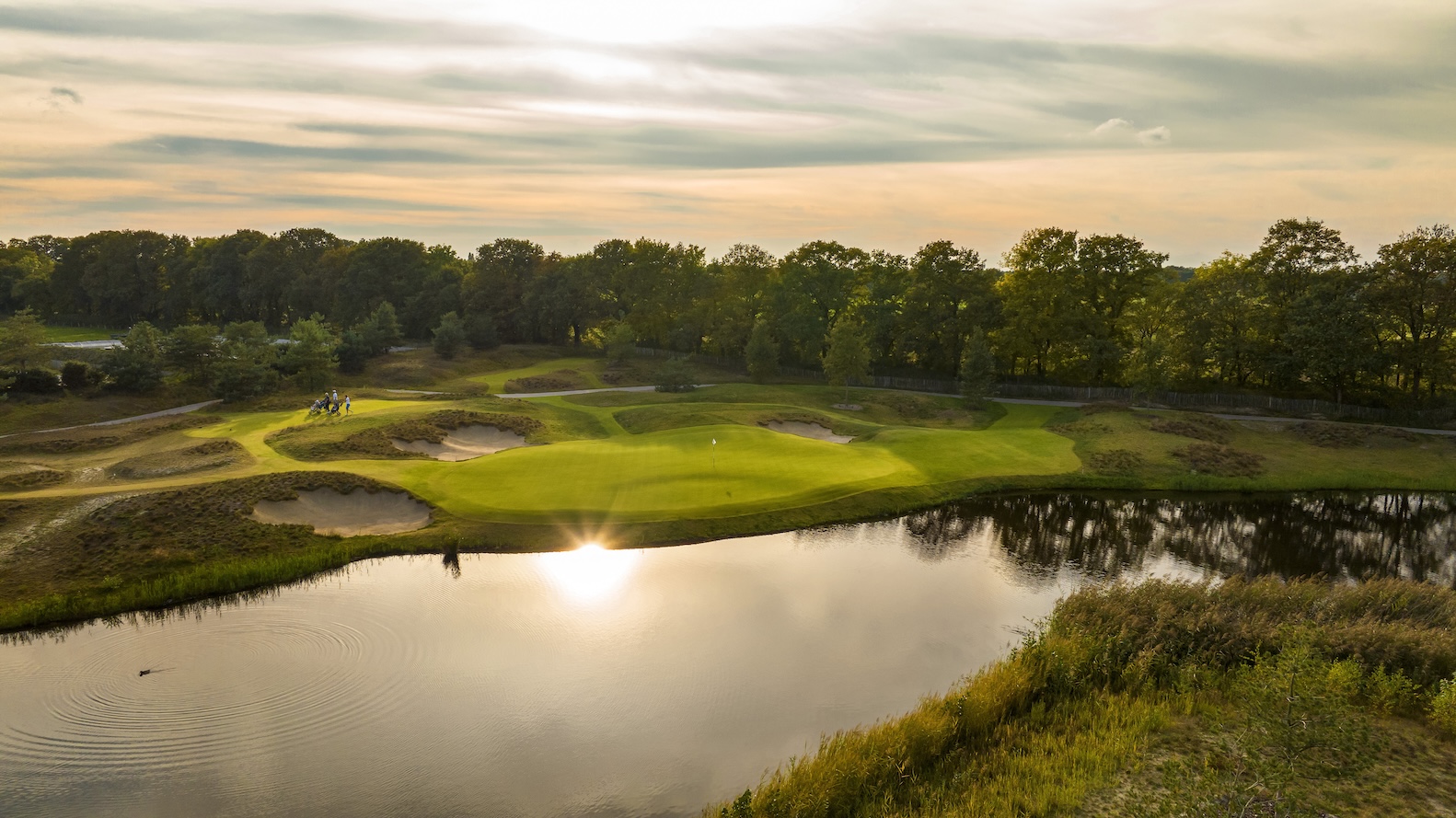
To understand the course properly, we can start with the landscape. The property covers 82 hectares, but only 33 hectares are maintained as playing surfaces. The rest of the site is dominated by nature.
The inspiration for the course came from the national park bordering the property, a sand-dune landscape known locally as the Brabant Sahara, with rolling heathland, purple heather, oaks and pines. That natural setting is what shaped the course’s identity and inspired Kyle Phillips’ design. We must also pay homage to the property’s owner, Robert van der Wallen, whose vision was to create an environmentally sustainable course where focus was driven towards nature and simplicity in harmony with the environment.
From an agronomic perspective, the sandy base of the site was fundamental. The land had been farmed for more than 100 years, so the topsoil was stripped back and blended with the sand beneath. Because this is a heathland course, there was only one grass species that made sense for us, and that was fescue. It supports the style of golf we want, but it also fits our environmental approach through lower water use, reduced reliance on fungicides and pesticides, and lower fertiliser inputs.

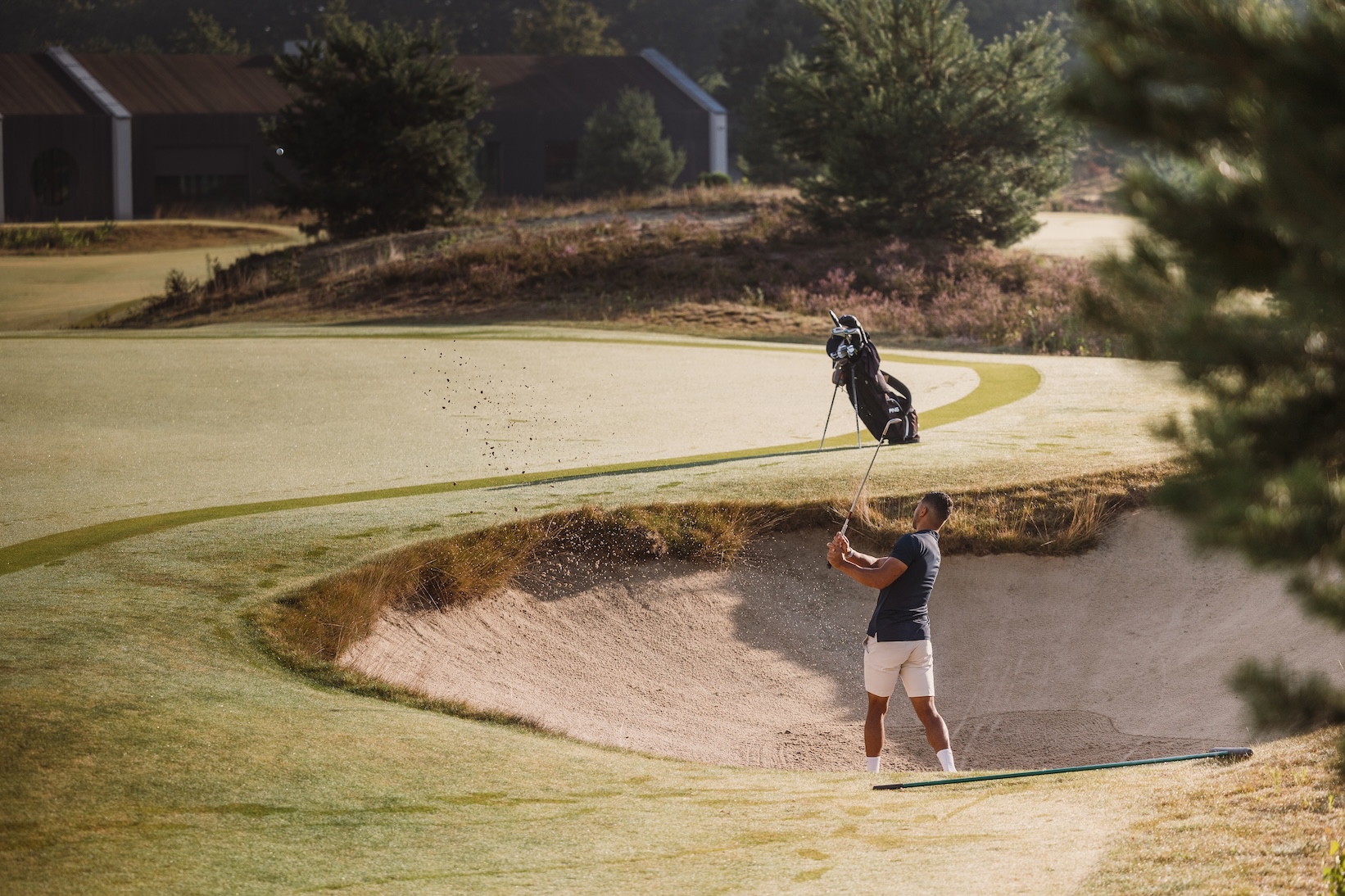
The set-up is also intentionally simple. We have just two heights of cut across the course: 5mm on the greens and 10mm everywhere else, including surrounds, fairways, walkways and tee tops. There is no rough in the traditional sense. Once you are off the fairway or outside the green surroundings, you are straight into nature.
That means less maintenance, but it also creates a very distinctive visual and playing character. The bunkers are rugged, and overall, we aim for firm, fast surfaces that sit naturally within the landscape. That is largely what defines Bernardus as a golf course.

Bernardus will host the 2026 Solheim Cup, one of the biggest events in women’s golf. When did preparation for the tournament begin, and how does it differ from preparing for a regular championship?
Once we had staged our last KLM Open in 2023, preparations for the Solheim Cup began straight away.
So, the focus has been less on changing the course itself and more on the logistics of hosting an event of this scale. Bernardus is still a relatively new course and it was built to a very high standard from the outset, so there has been no need for major alterations to the layout.
A significant change is that the course will start from the third tee during the Solheim Cup, which shifts the flow of the event and allows the surrounding agricultural land to be used for hospitality, fan areas, and entry and exit points. That meant undertaking a substantial amount of environmental and logistical work around the third tee and along the spectator routes.

Rather than simply clearing those areas, we took a more considered approach by transplanting trees and relocating heather and other vegetation to parts of the property where it could continue to develop. In total, we have planted more than 1,280 semi-mature trees across the site, respecting the area.
Alongside that, we have gone through the course hole-by-hole to identify areas that needed refinement, whether that meant improving drainage, addressing dry spots or making sure the playing surfaces were as consistent and uniform as possible.

When setting up the course for the Solheim Cup, how do you balance providing a true test for the world’s best players with respecting the original design of the course?
The feedback we have had has been very encouraging. Both captains have visited with their vice-captains, and they have played the course and responded very positively to it. They like the test it presents and the way it plays!
For us, the key point is that we strive for tournament conditions every day. Our focus is always on firmness and the trueness of the surfaces, so in many respects preparing for the Solheim Cup is an extension of the standards we already aim to deliver.
One of our course’s real strengths is its consistency. The way it was constructed means it performs very uniformly from hole to hole, and that allows us to stay true to the original design while still presenting a serious championship test with excellent conditions.
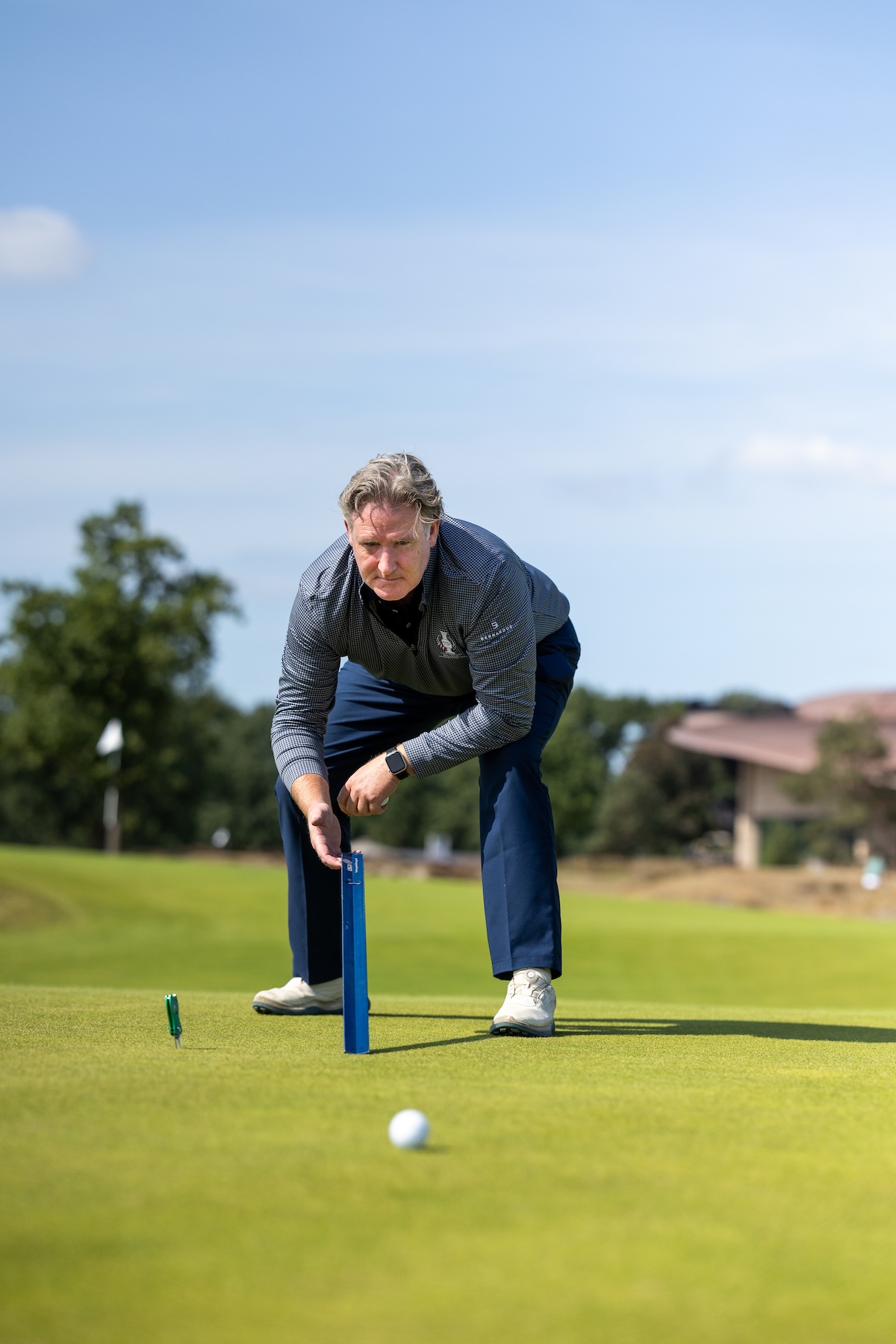
As preparations continue towards 2026, how do you ensure Bernardus maintains world-class playing conditions for members and visiting golfers daily?
That is one of our ongoing challenges and one that excites me a lot! Much of the project work has drawn to a close, and by mid-April the focus shifted fully towards the season.
The reality is that we are only able to maintain standards because we have a very strong team, with 19 people in the department working across seven days, with a reduced crew at weekends, and that gives us the structure needed to keep everything moving.

A lot of our work is done very early in the morning so that it has as little impact on play as possible. We also protect certain tee times for larger maintenance tasks. For example, on Tuesday mornings the course does not open until 10.00am, which gives us a valuable window to carry out the heavier work.
The priority is always to work around the golf and to make sure members and guests continue to enjoy the quality of experience Bernardus is known for. We will also have a three-week closure before the tournament, which will allow us to carry out the final detailing and fine-tuning.

Sustainability is a growing focus across elite golf venues. What agronomic practices or long-term planning are in place to support both the Solheim Cup and the future health of the course?
Sustainability is built into almost every part of the operation here. One major area has been irrigation.
We upgraded the system from Rain Bird Stratus to CirrusPro, which gives us far greater precision, sprinkler head by sprinkler head, and allows us to use water much more efficiently. Beyond that, we are also planning to build an on-site reservoir with capacity for 50,000 cubic metres of water, which is roughly our annual requirement. The long-term ambition is to harvest winter rainwater, store it and move towards far greater self-sufficiency rather than relying on groundwater abstraction.
Grass selection is another important part of that strategy. Fescue was chosen from the outset because of its lower water demand, disease resistance and reduced nutrient requirement, and continuing to encourage and strengthen those fescue surfaces remains a core part of our programme. We are also involved in a pilot project using UV-C robots that work overnight to help manage bacteria and fungi, while also carrying out dew removal.
That is complemented by extensive use of data, including moisture and oxygen sensors, to guide irrigation and broader agronomic decision-making.
There is also a strong sustainability focus in terms of infrastructure and wider environmental management. Around 70 to 80 percent of our fleet is now electric, the maintenance facility is carbon-neutral and fitted with 137 solar panels, and we continue to work on soil health, thatch reduction, habitat creation and partnerships with local environmental groups.
Some of these initiatives are large, others are small, but together they form a clear long-term approach.
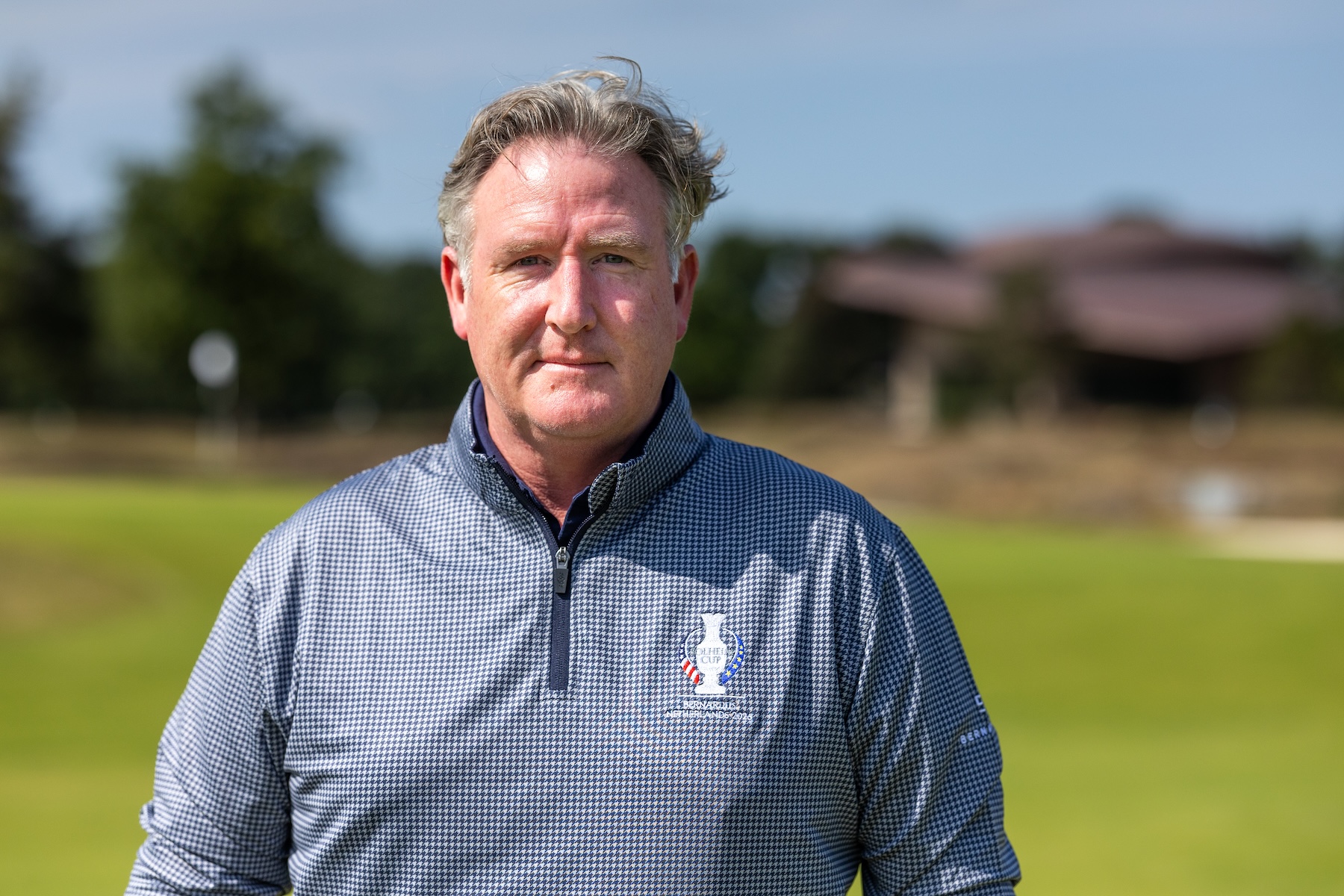
Once the Solheim Cup has been played, what do you see as the long-term legacy of hosting the event for Bernardus and its position on the international golf calendar?
I think the legacy will go well beyond the event itself. It will elevate the reputation of the club, showcase its agronomic standards and demonstrate its ability to deliver under the highest level of scrutiny.
From an industry perspective, it has the potential to position Bernardus as a benchmark for modern golf course conditioning and sustainable championship preparation. It’s also an opportunity to show what is possible in Europe through modern technology, data and a genuine commitment to sustainability.
We are not entirely pesticide-free, but we are very close at around 95 percent and that is something that genuinely matters. Over the course of my career, I have seen how much the industry has changed, from high-input resort conditioning to a far more considered and environmentally aware model.
Bernardus is a great example of that evolution. There is a real commitment from ownership to do things as sensitively as possible within nature, and I think that will be one of the most important long-term messages to come out of the 2026 Solheim Cup.
Regarding recruitment, training and development, have international events such as the KLM Open and now the Solheim Cup increased the level of interest from greenkeepers looking to join your team? And which nationalities are currently represented within the team now?
Yes, there has been a shift. As a relatively new golf club, Bernardus naturally attracted a particular profile during the construction and grow-in phase, individuals who were ambitious and motivated by the opportunity to help build something from the ground up and then carry that experience forward in their careers.
More broadly, recruitment across the industry continues to evolve, with a growing focus on positioning greenkeeping as a long-term and rewarding career. It’s a conversation being had not only in the Netherlands, but also across the UK, Ireland and beyond, and one that is gradually gaining traction.
Over the past year, we have been very pleased with how the team has developed, and events such as the Solheim Cup have certainly played a positive role, creating additional interest from those who want to be part of something at that level. Today, we have a truly international team, with Dutch, Portuguese, Romanian, Irish, English, South African, Italian and Danish colleagues, which brings a strong mix of perspectives and a very positive dynamic to the group.
John Deere named official machinery partner for 2026 Solheim Cup
John Deere will be the official golf course and turf maintenance machinery partner of the 2026 Solheim Cup taking place at Bernardus Golf this September, bringing its considerable experience in world-class course preparation, and adding to the event’s sustainability credentials.
The agreement formalises a partnership that brings together the global machinery manufacturer, Dutch dealer Kraakman, and the team at host venue Bernardus Golf.
Bernardus will use John Deere machines selected for cut quality, precision, and reliability, but there is a real focus on electrification and environmental sustainability, reflecting the vision and aspiration of the tournament’s organisers.
The fleet comprises 225 E-Cut walk-behind greens mowers, 2775 electric riding greens mowers, 6080A hybrid reel fairway mowers, 1235 electric bunker rakes, and GPS precision sprayers, plus electric utility vehicles.
To ensure the machines are used to their full potential, Dutch dealer Kraakman is working with John Deere technicians and trainers to deliver extensive training for the greenkeeping team.
Partnering with John Deere gives the Bernardus team the reliability and support they need to prepare the course to championship level. The electric and hybrid technologies, along with the data that Deere provides, help the team work more efficiently and sustainably.
“This is a chance to demonstrate how advanced machinery, data-driven management and high service standards can support top-level sport,” said Paul Trowman, John Deere’s Golf and Turf Business Manager. “Bernardus Golf is an elite course which is presented by a team that’s at the top of its game.
“With John Deere machinery at its core, its greenkeepers will have the tools and expertise to ensure a global audience sees the venue in the best possible condition.”