
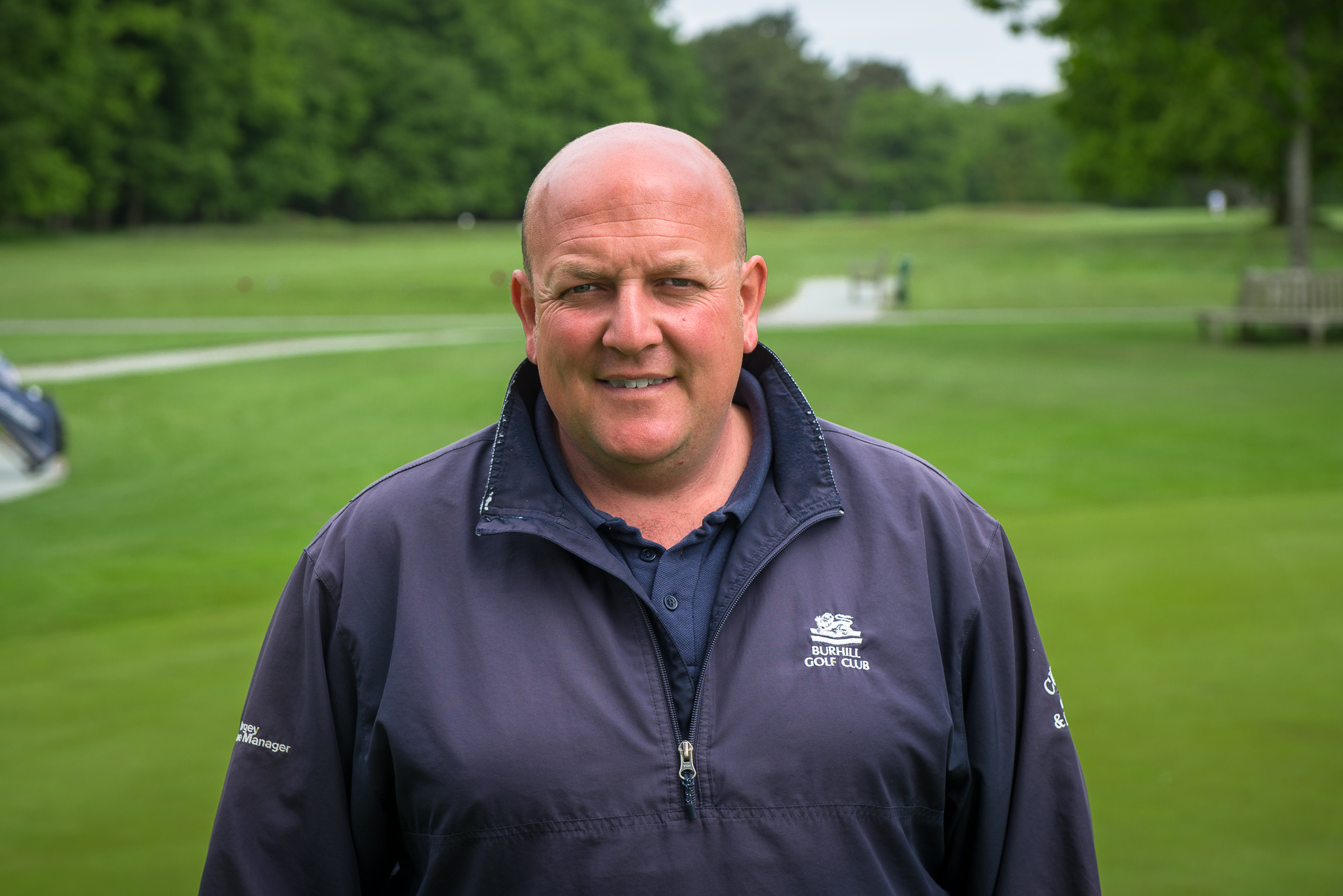
Rob Surgey, senior course manager at golf group Burhill Group Ltd (BGL), discusses the role, which sees him act as support for several other golf course managers, as well as work at Burhill Golf Club in Surrey, one of the UK’s most prestigious golf venues. Here he also talks about BGL’s seven-step process to achieving carbon net zero status.
Can you tell us about your career to date and what your current position entails?
I began my career in greenkeeping at the age of 15, starting with weekend work removing dew from the greens at my home club, Alfreton, in Derbyshire. After completing my A-levels, I attended Reaseheath College in Nantwich, where I pursued an HND in golf course management. This was a three-year sandwich course, and, during the middle year, I completed work experience at the Forest of Arden. While there, I had the opportunity to work at the British Masters tournament and found the tournament setup particularly enjoyable.
After finishing my HND, I returned to the Forest of Arden for a short period before moving to Wentworth. Over three years at Wentworth, I worked on three PGA Championships, three World Matchplay events and three senior tour events. With the goal of advancing to a deputy course manager position, I moved to Moor Park for six months before securing my first deputy course manager role at Wycombe Heights Golf Centre, part of the BGL Group, in May 2002.
After a couple of years, I was promoted to course manager when the previous course manager departed. I spent three years in that role at Wycombe Heights before moving to BGL’s flagship venue, Burhill Golf Club, in 2007, where I’ve been ever since. I spend most of my time at Burhill and only get out to our other sites if we have a big project being worked on. I have a very busy and prestigious 36-hole facility here at Burhill to look after, so this is my main focus. I would say I’m also here as support for the other course managers in the group, if needed.
BGL operates more than 20 golf courses at 10 golf clubs around the country – how do you oversee them all and are there some venues you spend more time at than others?
I don’t get involved in the day-to-day running or our other sites. I am here for support and to help out wherever I can. This can be anything from project work such as bunker renovations and design, to purchasing machinery. I do golf course audits across the group with support from one of our other experienced course managers, Ross Edmonds from Abbey Hill GC. We have a WhatsApp group which can be very good for sharing ideas or asking for help with any machinery issues. All our course managers help each other out when we can. I would like to think that course managers in the group feel they have a support network at BGL that they can all tap into if advice is needed.
BGL reported impressive golf participation figures in 2024, what do you feel have been the secrets to attracting golfers to your courses?
I don’t think this can be put down to one specific thing. I feel our courses are presented to a good standard and are excellent value for money. The driving ranges and practice facilities across the group are very good and I think this helps attract more golfers to our sites. I would also say that over the years we have broken down the barrier of golf being seen as a sport played by the elite.
BGL have worked hard on getting all walks of society playing golf at our welcoming, friendly and affordable venues. There is a pathway at all our sites for new people taking up the game to get into golf. They will generally start off on the driving range and maybe have lessons. Then they’ll head out on to our par three courses. The next step would be to get out playing on our main courses. These three steps allow golfers of all ages and abilities to enjoy the game.

What have been the biggest course management issues you’ve been facing of late and how are you overcoming them?
The biggest issues we have been dealing with as an industry is the lack of pesticides / fungicides and worm cast suppressants. The mild and wet weather we seem to get now through the winter periods has made disease pressure a real issue. The lack of fungicides is also a real issue. We have more demanding golfers who crave Augusta-like conditions all year round, yet we are losing important products that help keep our golf courses in top condition. So we have to find other methods and workarounds to deliver the best possible facilities.
Have there been any important projects the courses have embarked on recently?
At Burhill we are currently working through planning to add a second holding reservoir for our irrigation system. This would be filled using flood water from the river as part of the flood alleviation programme. Water will be taken out of the river when the flow reaches a certain level. This extra water will allow us to water the courses more during periods of heat during the summer months.
We have invested heavily across all our 10 sites over the past few years to install irrigation water holding lakes. We have tried to get all our sites off mains water and use bore holes, river abstraction and water harvesting from our car parks to aid filling up our reservoirs. We have also installed new irrigation systems at a number of our sites so that we are as efficient as possible with the water that we do use.
We know that sustainability is key to everything you guys do at BGL, can you explain the company’s seven-step process to achieving carbon net zero status?
We have identified several key pillars that, when combined, will drive each club and the entire 10-club BGL Group towards achieving carbon net zero status. These pillars include conserving resources, fostering nature, responsible procurement and taking climate action. We are demonstrating our commitment through initiatives to reduce carbon emissions such as purchasing renewable energy, new electric greens mowers and utility vehicles, enhancing habitats, ecology and carbon sequestration through planting wildflower areas, and arranging bird surveys in collaboration with a local ecologist and ornithologist.
Why sustainability, and why now?
There’s no better time than the present to make meaningful changes to how we work and what we do each day. Every one of us can contribute to the health of the planet, whether by carpooling, walking to work, planting more bee-friendly flowers or making more significant changes. My family recently switched to a fully electric car, and we had cavity wall insulation installed in our home within the last 12 months. I understand that some things cost money, and not everyone can make those changes, but every small action makes a difference. At BGL, we feel that we have a responsibility to look forward and make positive changes for the environment, and we’re proud of the work that we have done, and are doing, in the pursuit of carbon net zero.

What has BGL done so far to push towards greater sustainability?
A lot has happened and is happening! We have calculated our Scope 1 and 2 emissions and are now working with our suppliers to gather data for Scope 3. We’ve also mapped our courses and surrounding land areas to calculate our carbon sequestration.
The total of Scopes 1, 2 and 3, minus our sequestration will help determine how close we are to net zero and guide further positive actions.
In the meantime, BGL operates on green tariff electricity and gas contracts across the group. We’re investing in solar energy projects, including at Birchwood Park and other locations. We are actively removing gas from commercial kitchens and have made significant progress in sustainable irrigation. Currently, only one of our ten clubs, Abbey Hill in Milton Keynes, does not have a reservoir, but we’re working on that! All nine other BGL clubs use sustainable water sources for irrigation – not mains water!
Importantly, we are working with the water sector and environmental charities to assess the likely impacts of changing water availability that may result in reductions to our abstraction licenses in the future and seek alternative water sources. An example project is the restoration of the River Ver at Redbourn Golf Club, where we are working with Affinity Water, Herts and Middlesex Wildlife Trust, Environment Agency and club members.
The goal is to attenuate surface water flows to improve water quality, ecological condition, improve local flood resilience, reduce flooding on areas of the golf course, and potentially offer additional irrigation sources.
Sustainability and successful golf operations are not mutually exclusive, and we are keen to show the benefits the golf sector can offer the natural environment, local communities and golfers.

How did it feel to be the first multi-course operator to achieve GEO accreditation across all your sites?
It was a great feeling, and we were very pleased with the outcome. When we first started the accreditation process, it seemed quite daunting, but we were pleasantly surprised by how much we were already doing. We had to gather data, but this was relatively easy since we keep thorough records of all aspects of the business, not just the golf courses.