
The golf course superintendent at the host of the DP World Tour’s Dubai Invitational – Dubai Creek Golf & Yacht Club – Harry Wells, talks about the irrigation upgrade at the venue, which is delivering tournament-ready results.
Twelve months ago, Dubai Creek Golf and Yacht Club was in the middle of a major behind-the-scenes transformation. The club announced the installation of a brand-new, state-of-the-art irrigation system – a major infrastructure upgrade designed to take course conditioning to a new level, particularly with the DP World Tour’s Dubai Invitational returning to the calendar.

Now, with this year’s Dubai Invitational beginning on Thursday, the impact of that investment isn’t just visible, it’s measurable. Faster turf recovery, more consistent playing surfaces, improved efficiency and reduced waste across the course are all being seen on the ground. And for Golf Course Superintendent, Harry Wells, the results have arrived at exactly the right time.
“Tournament golf is… that’s what I do it for, you know. I love being around the buzz of the tournament, seeing the best players in the world come and play,” Wells says, as Dubai Creek prepares once again for one of the most high-profile weeks in its calendar.
A course with its own identity – and its own pressure points
Dubai Creek is a venue with growing global recognition, particularly in tournament settings. While it’s a parkland-style test in a desert environment, Wells says it has a distinct character, both visually and strategically, that becomes even more pronounced under championship setup.
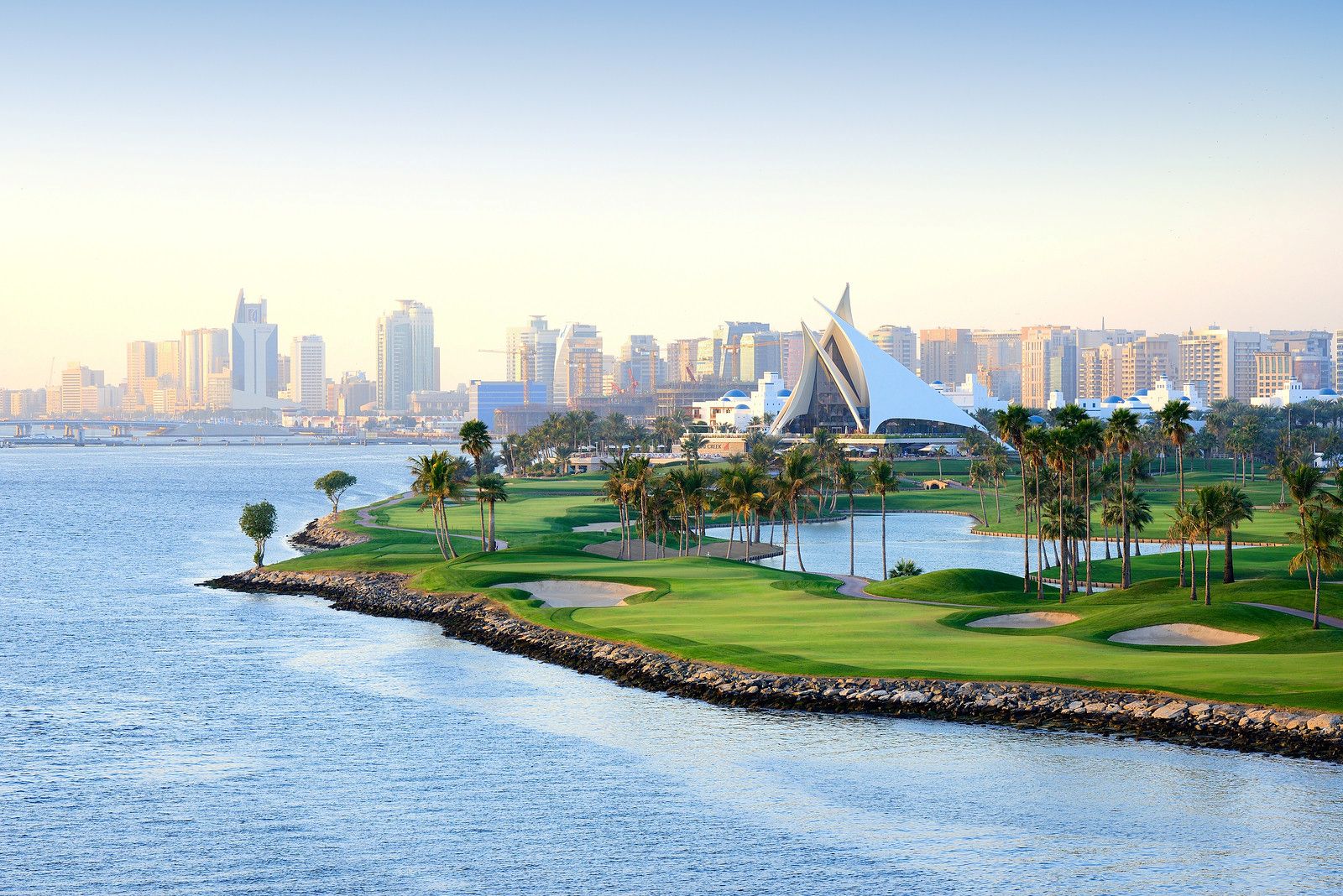
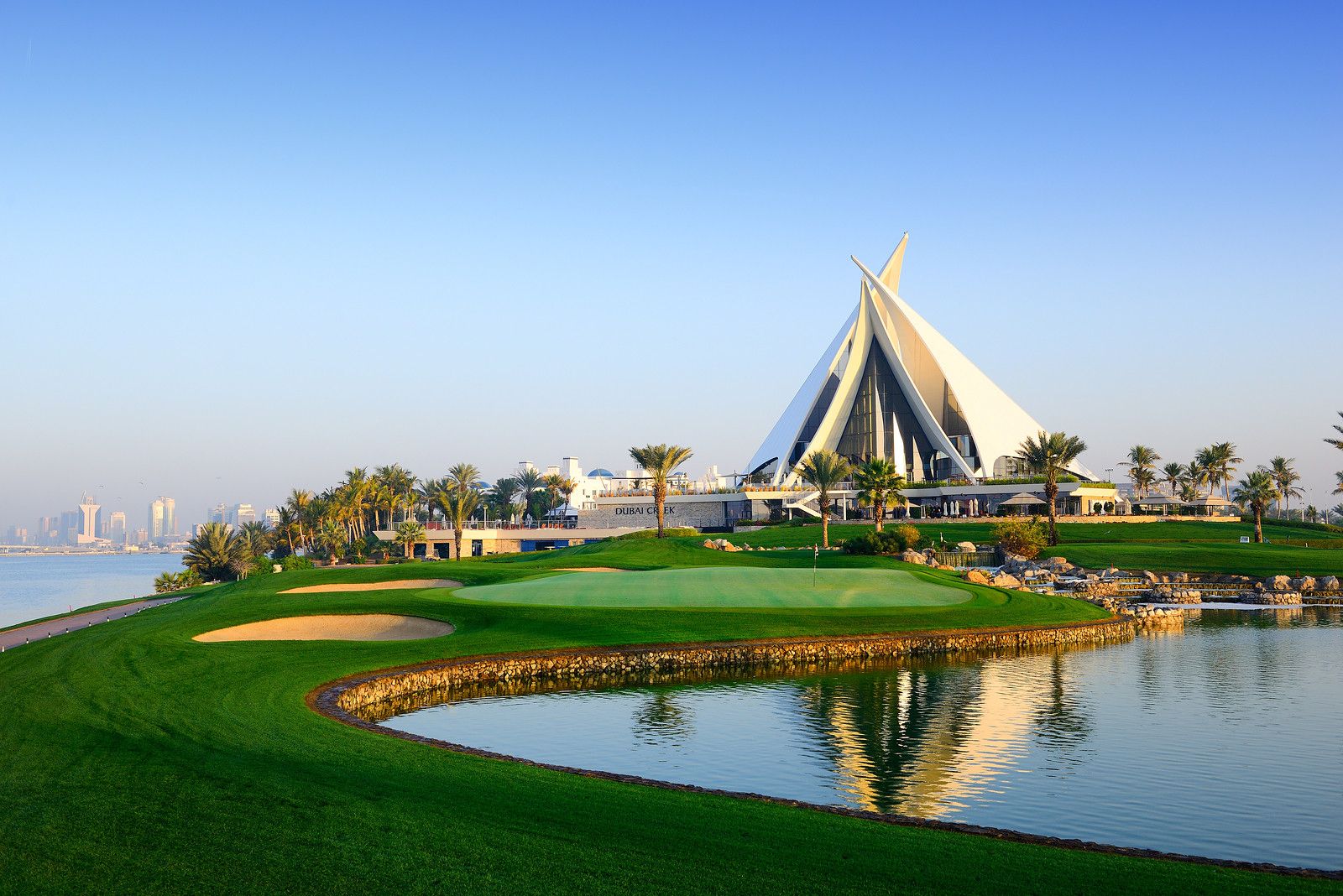
Short par threes are framed by skyline views, there is a signature floating tee box, and a closing stretch alongside the edge of Dubai Creek where the tournament can turn quickly. “The last three holes… I think there are a lot of golf matches won on those last holes,” says Wells. “There is lots of water involved on 17 and 18. If the wind gets up, it makes it very, very challenging.”
For a course measuring just over 7,000 yards at full length, the key to a strong tournament test isn’t brute length, its control, firmness, and consequence. “For us, it’s key to get the rough thick, and getting the greens as firm as we can. Pace is one thing, but really, we’re looking for firmness here,” he says, pointing to the importance of precision positioning over simply overpowering the layout.”
Why irrigation was the missing piece
While Dubai Creek has undergone changes in recent years, including a redesign delivered in 2023, Wells is clear that the irrigation project was the infrastructure leap required to deliver consistent championship conditions.
“The old irrigation system was in the ground from when the course was originally built… back in the late 90’s. One, it was very old technology. And two, it was quite a small system for what’s expected now,” he explains.
In Dubai’s climate, the window to irrigate effectively is critical. With high demand in peak seasons, and even in summer, there simply isn’t enough time overnight to move sufficient water across the property.
“It was impossible for us to water the golf course from dark until daylight… to keep the golf course to the standard that we want to produce, it was physically impossible,” Wells says.
That limitation wasn’t only affecting turf health, it was affecting play and daily operations too.
“You’d start watering as it’s getting dark, and it’d still be running until 09:00 in the morning. It’s hot in Dubai, so often we have golf starting early, so there would be golf on the course and sprinklers would still be popping up – that was disruptive,” he adds.
Doubling sprinkler heads and cutting watering time in half
The new system has been full rebuild. From pipework and mains to sprinkler head replacement and control architecture. The difference is scale as much as it is technology. “We’ve laid all new main lines and all new laterals, with pipes that are a lot bigger. So, we can carry huge amounts of water around the golf course now,” Wells says.
Crucially, sprinkler coverage has been transformed to allow precision and uniformity in a windy desert setting. “We went from about 1,500 sprinklers to just under 3,000, so we’ve almost doubled the amount of heads we have out there. Now, I can water the whole golf course in half the time it would have taken before, and we have a lot more accuracy over where the water is going,” he explains.
That accuracy has solved one of the classic frustrations of older systems: overwatering one area to compensate for another. “Our moisture levels around the course are a lot more uniform than they were before. Previously, we’d have some areas that were very wet, and an area controlled by the same sprinkler that was really dry,” he says.
From satellites to smartphone control
The operational leap has also been significant. Dubai Creek has moved away from a satellite setup, with all the reliability problems that come along with ageing hardware, and into a system built for modern course management.
“We’re now using a two-wire ICM system. Every sprinkler has its own computer which communicates to the control system in our office,” Wells explains. It also means faster troubleshooting, smarter adjustments, and more efficient daily decision-making. “When I drive around, if I see a dry area, I can straight away log onto the system… it saves you a lot of time as you can fix things much more quickly.”
And the most important benefit, especially in desert environments, is reduced waste. “That’s how we’re saving water, because we’re only putting out more water in areas that actually need it,” says wells. “To be able to reduce our water consumption is only a good thing. We actually now have the water going where we want it to go.”
Tournament week: presentation and firmness
With the Dubai Invitational returning this week, Wells says the focus has been on refinement. Using the improved infrastructure to enhance firmness, strategy, and performance under pressure.
“We learned a lot when we last hosted the event in 2024. So we’ve been tweaking how to make the operation even better, and what we can do to the golf course to get better performance out of it,” he says.

As for the scoring, he’s realistic, but quietly ambitious. “If we can keep it under 20-under, I’ll be happy again,” Wells laughed. “A bit of wind over the weekend would be great.”
One year on from a transformative investment, the outcomes are clear, and with the eyes of the golfing world arriving at Dubai Creek this week, the timing couldn’t be better.