We speak to five senior members of staff at Blairgowrie Golf Club in Perthshire, including the head greenkeepers of its three golf courses, and the venue’s managing secretary and chief mechanic, to find out how the courses are maintained and what machinery is used, how the venue coped with the dry spring and what sustainability measures are being deployed.
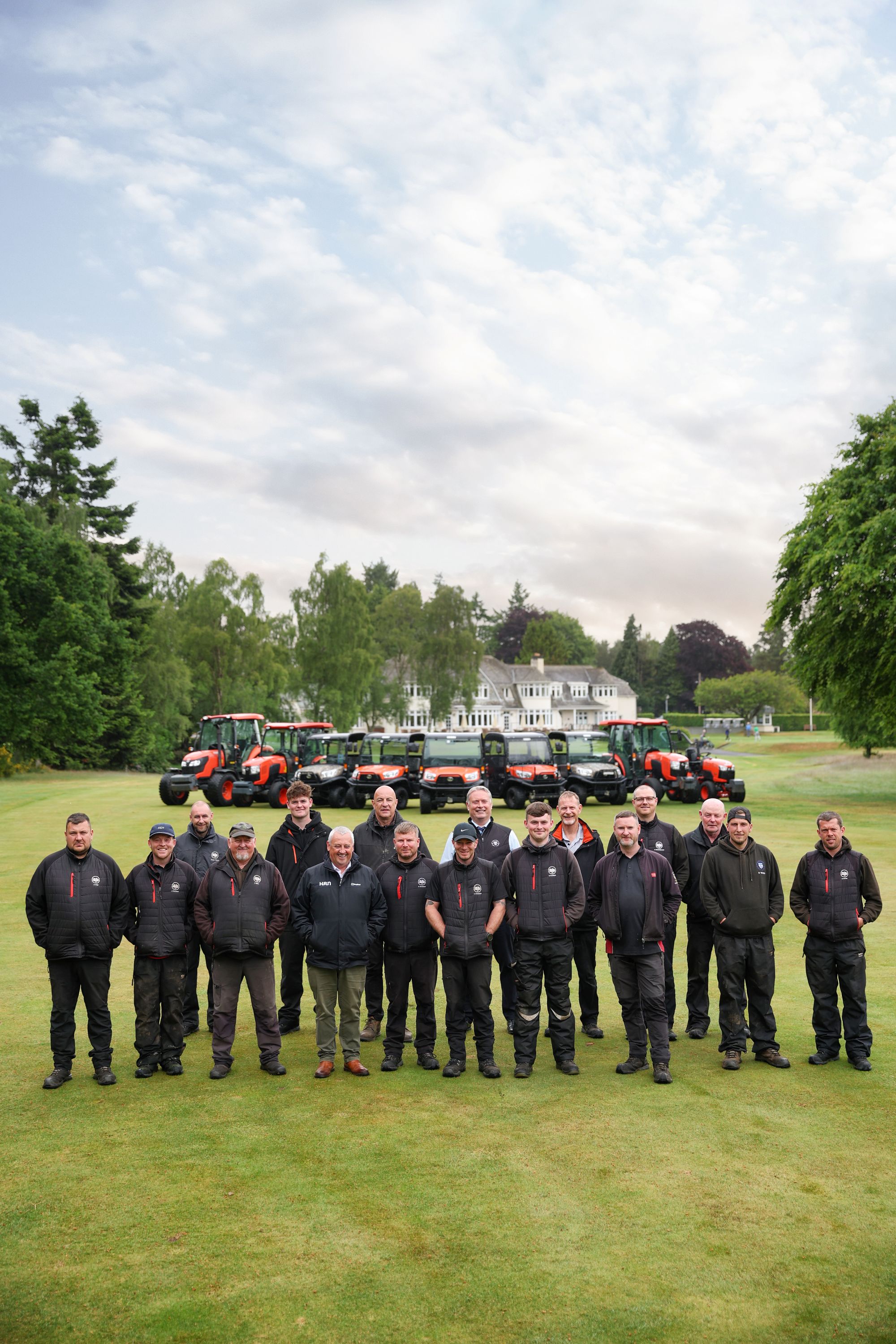
Thank you for having us. Firstly, run us through the history of Blairgowrie Golf Club and the facilities you offer?
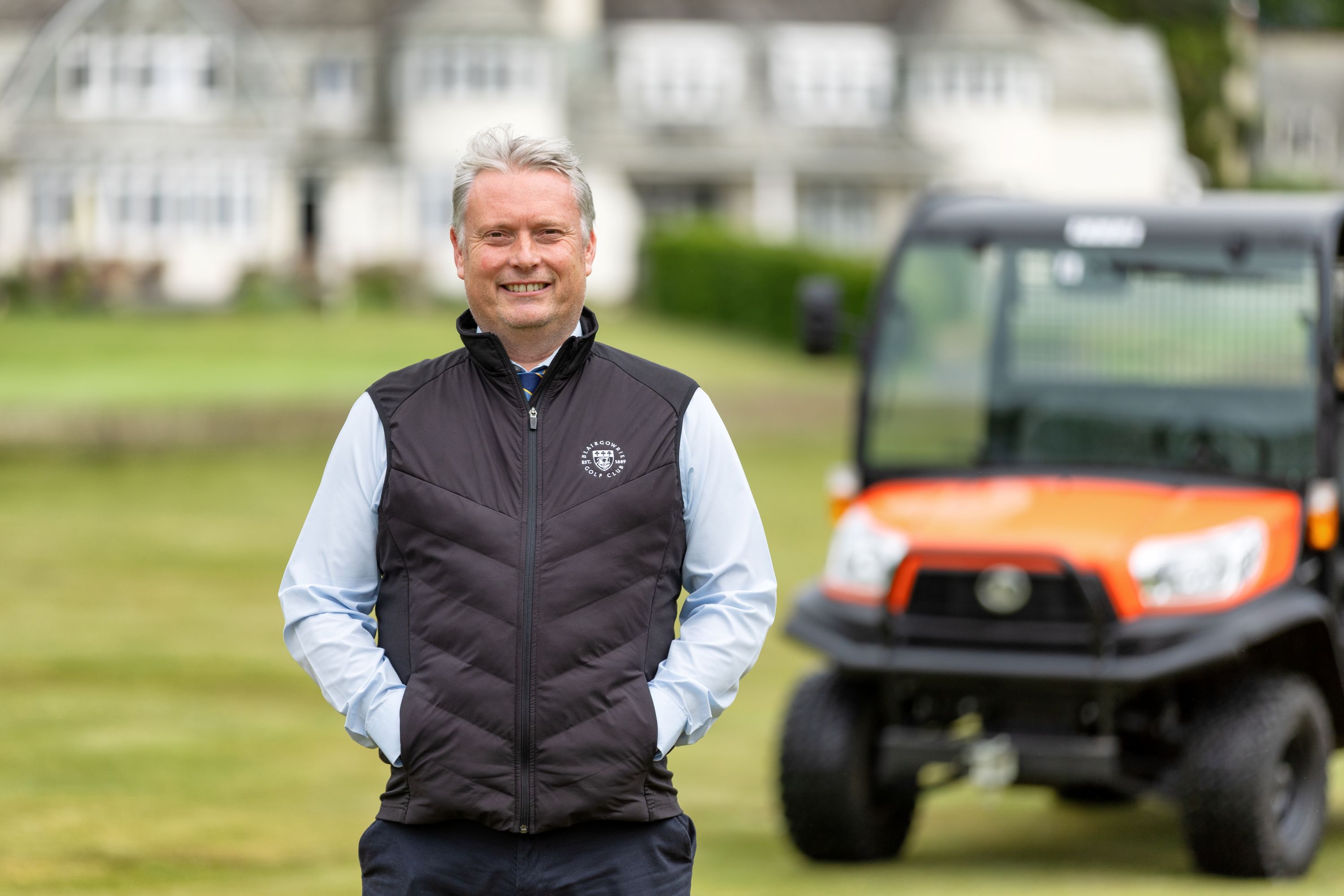
Stuart M Wilson (Managing Secretary): Blairgowrie Golf Club was founded in 1889 with an initial layout of nine holes that we now play as the ‘Wee Course’, and when talked about is always followed by the statement ‘but it’s not that wee!’
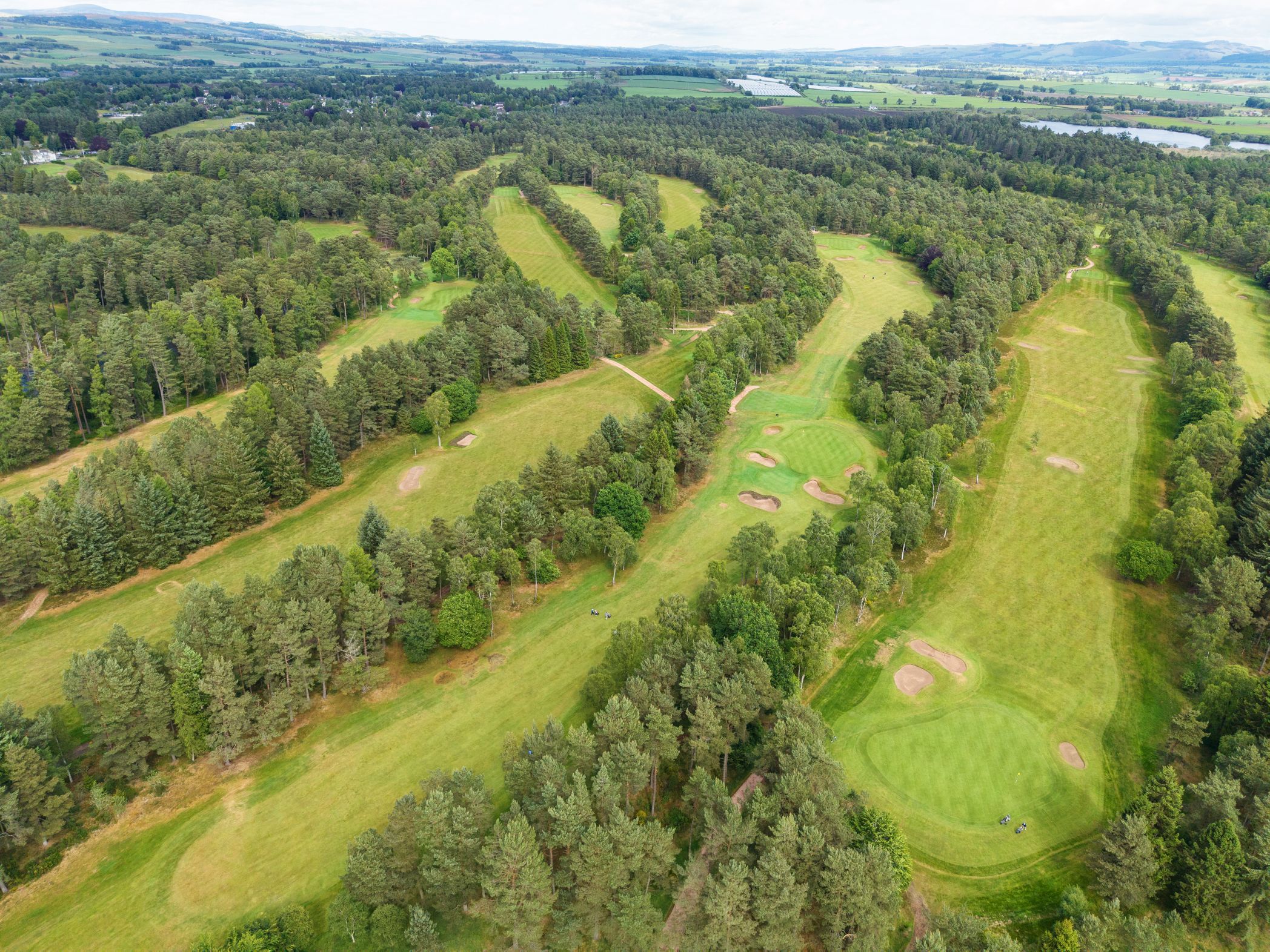
This course was extended in 1927 to 18 holes by Dr Alister Mackenzie, of Augusta and Cyprus Point fame, and was then supplemented further by additional holes designed by five-time Open champion James Braid in 1930. It is these Mackenzie and Braid holes that predominantly make up the 18-hole Rosemount Course as we know it today.
Lansdowne came along in the late 1970s and was designed by Peter Alliss and Dave Thomas – thus completing our 45 holes at Blairgowrie. All of our holes are all set in heather-lined avenues of scots pine and silver birch.
We also have a beautiful clubhouse dating back to the 1930s, the facilities of which round off a golfing experience to remember. This is further supplemented by excellent practice facilities and a Trackman driving range.
Over the years, Blairgowrie Golf Club has played host to many national championships for Scottish Golf, European Golf Association, DP World Tour and The R&A. Rosemount was the venue for Greg Norman’s maiden win on the European Tour in 1977 with victory in the Martini International.
What are the major challenges of maintaining a 45-hole complex?
Stuart M Wilson: We have a very active membership that totals around 1,800 members. The tee sheets are therefore busy on a daily basis across all three of our courses.
Brian Scott (Head Greenkeeper, Rosemount): In the past there has been an element of equipment sharing for particular jobs. However we are now in a position whereby we can, for instance, be cutting the greens and fairways simultaneously on all three courses thus limiting the impact on the early morning golfers.
Craig Stewart (Head Greenkeeper, Lansdowne): Also, trying to keep consistency in playing performance over the three different courses can be a challenge as the greens are of different construction. However, the team manages this very well and the courses are presented to a very high standard throughout the season.
Consistently featuring in Scotland’s Top 100 rankings, how do you balance golfer expectations with the requirements of the course?
Craig Stewart: Each course is allocated a maintenance day on a monthly basis to allow essential works such as aeration, verti-cutting, topdressing and overseeding to take place with minimal disruption to the operations. This is due to us being in a fortunate position of having three courses, two of which can remain open while the works take place.
You pride yourselves on working with the natural habitat. What work has been undertaken to support native flora and fauna?
Stuart M Wilson: The courses at Blairgowrie Golf Club also provide an amazing habitat for wildlife, which also makes up a great part of the playing experience at the club.
Brian Scott: In recent times, we have cut back on managed areas and left these to nature, in particular extra grassland and areas within the woodland. We’re also working all the time to cut back on fungicides and herbicides used to maintain the courses.
Ross Stewart (Head Greenkeeper, Wee Course): We are actively encouraging our heathland environment with the planting of heather and designated heather regeneration zones.
Throughout our whole site we also have installed bird boxes, owl boxes, bat boxes and feeders.
We are lucky enough to support a thriving population of the endangered species of red squirrels and roe deer, otters and a whole host of bird life.
Most recently we have had beavers take up residence at our loch.
Stuart M Wilson: We have also engaged with Sophie at Oleo Ecology to survey the site and produce an ecology plan to help enhance and improve the mosaic of habitats that make up the site. This is a project that we are very much looking forward to.

How do you, as a team, manage hosting national events on two courses at one site?
Ross Stewart: Here at Blairgowrie Golf Club we are fortunate enough to be selected as host venue for various national events, and through experience of this we have now got the management down to a fine art! The teams are well managed with plenty of pre-planning going in to deliver on the course set up requirements that can vary from tournament to tournament. So far, we have always managed to deliver courses of the highest standard.

The start to 2025 has been unusually warm and dry. Has this hampered any plans and how are you, generally, coping with changing weather patterns?
Craig Stewart: Thankfully, as a heathland site we can cope with dry conditions very well. We have recently upgraded our irrigation system to include the addition of another borehole to keep on top of water demands. All of our installations and repairs are taken care of, in house, by our skilled team.
Ross Stewart: The main issue we’ve had to deal with is areas of newly laid turf that are not in areas covered by our irrigation. This has resulted in extra hours of hand watering alongside applications of wetting agent to keep the turf healthy.

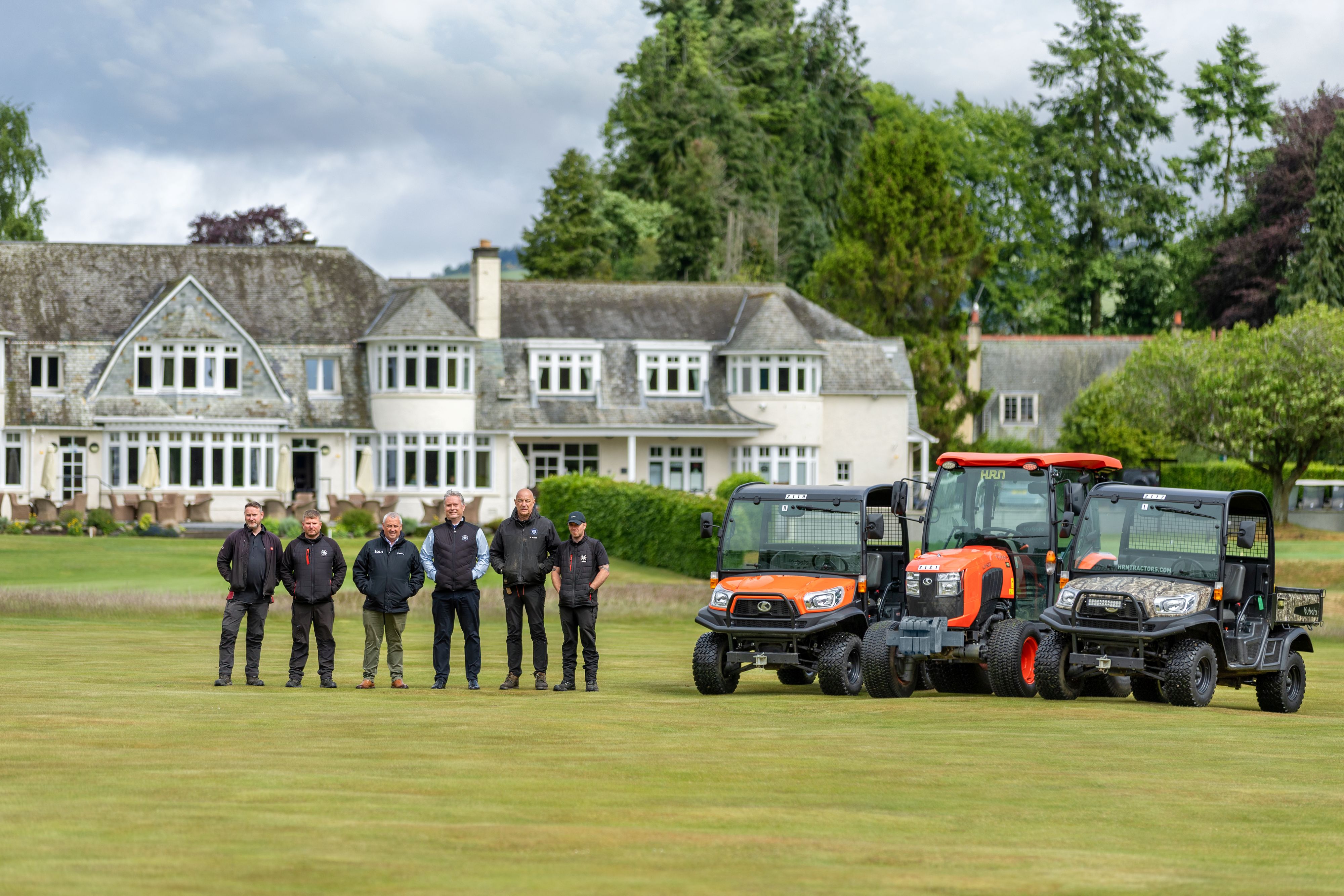
Supporting the greenkeeping team is a sizeable fleet of tractors and RTV’s from Kubota. How pivotal are these to the maintenance operation?
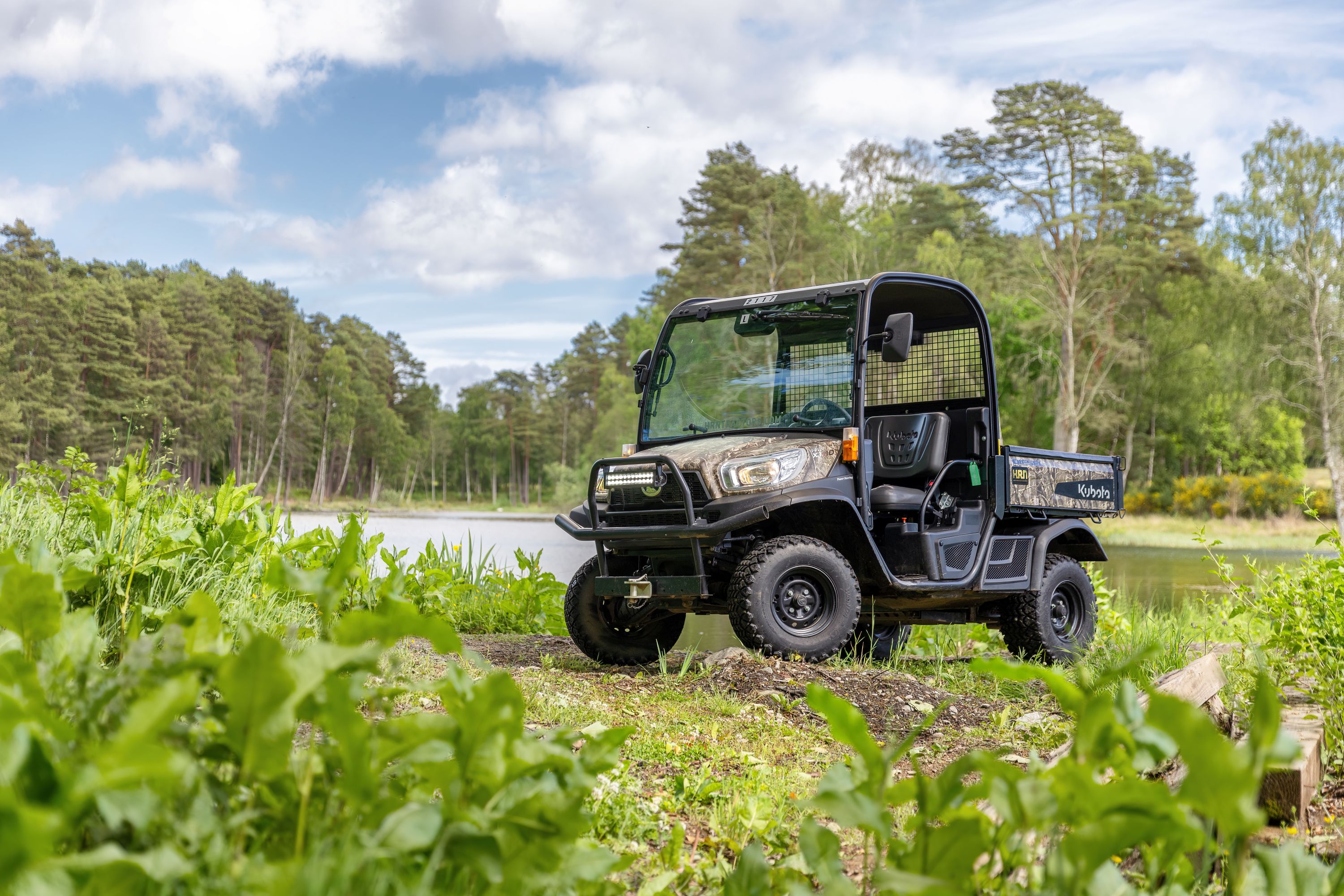
Peter Robertson (Chief Mechanic): The Kubota equipment is extremely important to the operations at Blairgowrie GC. Our six Kubota tractors are used daily for all areas of maintenance involving tractor mounted equipment such as blowers, verti-drains, seeders, VGR topchanger and mowers to name but a few!
The fleet of five RTVs are robust vehicles that are perfectly suited to the terrain of our courses. These can take a high payload with hydraulic tip that assists the team with many jobs. Not to mention being able to cover our sizeable site in good time!
What is it about the Kubota equipment that keeps the club loyal to the brand? Are there any features or functions of the machines you find particularly useful?
Peter Robertson: We have found the Kubota fleet incredibly easy to maintain, with minimal parts that can – or do – go wrong. Also, there is great continuity from generation to generation meaning that those with previous experience of the Kubota machines can transfer from vehicle to vehicle with ease.
Servicing is vital in the successful delivery of all greenkeeping operations. Do you attend to this in-house?
Craig Stewart: Yes, we have a very skilled and experienced mechanic on site that looks after all of our servicing needs in house. Thanks to the build of the Kubota fleet these are easily maintained, and if they do go out of service with an issue they are easily repaired with very little downtime.
How important is the back up support from dealers when it comes to optimising the performance of a machinery fleet?
Brian Scott: Once again, we are in a fortunate position here! Our Kubota dealer, HRN Tractors, is located in Balbeggie which is only a short distance from the club. We have an excellent working relationship with HRN. They have a very knowledgeable after sales team that can assist at short notice when required.
Are you deploying any sustainable practices and is this something you’re focusing on for the future?
Brian Scott: Sustainability is a hot topic at the club just now. We are investigating options of fleet replacement with electric machines, from cutting equipment to electric scooters for moving around the site. We have also looked at more simple changes like bulk buying materials to cut on delivery frequency / costs.
Ross Stewart: We also have used recycled materials for the replacement of our signage across the site that will not only require less maintenance but also have a longer life span.
Given the dry spell at the start of this year, we are also looking at options to ensure water security in the future.
What’s next for Blairgowrie Golf Club? What can we expect to see from the courses over the next few years?
Stuart M Wilson: This summer we are hosting the Scottish Boys Amateur Championship on our Lansdowne course, which we are particularly excited about, and we look forward to having the opportunity to host more national events in the future.
Through our engagement with The R&A as part of the Future Venues initiative we are looking at being more data driven in our approach to the agronomy through the use of the instruments such as the Pogo and investing in the USGA Smart Ball to provide metrics on the playing surfaces to inform our future decision making.