
Will Curran, the deputy course manager at Royal Ashdown Forest Golf Club in East Sussex, talks to irrigation expert John Kidson about how the club’s two courses deal with the sort of dry weather the region experienced for much of 2025.
Will, great to have you here. Tell us about your role and what drew you to golf course management, especially water usage.
Thanks John, good to chat.
I’m the deputy course manager at Royal Ashdown Forest Golf Club, which consists of two 18-hole courses, the Old and the West. I help support my course manager Dominic Lewis in the day-to-day running of both of the courses.
My ambition was always to become a manager within the greenkeeping industry and becoming a deputy course manager has allowed me to gain valuable knowledge and experience.
Part of my role and responsibility requires me to be involved with water management through maintaining and managing our irrigation system during the main playing season.

Water management: How has water management changed over the years? What early challenges did you face, and how has climate change impacted your approach?
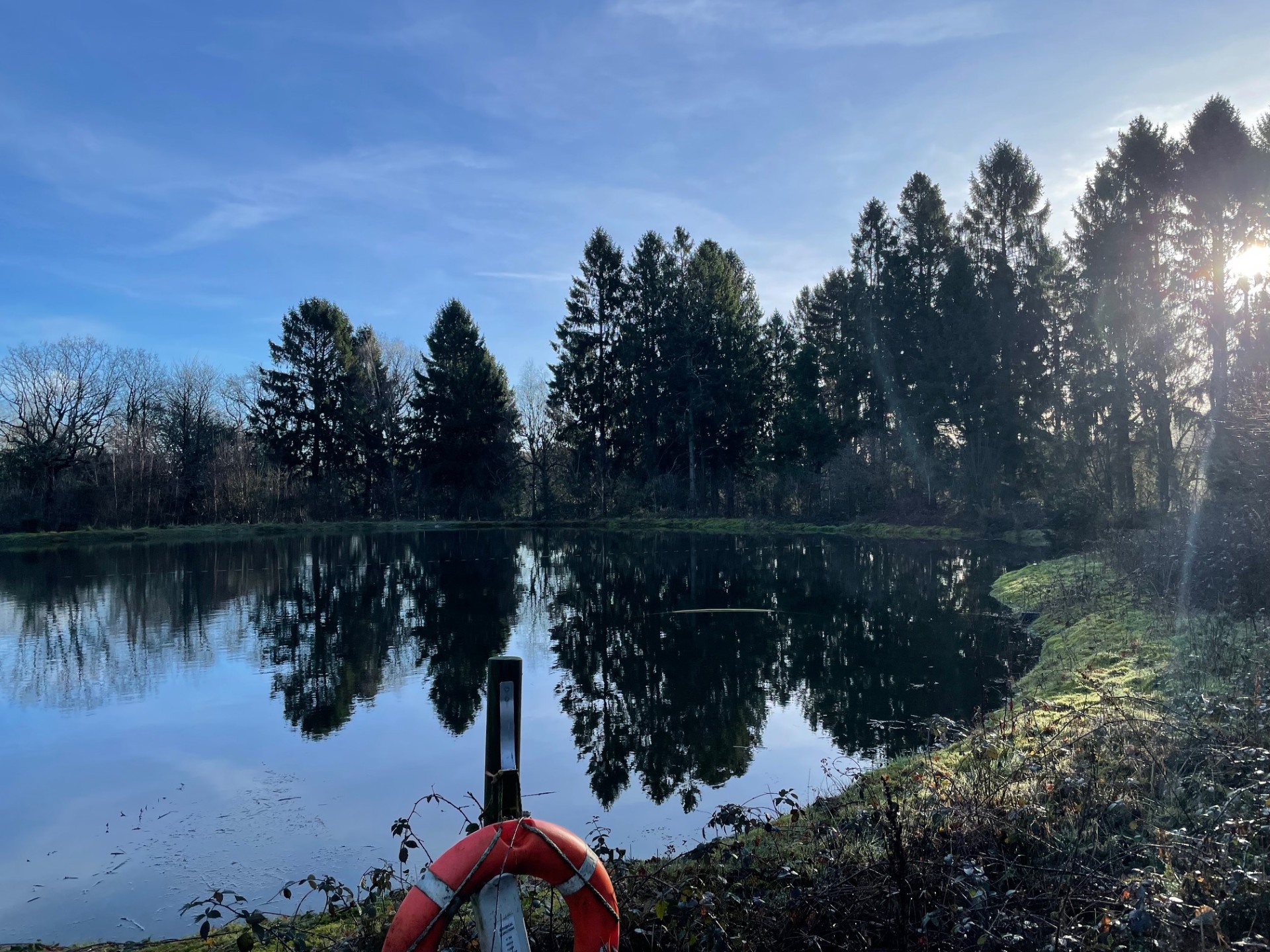
In terms of water management, the club historically used mains water in order to irrigate greens and tees. Back in the late 2000s, the club purchased land in order to build a reservoir which has a storage capacity of circa 5,500m³ of water, with the sole purpose of this being the main irrigation supply to both courses.
Having this reservoir has allowed for us to be ecologically healthier, long-term sustainable whilst also dealing with the challenges of high drought periods.
Current practices: What key water-saving techniques and irrigation systems do you use to keep the course in top shape efficiently?
We are on a block system for greens and tees and every year when starting up the system we spend several days auditing areas. This allows us to make sure we are delivering water in the right areas and to rectify any issues we may have such as optimising the arch coverage, levelling irrigation heads and replacing any worn or defective parts.
We also use a Pogo to collect data for both courses and by using the moisture readings on our greens, this can help us to determine which areas may be suffering from drought stress or even over watering. This then enables us to determine the best course of action such as hand watering dry areas or even lowering the watering time during irrigation cycles.
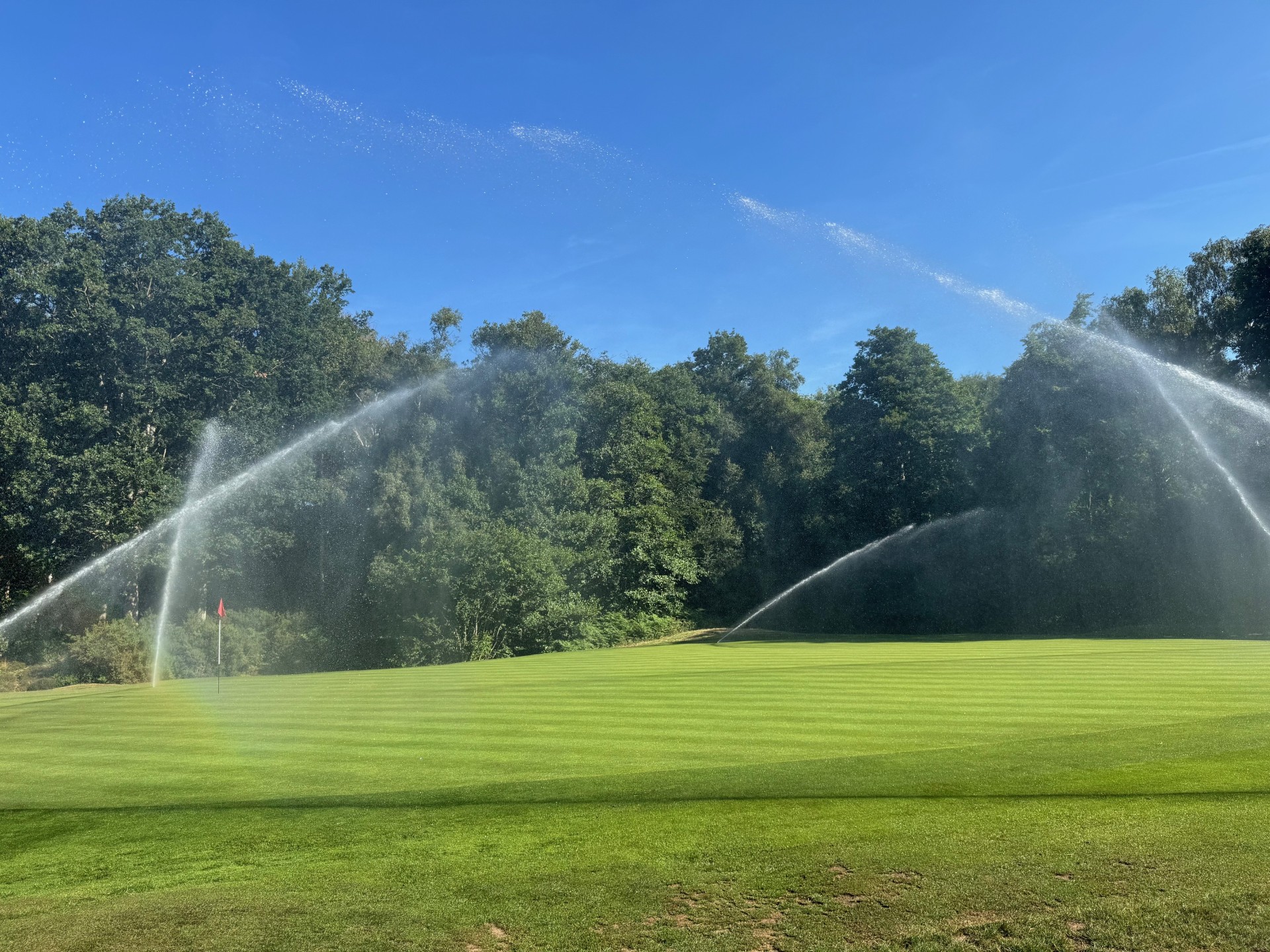
Sustainability and innovation: How do you incorporate sustainable water practices? Any innovations that have made a big impact? What role should golf courses play in water conservation?
The club invested in a water harvester which collects rainwater run-off from the clubhouse guttering, car parks and some of the open ditches. We also recently had a borehole installed which allows us to extract 20 cubic metres a day.
Both the borehole water and the run-off water are collected into the water harvester which then pumps directly up to our reservoir.
By having these innovations, it means we are no longer totally reliant on mains water to irrigate areas of turf, which is going to be fundamental in how we deal with climate change and water usage.
Weather adaptation: How do you handle extreme weather like droughts or heavy rain while maintaining course quality?
When dealing with prolonged periods of drought, all of the water harvesting capabilities we have help us to manage until the next rainfall period. We also use wetting agents on fairways, greens and tees as well as hand watering guns with surfactants to help with localised dry spot. Also, by cutting areas less and raising the height of cut on mowers, which all help to alleviate stressing fine turf areas.
Cultural practices of aeration, scarification and top-dressing during renovations and maintenance windows help with the plant health of our fine fescues and bent grasses during drought periods. We overseed regularly during these periods too, which helps with bounce back after droughts.
For heavy rainfall, we have drainage on greens and fairways, which all help to avoid water logging or flooding. Our water harvester has a specially designed silt collection chamber which can be blocked off to avoid torrential rainfall, which may bring debris which would harm the water harvester pump if it got in. There is also an overflow pipe which allows run-off to filter back into the water course that runs around the courses.
Advice for greenkeepers: What’s your top advice for improving water management, especially for courses with limited budgets?
My advice would be to make sure your irrigation system basics are working correctly such as correct arching, rotating correctly, solenoid or decoder troubleshooting. Every course is different, including their budget, so I think it’s essential to understand what your own set up is, what can you realistically do to improve and sustain water management. Network with others, find out what they have or have done to improve their situation.
Looking ahead: What’s next for water management in golf? Any trends or regulations greenkeepers should watch?
Golf courses should be looking towards the not-too-distant future as detailed within The R&A’s golf course 2030 initiative. This very importantly addresses the need for golf courses to look at sustainable water management practices and what can be done at their sites.
Final thoughts: What’s been the most rewarding part of working with water management? Any last insights to share?
Having made this my career one of the most rewarding things I get to be part of is nature and its sustainability. This includes water management and I’m fortunate to work for a golf club that shares my values.
Contact John Kidson @JKIrrigation on all socials