
As the driving force behind agronomy across all of Viya’s clubs in Abu Dhabi, how do you balance the need for each course to retain its own identity while delivering consistently high standards across all three?
Firstly, I’m very fortunate to have three excellent assistant superintendents across the courses. I can’t be everywhere every day, so they are the real driving force on a day-to-day basis, and they do an exceptional job. They’re highly motivated, take great pride in their courses, and they fully buy into what we’re trying to achieve. Everything we do is very much a collaborative effort and it’s certainly not a one-man job.
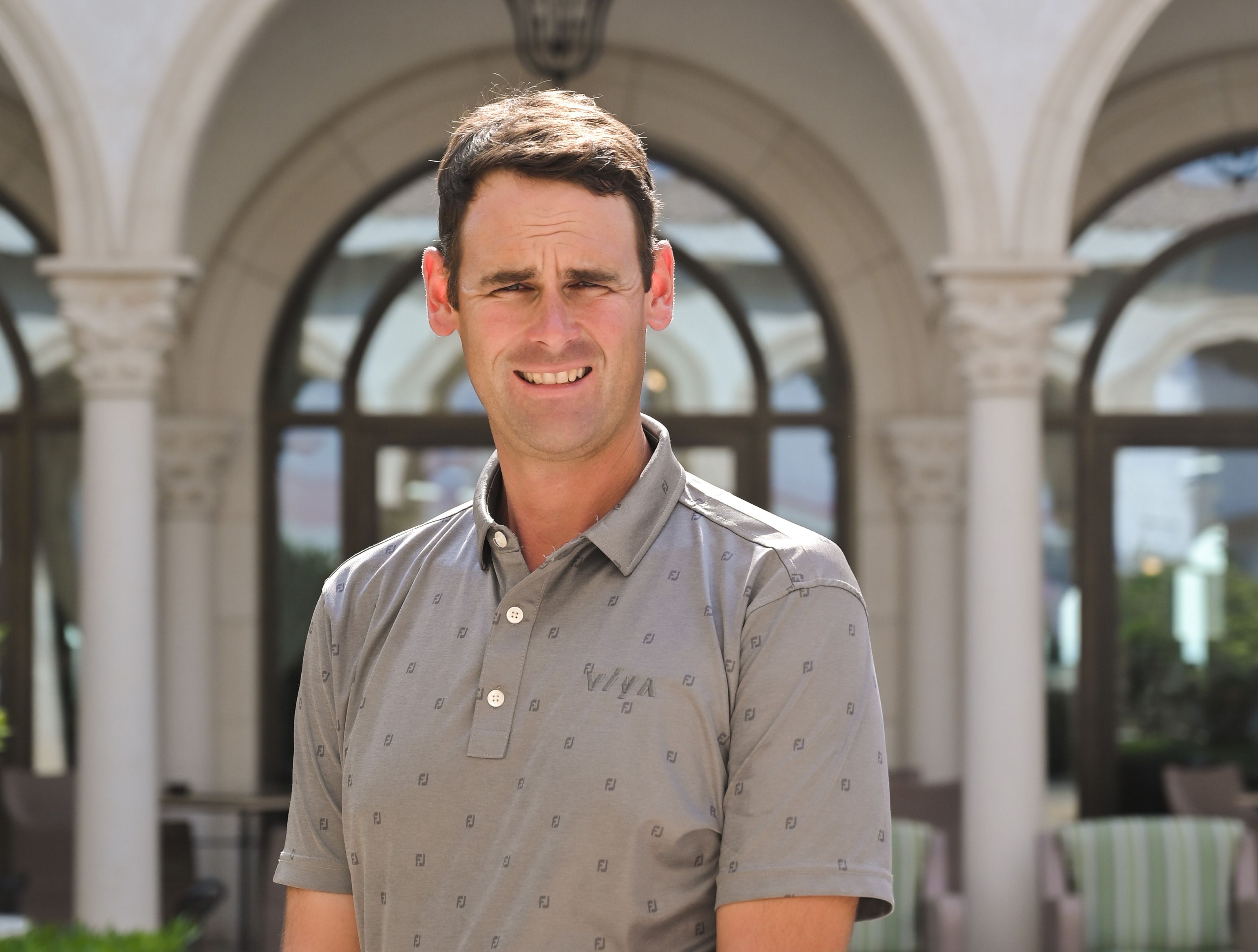
My journey in Abu Dhabi began at Saadiyat Beach as an assistant superintendent, which has allowed me to build a deep understanding of each course over time. Every site is different, from design to grass types and maintenance requirements, and there is no one-size-fits-all approach.
Saadiyat Beach, with its Bermuda grass and Mini Verde greens, is the most demanding club from an agronomic perspective, while Yas Links and Yas Acres, with paspalum throughout, require a different, and in many ways more forgiving, management approach.
I also believe strongly in fully experiencing the courses as a golfer. I play at least once a week across the venues, because you gain insights you simply don’t get from a maintenance car. Playing gives you a real feel for how the course is performing. Ultimately, every course is unique and deserves to be treated that way.
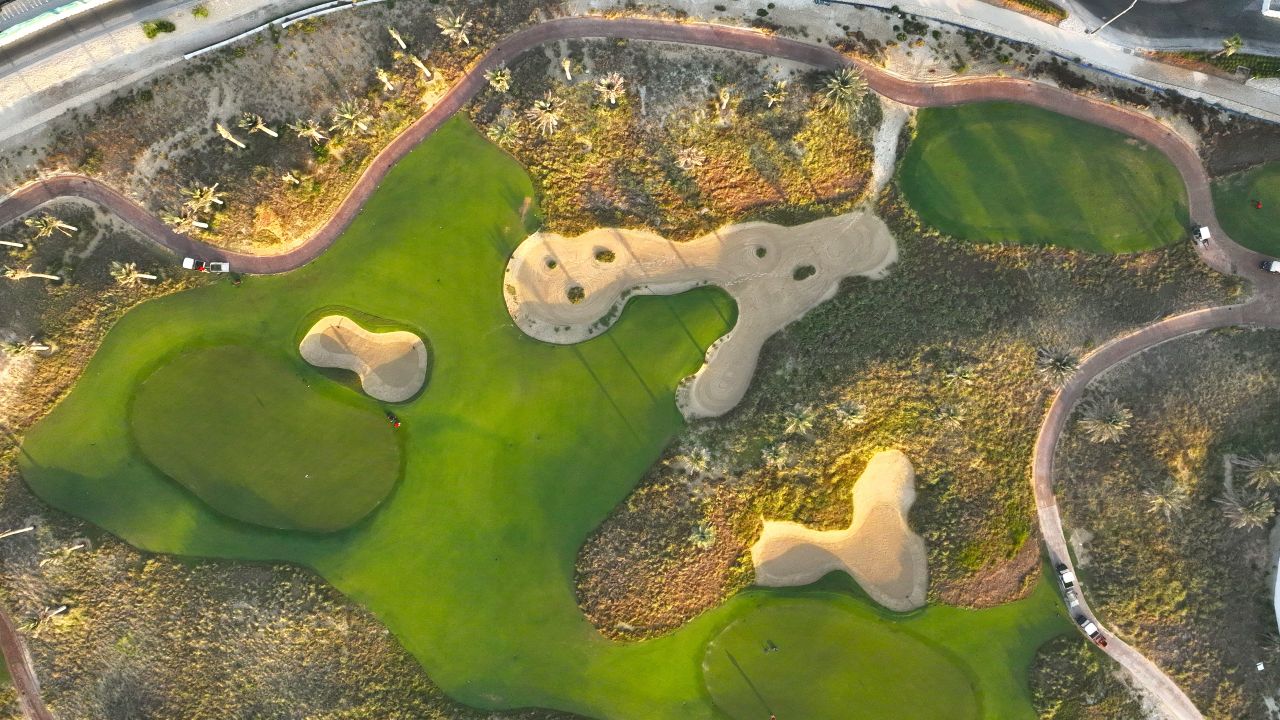
You have been part of Yas Links’ journey for many years. Looking back, which changes have made the biggest difference to how the course plays today compared to when you first started?
When I first arrived at Yas Links, the course had several fundamental issues and was not in great condition. The team here, many of whom are still with me five years later, have played a huge role in turning things around and have been the real driving force behind what we have achieved. From the outset, our approach was to work backwards, identify the biggest problems and fix them properly, rather than relying on short term solutions.
I have always believed in getting the basics right. Strong agronomy, consistent maintenance routines and clear programmes matter far more than chasing the latest tools or trends. Technology certainly has its place, but it will never replace solid fundamentals.
One of the key shifts was moving away from repeatedly repairing the same areas. By fixing issues properly the first time, we were able to build long term consistency across the course. While the course has improved significantly and continues to receive very positive feedback, I do not believe we have reached our best yet.
There is always room to refine and improve, and that mindset is what continues to drive us forward.

Yas Links hosts the Abu Dhabi HSBC Championship and is regularly praised by some of the world’s leading players. How does that level of exposure influence your approach to agronomy throughout the year and not just during tournament week?
Our goal is to keep stepping up every year and to keep doing something different but always at the highest level. After the last tournament, the course was rated very highly in terms of conditions, but there were still areas we identified for improvement. In fact, we had already started working on some of those points within a couple of weeks of the event finishing, and even back in November we were addressing things we knew would make a difference for the following year.
That level of exposure, particularly on television, has a real influence on how we approach things season after season. A lot of the work we do for the championship directly benefits our members and guests, because it allows us to keep the course at a very high standard throughout the winter. If the DP World Tour arrived tomorrow, we would not be far from being ready. Maintaining that consistency well beyond tournament week is a major focus for us, and it is something the whole team takes a lot of pride in.
There are plenty of courses that do an excellent job, but often they peak for tournament week or a short period afterwards. What we aim for is to be consistently strong right through the winter, and then use the summer period to carry out the deeper work we need to do. Right now, you could go out and experience conditions that feel very much like tournament level, pretty much every day of the week.

Saadiyat Beach has now had time to settle since reopening as a full 18-hole course. From an agronomy point of view, when do you know a course has really ‘come into its own’ after a redesign?
Managing the Saadiyat Beach project over the past 12 to 18 months has been the biggest challenge of my career. There were several factors involved, from contractor coordination and grow-in timing to making sure the new greens matched the existing ones in both performance and character.
The course is in a very good place now, but true maturity takes time. I would say we are still around 18 months away from the new surfaces fully matching the older ones. At the moment, we manage them slightly differently to achieve consistency in speed and firmness, as the newer greens naturally require less intervention.
We were very deliberate throughout the redesign process. We stayed with the same grass species, made no changes to the original specifications and avoided unnecessary upgrades, all to ensure continuity across the course. That decision is already paying dividends, particularly in terms of cohesion and how seamlessly the course plays as a whole.
There are still a few finishing touches to complete, such as some new tee boxes, but the course has come together exceptionally well. It feels refreshed and different in a very positive way, while still retaining the essence of Saadiyat Beach.
Feedback from players has been overwhelmingly positive, and the course is already performing at a level very close to tournament standard.
I would not say the job is ever truly finished, as I am always searching for excellence, but overall the course is now almost 99 percent mature, performing extremely well and delivering the level of quality we set out to achieve.

Yas Acres has recently started to attract increased attention, including from ranking panels, despite being a nine-hole course. Having been involved in the project from day one, how do you reflect on its development and the work that has gone into establishing Yas Acres as a consistently high-quality playing experience?
In terms of conditioning, Yas Acres is maintained to exactly the same standards as Yas Links and Saadiyat Beach, and I would say it is one of the most consistent of the three.
A huge amount of work has gone into getting the fundamentals right from the outset, from keeping the grass species clean to maintaining firm, high quality greens. While the scale of the surrounding landscape presents an ongoing challenge from a presentation perspective, turf quality has always been the priority, and the feedback has been extremely positive.
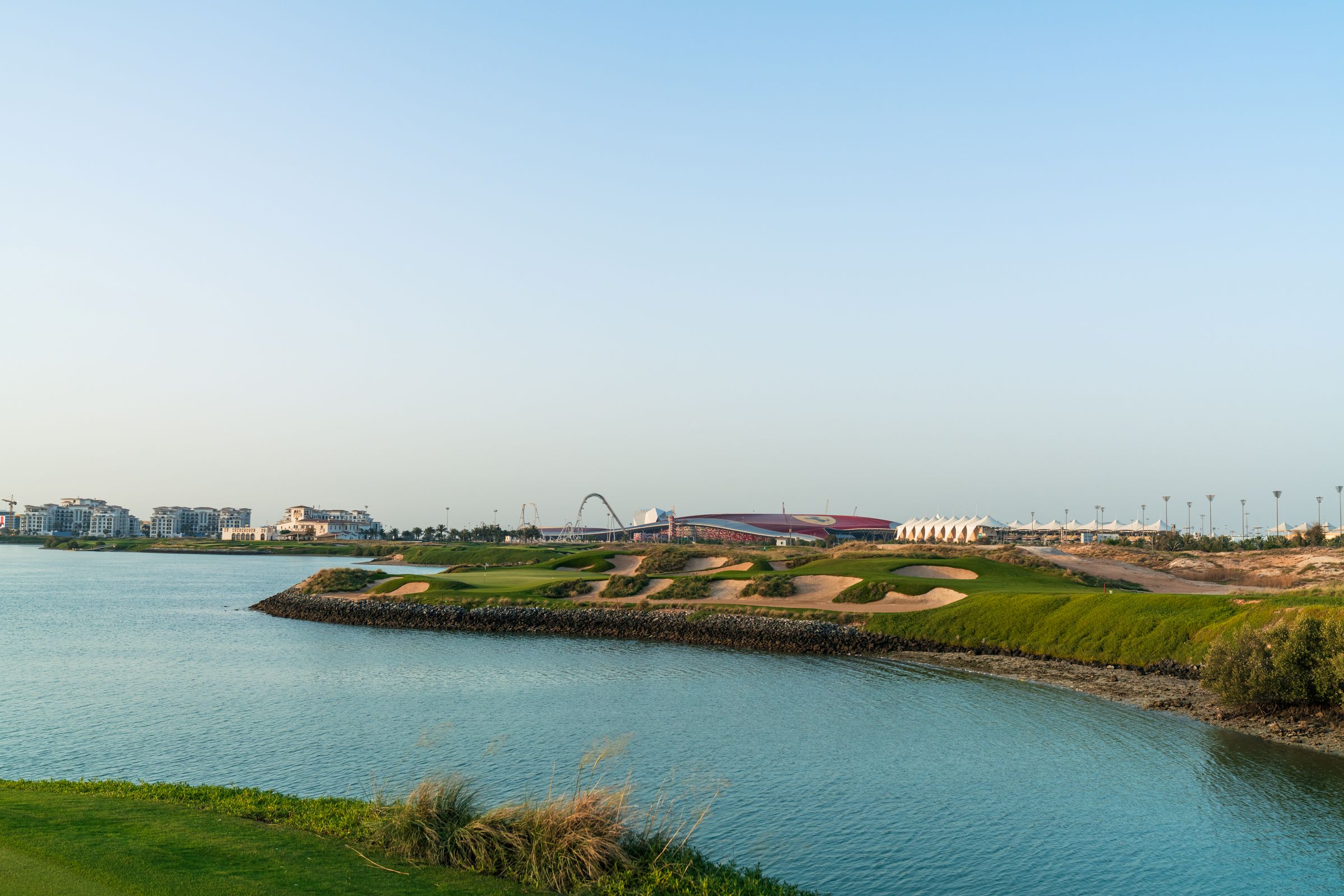
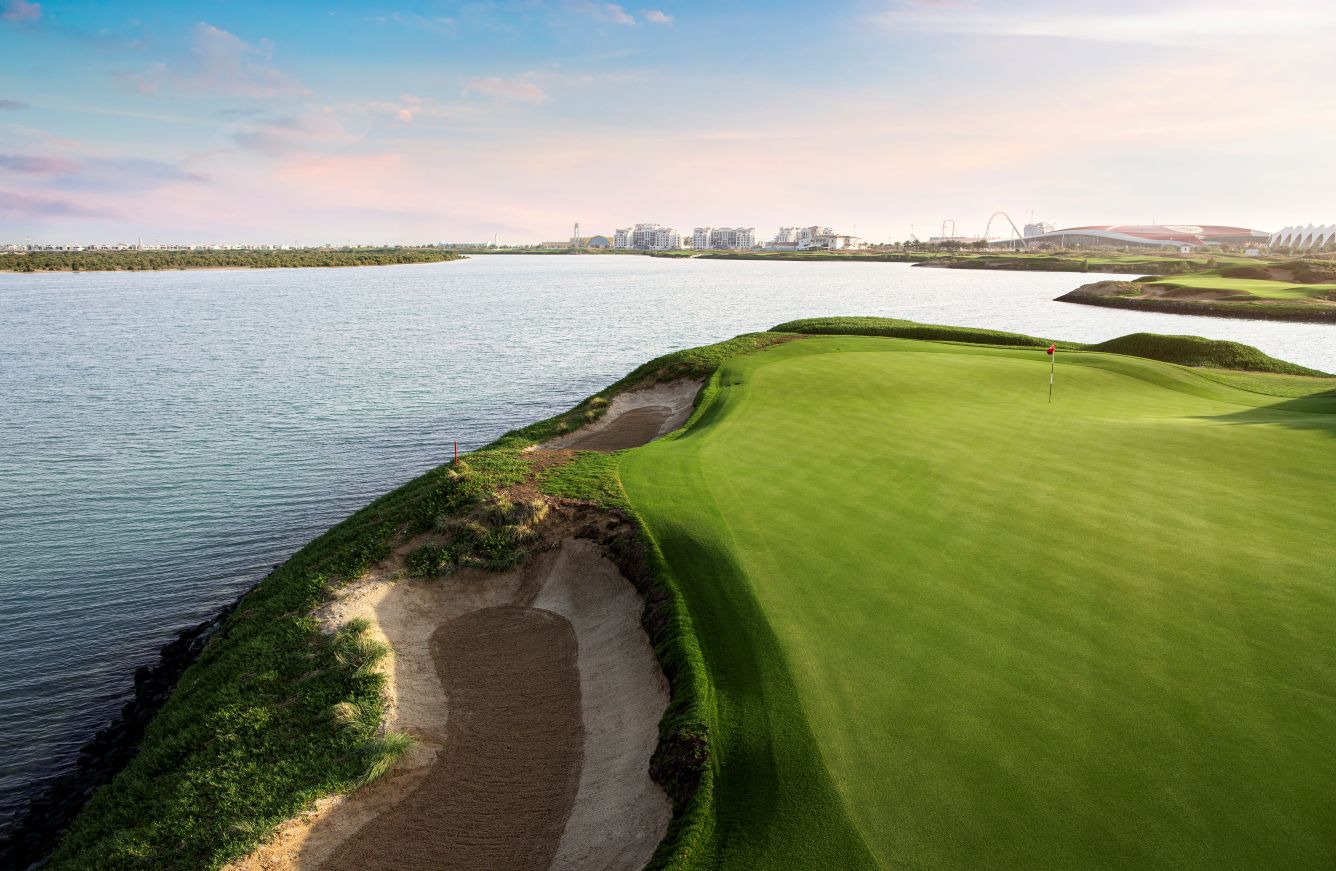
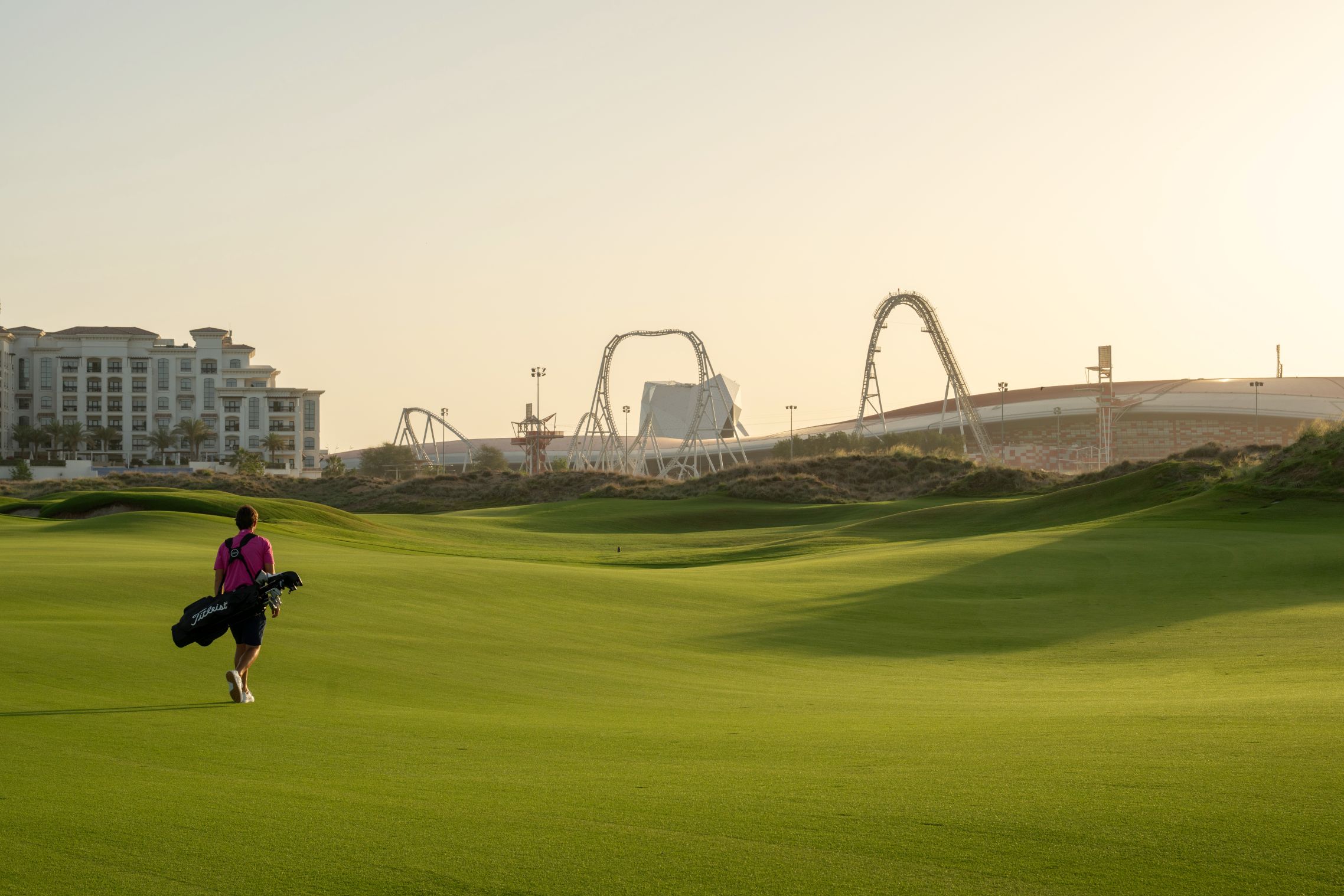
That is reflected in the number of DP World Tour professionals who now use the course for practice. Those who experience it quickly recognise the standard of conditioning and the quality of the overall playing experience.
Much of that success comes down to the strength of the team on the ground. Jay, who I have worked with for around 13 years, has been a real driving force. Originally from India, he has played a key role in training and leading a large part of the team, helping to develop skills, standards and confidence across the operation. He was also the first member of staff to achieve Level 3 turfgrass certification through the R and A and the New Zealand Sports Turf Institute, setting an important benchmark for the wider team.
While each course has its own dynamics, staff regularly move between venues to support projects, share expertise and assist during busy periods. Although the courses operate independently on a day-to-day basis, the agronomy teams come together when needed, reinforcing a strong and collaborative approach across the wider portfolio.
