
Joshua Thomason MSc, BSc (Hons), technical manager at Agrovista Amenity, provides a straightforward guide to feeding turf through the colder months, using the Winter Prime package within an integrated pest management programme, and applying Maxtima and Insignia when disease pressure requires fungicide support.

Autumn and winter are among the hardest periods in which to maintain clean, consistent turf. Temperatures fall, daylight becomes limited and surfaces stay wet for longer. Growth slows but play and wear often continue. At the same time, the cool, damp conditions that restrict recovery are exactly the conditions that favour Microdochium patch.
The best results come from joining several sensible actions together. This is the basis of integrated pest management, usually shortened to IPM. In practical terms, IPM means improving the growing environment, feeding the plant appropriately, using non-fungicidal support products and only introducing fungicides when the level of risk justifies them.
Winter nutrition: feeding without forcing growth
Grass does not stop functioning as soon as summer ends. Even in cold weather, the plant still needs energy to maintain its leaves and roots, repair wear and protect its cells. However, its demand for nutrition is much lower than during spring or summer. The aim is therefore to maintain the plant, not to create a flush of growth that is difficult to manage.
Too much readily available nitrogen can produce soft, lush leaf tissue. This growth holds moisture, increases clipping production and can make the turf more vulnerable during prolonged disease pressure. Too little nutrition, however, can leave the surface thin, weak and slow to recover. The most reliable approach is to use small, measured inputs that match actual growth and playing demand.
Why the form of nitrogen matters
Nitrogen reaches the plant in different forms. Each behaves differently as soils cool, so the fertiliser analysis is just as important as the total amount of nitrogen being applied.
• Nitrate is immediately available to the roots. It can be useful when a dependable response is needed in cool conditions, but it also moves easily with water. On wet or freely draining rootzones, excessive nitrate can be lost before the plant uses it.
• Ammonium is also available to the plant, but it is held more strongly by soil and organic matter. This can make it a useful part of winter feeding, provided rates remain low and proportionate.
• Urea still has a place. It is concentrated, soluble and well suited to low-rate liquid or granular feeding. It first has to be converted into ammonium, so its response becomes slower and less predictable as soils cool. It should not be treated as useless below 10°C, but it should be used with greater care.
The familiar 10°C soil-temperature guide is helpful, but it is not an on / off switch. Moisture, sunlight, root activity, grass species and the length of the growing window all influence the response. In practice, winter programmes often rely more heavily on directly available nitrate and ammonium, while retaining a smaller amount of urea within a balanced blend.
A useful seasonal guide: nitrate and ammonium become increasingly important as soils cool, but 10°C should be treated as a guide rather than a rigid cut-off.
Nutrition and Microdochium patch
Microdochium patch is the disease most closely associated with cool, wet winter turf. It commonly begins as small orange-brown or water-soaked patches that may merge into larger scars. Under humid conditions, pale pink or white fungal growth can sometimes be seen around the edge of an active patch.
The disease is encouraged by long periods of leaf wetness, mild temperatures, shade, poor airflow and surfaces that remain saturated. Annual meadow-grass is particularly vulnerable, although other cool-season grasses can also be affected. Once the leaf tissue has been killed, no treatment can instantly rebuild it; recovery depends on the plant producing new growth, which is naturally slow in winter.
Winter nutrition should therefore support density and resilience without creating a soft canopy. Regular dew removal, improving airflow, managing organic matter, maintaining drainage and avoiding prolonged surface wetness are just as important as the fertiliser or fungicide selected.
The Autumn/Winter Prime package
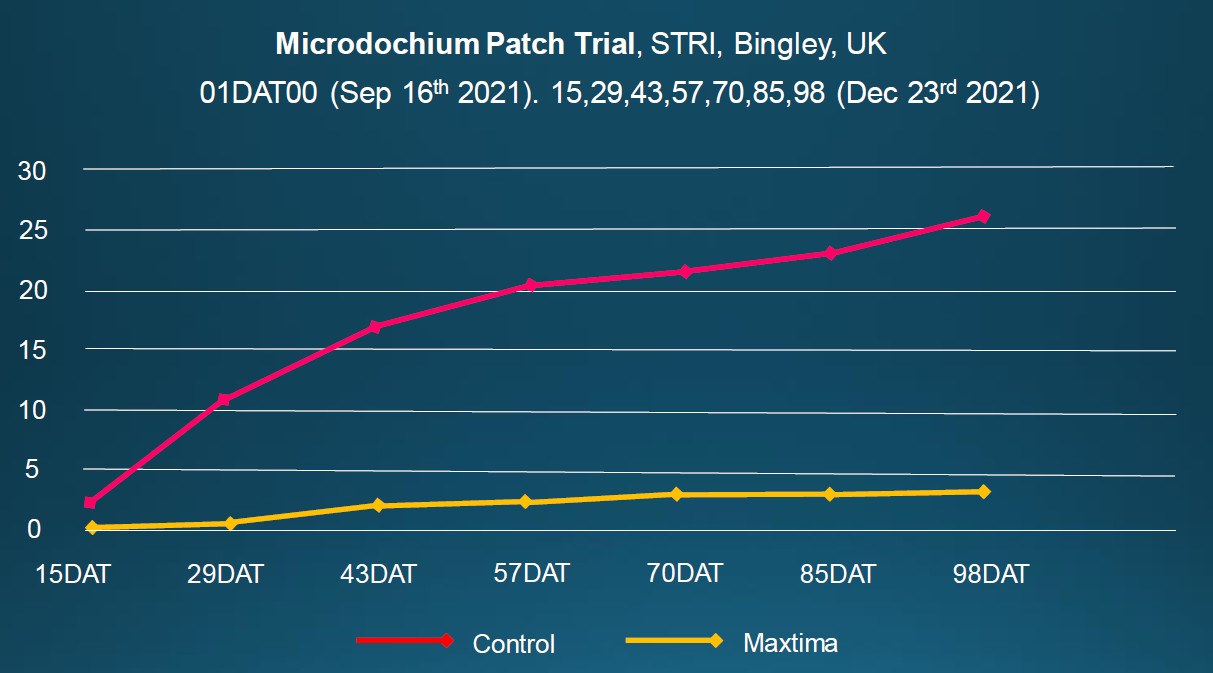
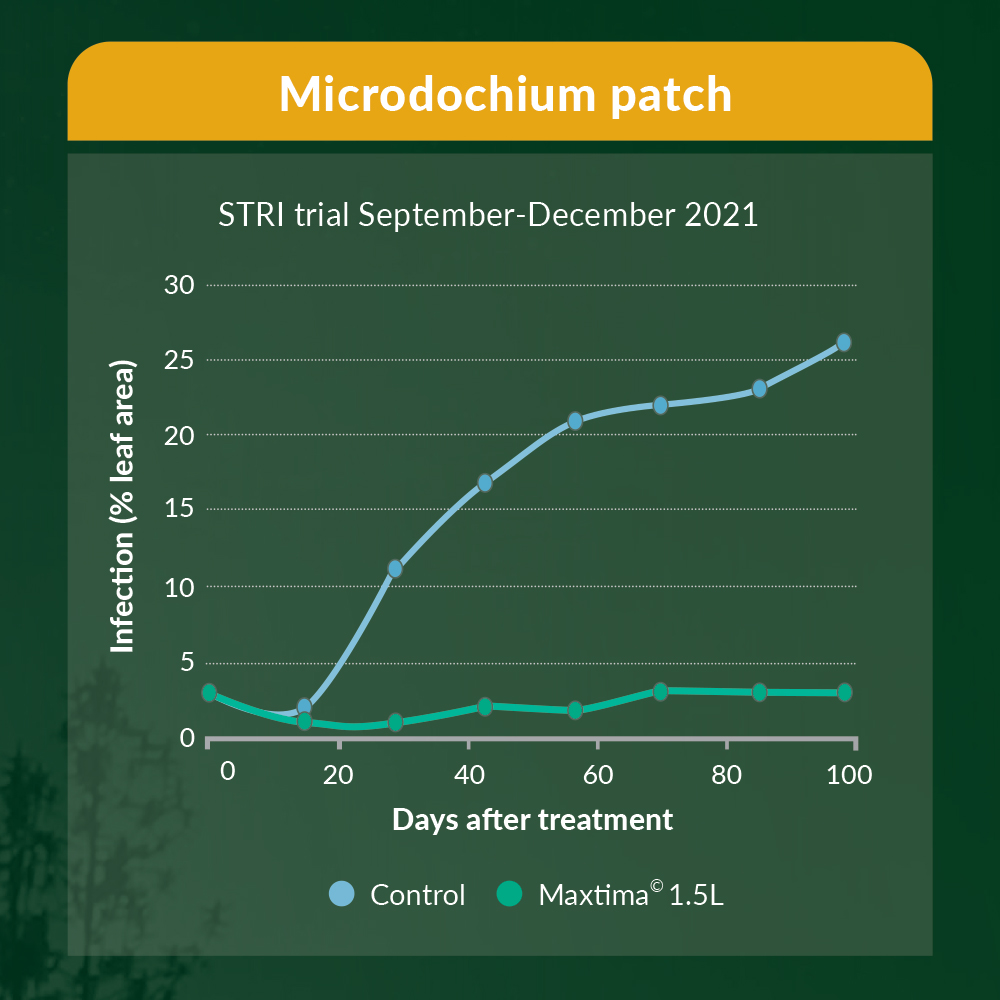
The Agrovista Amenity Autumn/Winter Prime package provides a non-fungicidal layer within an IPM programme. It is not designed to replace fungicides in every situation. Its role is to support the plant, improve turf quality, and help reduce the background risk of disease, allowing fungicides to be used more selectively and at the most critical points in the season.
How the remaining Prime components support the plant
• Cal-Mag supplies calcium to support cell-wall strength, magnesium for chlorophyll and colour, and a small amount of nitrate nitrogen that remains directly available in cool conditions.
• TKO Phosphite is used as a programmed input to support the plant’s natural defence response and has been positioned as a non-fungicidal tool for reducing Microdochium incidence.
• Bullet Chelated Iron provides rapid greening without relying on a large nitrogen input. Its chelated form is designed to keep iron available and reduce lock-up.
• Citric acid reduces spray-solution pH and helps create a less favourable leaf-surface environment for fungal activity.

Why Movax is central to the programme
Movax is applied at 1 L/ha within the Prime programme. It contains patented Alethea technology, a combination of plant-signalling analogues designed to encourage the grass plant to increase its own antioxidant production. Antioxidants help the plant control reactive oxygen species – unstable molecules that build up when turf is placed under stress.
Cold, low light, salinity, drought and other stresses can all increase this internal pressure. By helping the plant manage that stress response, Movax supports cell protection and helps the turf remain more resilient during periods When growth and recovery are restricted. It also contains L-arginine, an amino acid involved in nitrogen metabolism, signalling and growth regulation.
Its value is that better-prepared turfgrass is more capable of maintaining density, colour and function while the wider IPM programme reduces the opportunity for disease to establish.
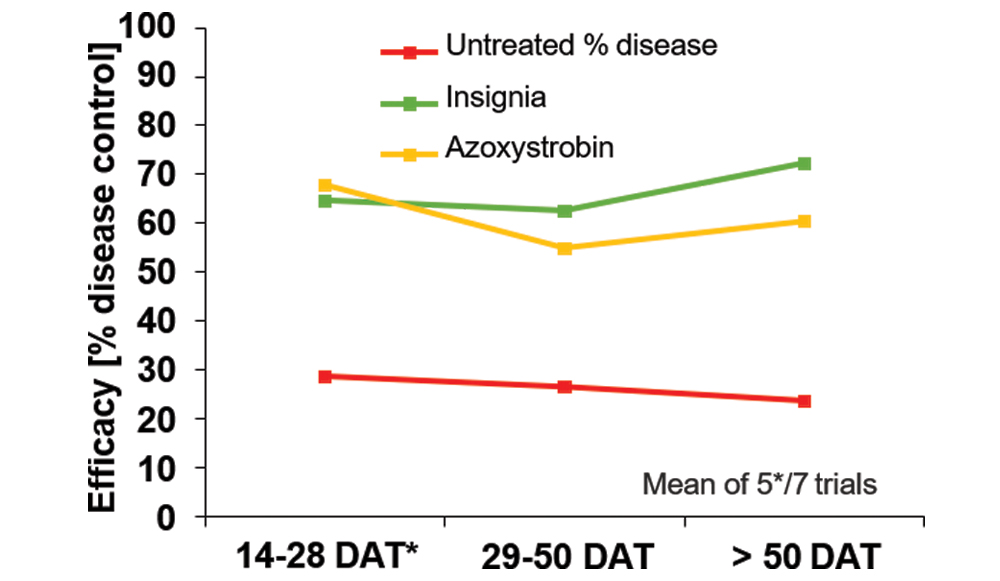
Maxtima contains Mefentrifluconazole. Its strength is rapid absorption and movement within the plant, which allows it to act quickly while also providing lasting protection. This makes it particularly useful when forecasts show rising disease risk or when very early infection may already be present. It should still be applied before widespread scarring develops.
Insignia contains pyraclostrobin and is best understood as a protective shield. It moves across the leaf blade and acts against several stages of the fungal life cycle. Its one-hour rainfastness can be particularly valuable when winter spray windows are short and unsettled weather is approaching.
The two products belong to different fungicide groups: Maxtima is FRAC Group 3 and Insignia is FRAC Group 11. Rotating between different modes of action is an important part of resistance management. Repeated use of the same group increases the selection pressure on the pathogen population and can reduce the long-term value of the chemistry.
Bringing the winter programme together
A practical programme begins with the basics. Remove dew where possible, maintain airflow, avoid waterlogging, manage organic matter and feed according to growth. Use the Winter Prime package as a preventative support layer, with Movax helping the plant prepare for cold and low-light stress. Monitor the weather and the surface closely. When disease risk rises beyond the level the turf can tolerate, introduce a correctly timed fungicide and rotate the mode of action.
This approach does not rely on a single product to solve every problem. Instead, each part of the programme has a clear purpose: nutrition maintains the plant, cultural practices reduce the disease environment, Prime supports resilience and lowers background pressure, and Maxtima or Insignia provide targeted fungicidal control when it is genuinely required.
The result is a more balanced winter strategy: less unnecessary growth, better use of nutrition, more deliberate fungicide timing and a stronger chance of reaching spring with clean, dense and playable turf.

For more information, visit amenity.agrovista.co.uk
Five practical winter checks
1. Measure growth and clipping yield before deciding how much nitrogen to apply.
2. Monitor disease thresholds, leaf wetness, dew, temperature and site history rather than spraying by the calendar.
3. Use nitrate and ammonium for reliable cool-weather availability, while retaining urea only where conditions support its conversion and uptake.
4. Use the Prime package preventatively, with Movax at 1 L/ha as the stress-priming component.
5. Apply Maxtima or Insignia according to the current label and rotate FRAC groups as part of resistance management.