
Why robotic mowers and trailed rotary mowers both have a place in tomorrow’s golf course maintenance.
Golf course maintenance is evolving rapidly. While delivering exceptional playing surfaces remains the priority, greenkeeping teams are under increasing pressure to maintain standards with fewer staff, rising operational costs, reduced budgets and growing sustainability expectations. As a result, many course managers are reassessing how they allocate labour, manage machinery fleets and maintain turf across the entire site.
One of the most significant developments in recent years has been the rise of robotic mowing. Autonomous units are now being trialled or adopted on a growing number of courses, offering the potential to reduce routine mowing hours and deliver consistent, repeatable results. But while robotics are becoming an important part of the conversation, they are not replacing traditional equipment. Instead, the most forward‑thinking clubs are discovering that the future of mowing is not robotic or conventional – it’s both.
How robotics fit into the maintenance picture
Robotic mowing is proving particularly effective in areas where consistency and frequency matter most.
Fairways, practice grounds and selected semi‑rough areas are increasingly being identified as ideal environments for autonomous mowing.
These areas share several characteristics that suit robotic systems:
• Large, open spaces with minimal obstacles
• Uniform turf that benefits from ‘little and often’ cutting
• High labour demand when maintained conventionally
• Presentation standards that rely on consistency rather than heavy‑duty capacity
By taking on these repetitive, time‑intensive tasks, robotic mowers can free greenkeeping teams to focus on more specialised work such as bunker maintenance, irrigation checks, renovation and detail presentation.
For many clubs, robotics are becoming a valuable addition to the maintenance toolkit – but they are not a complete solution.
Where trailed mowers remain essential
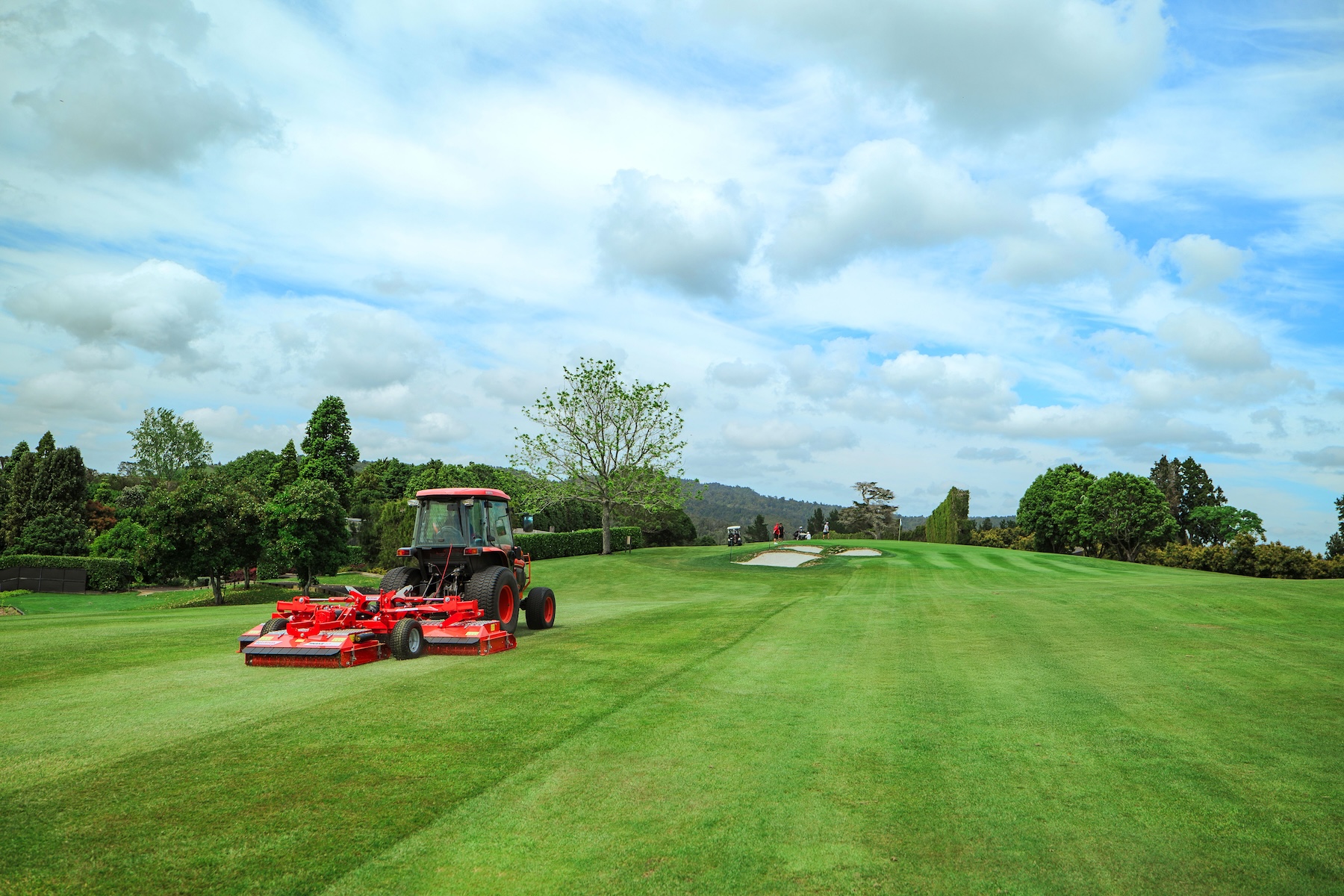
Golf courses are diverse landscapes, and not all areas are suited to autonomous mowing. Rough, semi‑rough and undulating maintained areas continue to require the flexibility, power and productivity of tractor‑mounted equipment.
Trailed rotary mowers excel in these environments for several reasons:
• Capacity to manage longer, denser grass
• Ability to recover large areas quickly after periods of rapid growth
• Superior contour following on uneven ground
• Effective clipping dispersal in areas where grass volume is higher
• Compatibility with existing tractors, maximising fleet value
These are tasks that robotic systems are not currently designed to handle. As a result, trailed mowers remain a critical part of the machinery fleet for almost every golf course – even those investing heavily in automation.
Maximising the value of existing machinery
Most golf clubs already own tractors that support a wide range of maintenance tasks throughout the year. Pairing these tractors with a high‑quality trailed mower remains one of the most cost‑effective ways to maintain large areas of turf.
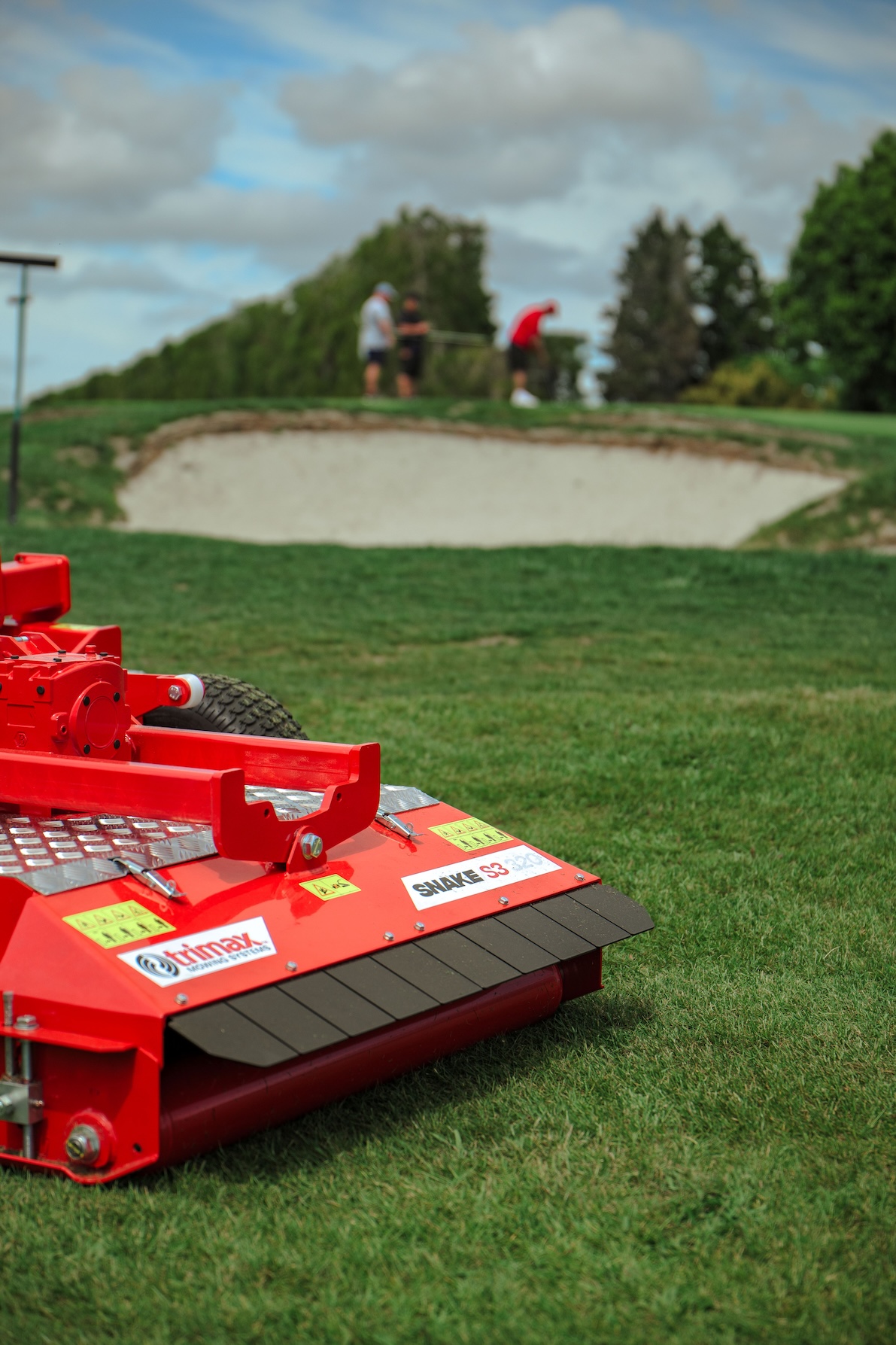
This is where equipment such as the Trimax Snake S3 continues to play an important role. Designed specifically for golf and sports turf applications, the Snake S3 combines exceptional cut quality with impressive productivity and contour-following performance.
Its ability to deliver a clean, consistent finish across fairways, semi‑rough and rough makes it a versatile asset for clubs looking to simplify their machinery fleet without compromising on presentation.
By integrating trailed mowing into a robotic strategy, clubs can maintain flexibility while reducing capital expenditure and minimising maintenance complexity.
Productivity where it matters most
Even as robotics take on more routine mowing, productivity remains a key consideration for greenkeeping teams.
Large areas still need to be cut quickly during peak growth periods, after weather disruption or ahead of major events. Trailed rotary mowers provide the cutting width, power and resilience required to stay ahead of growth when conditions demand it.
This ability to respond rapidly is one of the reasons trailed mowers remain indispensable – they provide the capacity that robotics cannot yet replicate.
A more strategic approach to mowing
As more golf courses explore robotic mowing, attention is shifting from whether robots can replace traditional equipment to how the two can work together most effectively.
A growing number of clubs are adopting a strategic, area‑based approach:
• Robotics for fairways, practice areas and selected semi‑rough
• Trailed rotary mowers for rough, semi‑rough, undulating areas and rapid recovery
• Tractors for multi‑tasking and year‑round maintenance
This integrated model allows clubs to reduce labour requirements, maintain presentation standards and maximise the value of their existing machinery.
Trimax as an integration partner
As automation becomes more common, clubs need equipment that complements robotic systems rather than competes with them. Trimax trailed rotary mowers – including the Snake S3 – are designed to deliver the flexibility, productivity and cut quality required to support an integrated maintenance strategy.
By combining autonomous mowing with high‑performance trailed equipment, golf courses can achieve a balanced, efficient and future‑ready approach to turf management.

For more information about the Trimax Snake visit trimaxmowers.co.uk/rotary-mowers/snake