
by Henry Bechelet, Technical Manager, ICL Turf and Landscape
The early emergence of spring growth is crucial for all forms of turf maintenance, especially golf greens. Growth is needed for the turf to recover from the damage of winter play and disease attack. It also allows us to proceed in earnest with early surface preparation work such as top-dressing. A good early start to the year with the quick establishment of growth is usually a great help.
Groundbreaking work
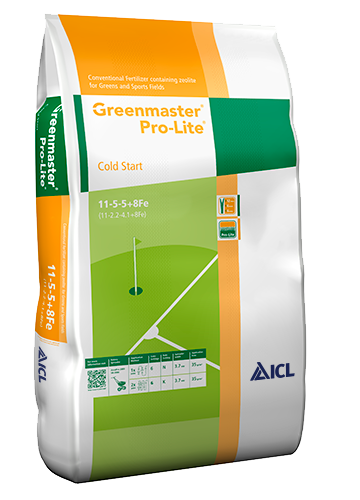
At ICL our aim is to help you understand how to get the best results from our products. To this end, we commission independent research studies and conduct our own trials to provide a solid grounding for our recommendations. Over 10 years ago we commissioned a trial at STRI to shed light on the subject of spring growth in golf greens. The trial evaluated a number of fertiliser alternatives and found that the one that created the best turf quality, best turf colour, and experienced the least disease was the analysis that very few people would have used (the then unknown Greenmaster Pro-Lite “Cold Start” 11-5-5 +8Fe). This work revolutionised our thinking about spring nutrition.
Ongoing trials
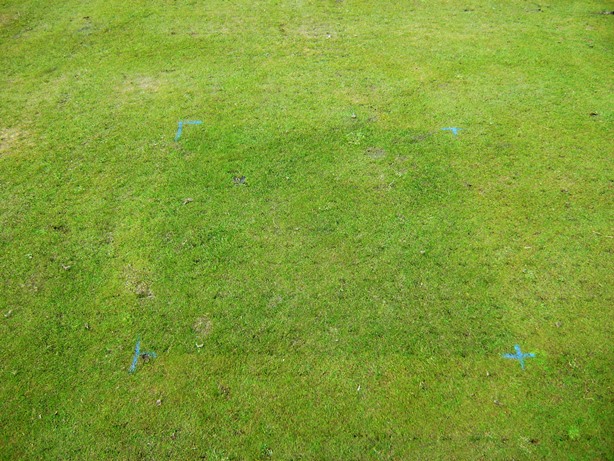
The following year we set up an internal trial to clarify things further. In this trial we used various different types of fertiliser (conventional and slow-release) with the application rates adjusted to deliver the same level of nitrogen. Here we wanted to see how nitrogen source, rather than quantity, influenced the onset of spring growth. The treatments were applied very early in the spring (early March) when conditions first allowed.
Treatment list
Untreated control — No fertiliser applied.
Greenmaster Pro-Lite “Cold Start” 11-5-5 +8Fe — Conventional nitrogen sources (50 percent sulphate of ammonia, 50 percent urea) applied at 25 g/m2 (27.5 kg N/ha).
Greenmaster Pro-Lite “Turf Tonic” 8-0-0 +3MgO +3Fe — Conventional nitrogen sources (60 percent sulphate of ammonia, 40 percent urea) applied at 35 g/m2 (28 kg N/ha).
Greenmaster Pro-Lite “Autumn Mg” 6-5-11 +3MgO +0.5Fe — Slow-release and conventional nitrogen (66 percent slow-release methylene urea) applied at 46 g/m2 (27.6 kg N/ha).
Sierraform GT “K-STEP” 6-0-27 +2MgO +TE — Slow-release and conventional nitrogen (50 percent methylene urea, 50 percent urea) applied at 46 g/m2 (27.6 kg N/ha).
Sportsmaster WSF “High K” 15-0-43 +0.13Fe — Quick-release nitrogen (90 percent potassium nitrate, 10 percent urea) applied at 18 g/m2 (27 kg N/ha).
Trial results
The trial was a randomised block design with three replications.


The graphs are shown to illustrate the relative turf responses.
The trial clearly showed that early spring fertilisers work but also that the type of fertiliser used makes a significant difference.
Key takeaways included:
Conventional nitrogen (sulphate of ammonia + urea) was most effective, especially with iron.
Slow-release fertilisers are not designed for immediate responses in very early spring, as cool soil temperatures inhibit microbial activity required for nitrogen release.
Potassium nitrate was comparatively weak in terms of response and longevity.
The standout performer at this very early stage was Greenmaster Pro-Lite “Cold Start” 11-5-5 +8Fe, delivering the best speed of response, longevity and turf colour. This product can be applied at 25 g/m2 to get an excellent early response from the iron and nitrogen but you would only choose it if it was right for your situation.
Latest thinking
There have been significant developments in recent years to help with our choice and timing of early spring fertiliser applications. The Syngenta Turf Advisor app is an amazing resource that contains a number of really useful agronomic metrics. In particular, the percentage Growth Potential metric is extremely useful to help identify any emerging growth opportunities. A forecasted run of growth potential figures of 30 to 40 percent might indicate a good opportunity to get things moving.
Conventional thinking
The development of early spring growth can be extremely helpful in terms of generating turf recovery and allowing you to get going with early preparation work. Your ability to create a growth response will be dependent on conditions and so you need to monitor the situation and wait for an appropriate opportunity. It is clear that choosing conventional granulars containing sulphate of ammonia and / or urea are ideal for this task
Your choice
The final choice of product (and application rate) would be dependent on the weight of response that you require. If you are needing to generate a significant response to get through heavy top-dressing then the Greenmaster Pro-Lite “Cold Start” might be the product for you, but if you are not needing such a substantial response then the Greenmaster Pro-Lite “Turf Tonic” or “Invigorators” might be a better choice.
Next steps
Plan spring applications now: Early planning ensures that you have the right products available for when conditions allow.
Consider the balance of nitrogen and iron: Use appropriate conventional formulations that stimulate early growth without over-applying nutrients.
Monitor the emergence of growth: By downloading the Syngenta Turf Advisor app.
By following these principles, you can ensure your greens get off to a strong start in early spring.
For more information or specific product guidance, contact ICL Turf and Landscape: icl-growingsolutions.com/turf-landscape