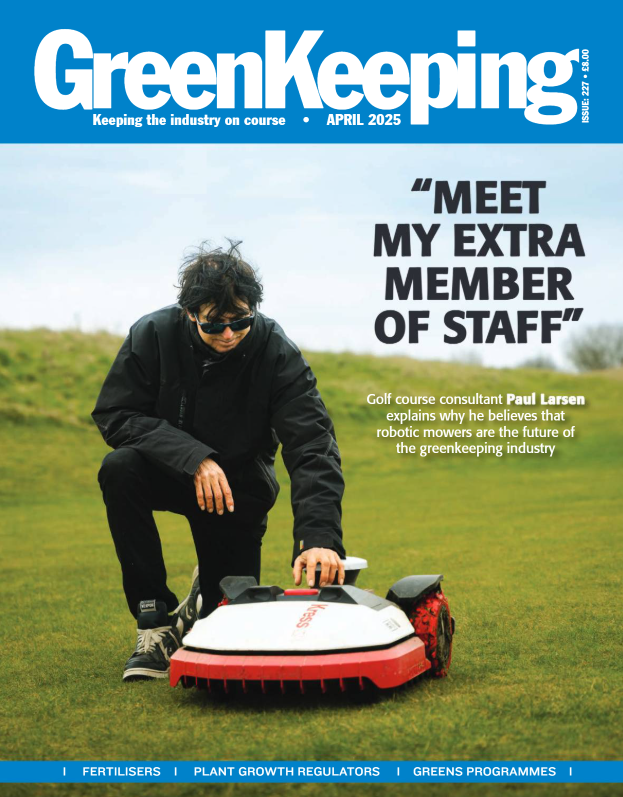
After finding success as a greenkeeper for nearly a quarter of a century, Paul Larsen decided to use his vast experience and wisdom to advise others in the industry. He now works as a course consultant, based for part of the week at Lydd Golf Course in Kent and with a variety of other clients for the rest of the time. He talks to us about maintaining high standards and sustainable practices on a low budget and using his experience to improve surfaces outside of golf.
What is your background in greenkeeping and why did you move into consultancy?
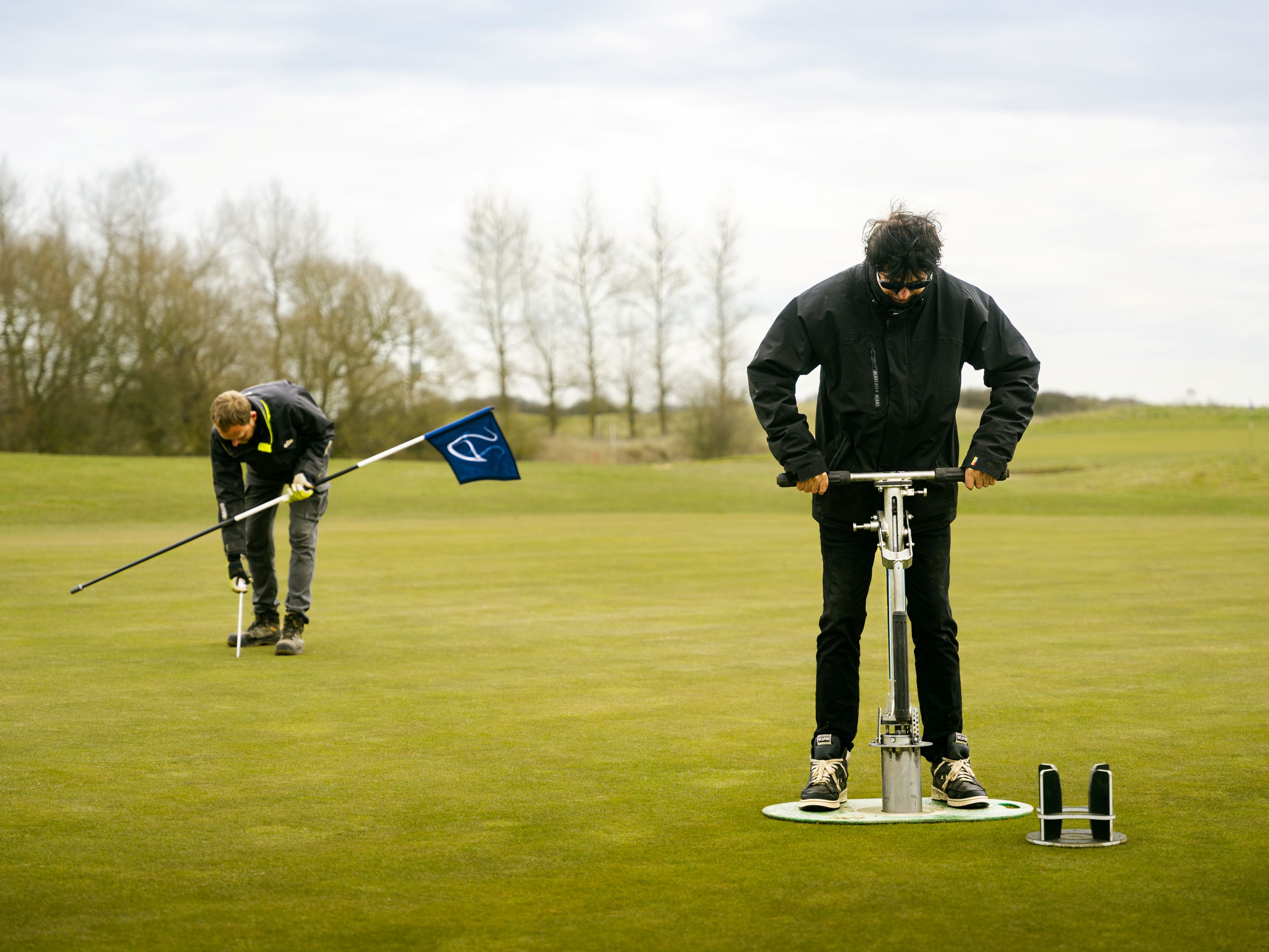
I’ve been in the industry for 25 years and I run my own company now called Paul Larson Consultancy. I am a consultant based at Lydd Golf Course in Kent. I started off in greenkeeping at a local golf course called Sene Valley not far from here where I am based now. From there after a few years, I became an assistant greenkeeper at Royal St George’s. In a nutshell, I left St George’s after two years to run a course out in Holland, which I did for four years. This was a great learning opportunity for me. There were no advisors and it was really interesting working as an Englishman in Holland. I loved it. From there, I went back to Royal St George’s in 2011 for the Open. I think it was about a year later that I became head greenkeeper. I was there for 10 years until 2022. Obviously, doing the Open in 2021 was great, but it was the lead up to the Open and all the stuff that went with it that was really fantastic. Since then, I’ve done my own thing for two years. I tend to be based here at Lydd Golf Course three days a week and that gives me loads of areas to explore different ideas and practices for the course here, which I can then bring to the other courses I go to. So far, it’s working out quite well.
What kinds of clients do you work with?
It’s been quite varied actually. My main client is here at Lydd, but I’ve gone to other golf courses like Whitstable, Hythe and Manston. I also work on a local bowls club, and have been to a couple of cricket pitches to look after their greens. I try to stay local-ish in Kent and Essex, but I have gone up to Suffolk to courses. On the whole I prefer to stick to fescue, links-type courses or something with that background, because my speciality is fescue. But I am learning more about bent grasses now. My course in Holland had purely poa greens, so I have looked after poa greens as well.
What different needs do your clients have?
There’s quite a bit of variation. I took over running the bowls club a couple of years ago, which I last did when I first left school. I did my City & Guilds on bowling surfaces and working on football pitches, so I vaguely remembered it from then. You think you can manage a bowling surface like a normal green, but there are things you can’t do, like putting fertiliser down before they’re bowling. I’m still learning quite a lot while doing it. When I took over, the green had been decimated by rooks because of leather jackets. So I’ve explored all natural ways to get rid of leather jackets using silage sheeting and so on. It’s been really interesting to look into that. I’ve looked after a couple of cricket pitches as well and I never realised the art of managing a cricket square before. I’ve been lucky because I’ve met some of the top people from the cricket world and they’ve given me a few tips. For me, doing the consultancy work has given me variety and it’s making me learn more as well. I actually think I’ve learned a lot more even in these first two years of working for myself, so it’s been quite nice.
How did your interest in robotic mowers start?
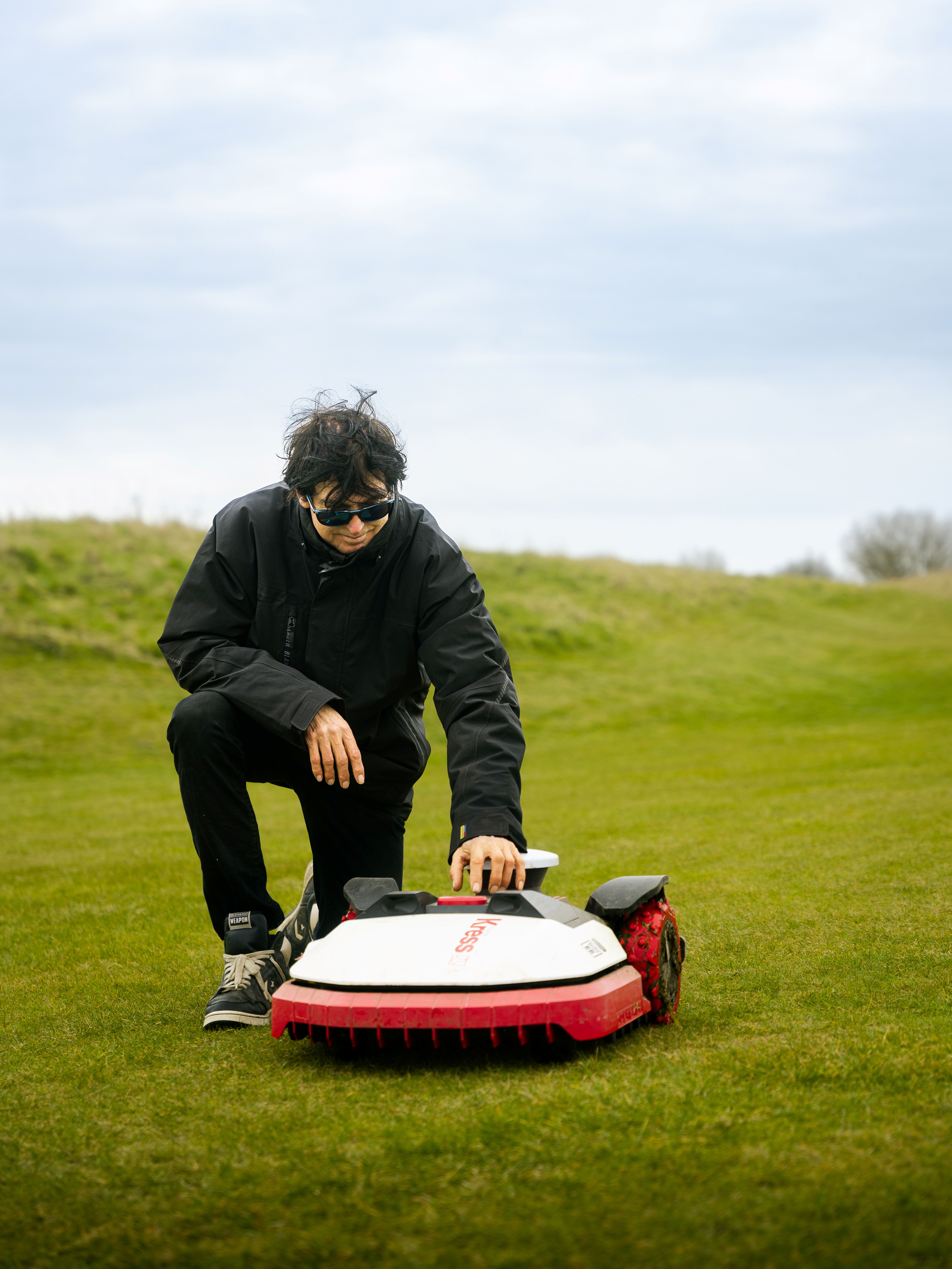
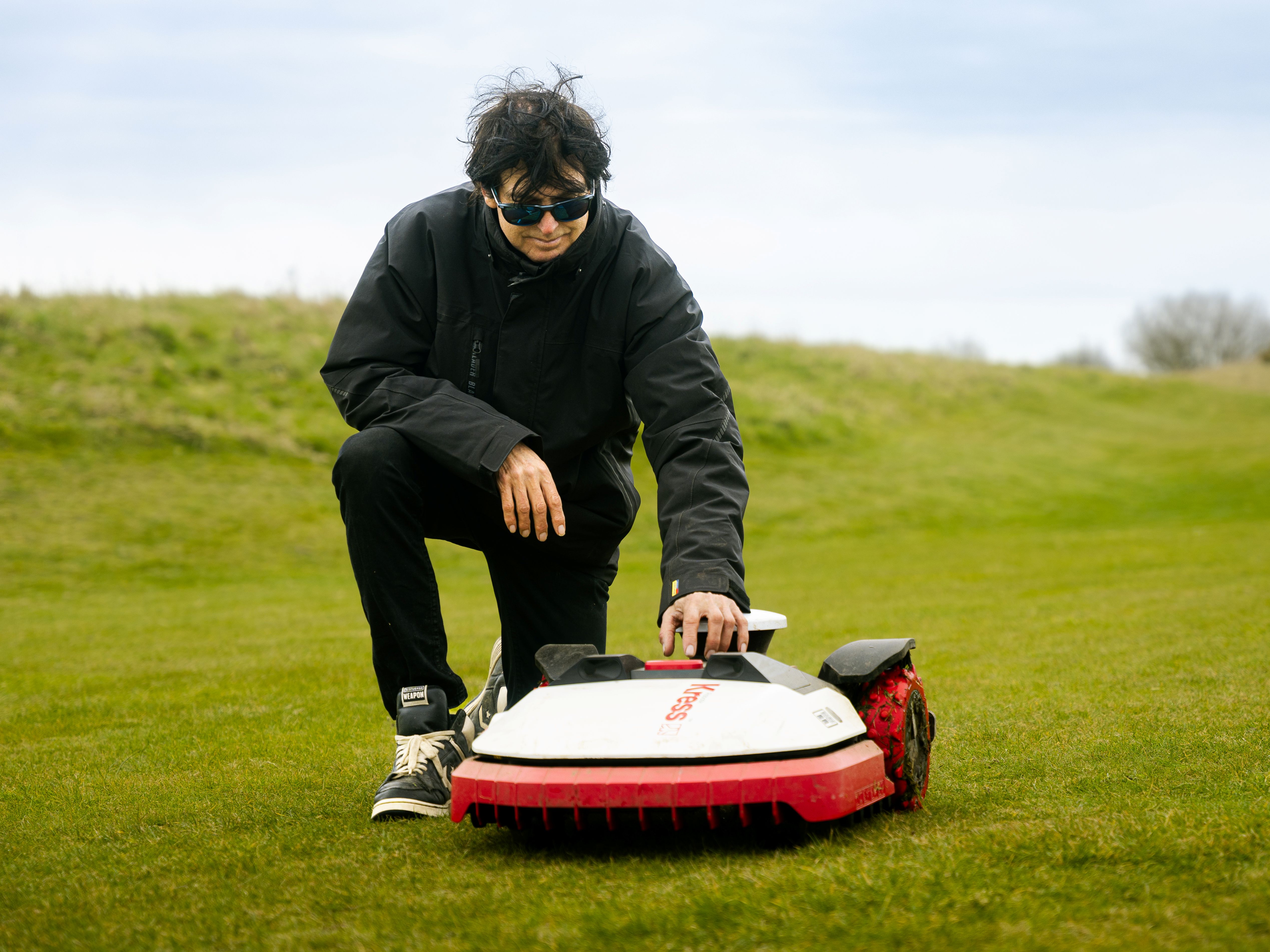
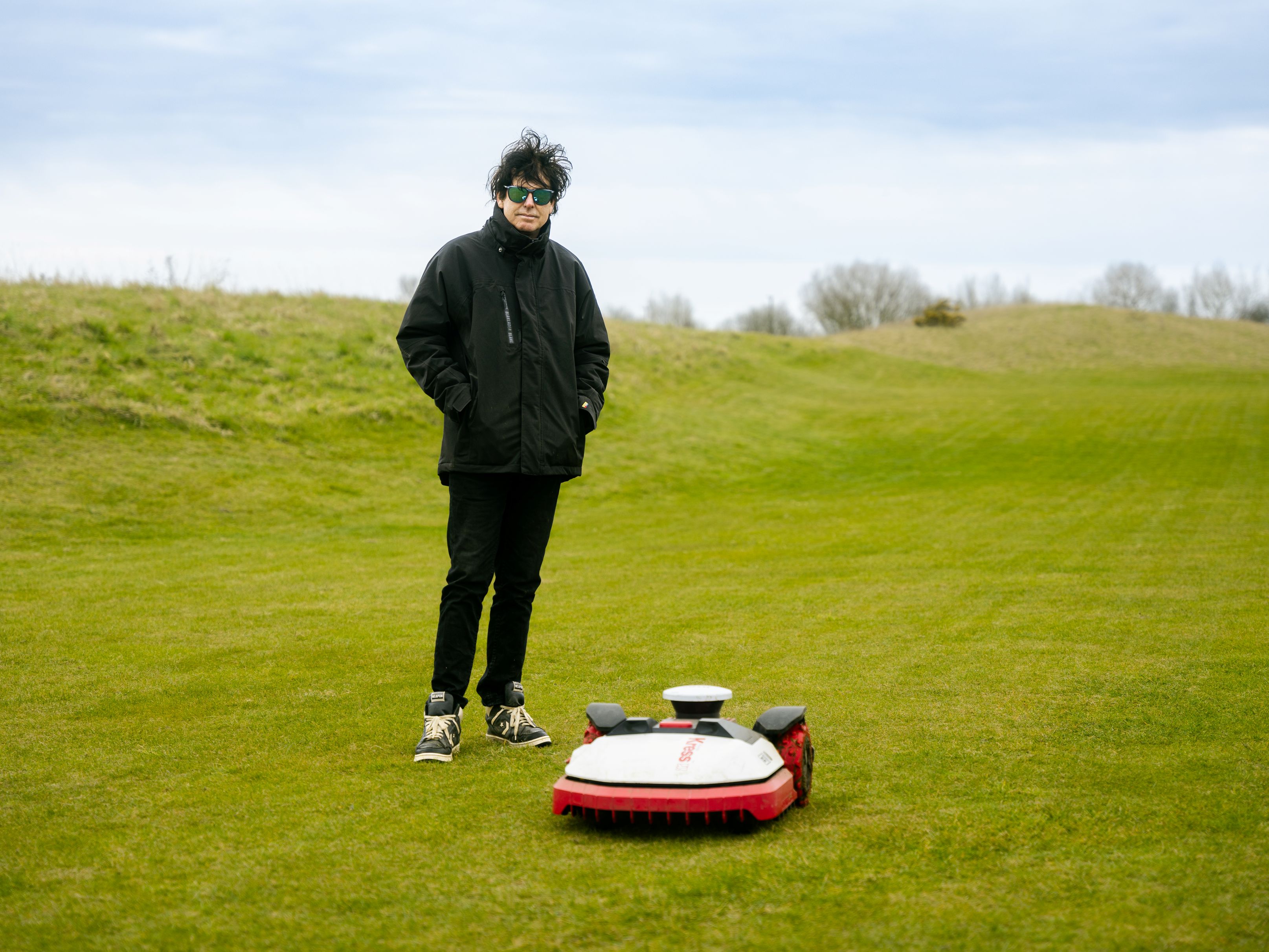
Obviously I’ve seen robot mowers around for the last few years but I didn’t pay too much attention to them at first. I remember going to Eton last year for a turf business summit and I saw their tool range and I was really impressed with it, which got me talking to the guys at Kress. They showed me their robotic mowers and I thought, ‘oh, that looks quite neat. I wouldn’t mind having a demo and trying it out on some of the courses.’ After the demo I ended up bringing them here to Lydd, and now I’ve completely bought into the idea of what they do and how they can help us.
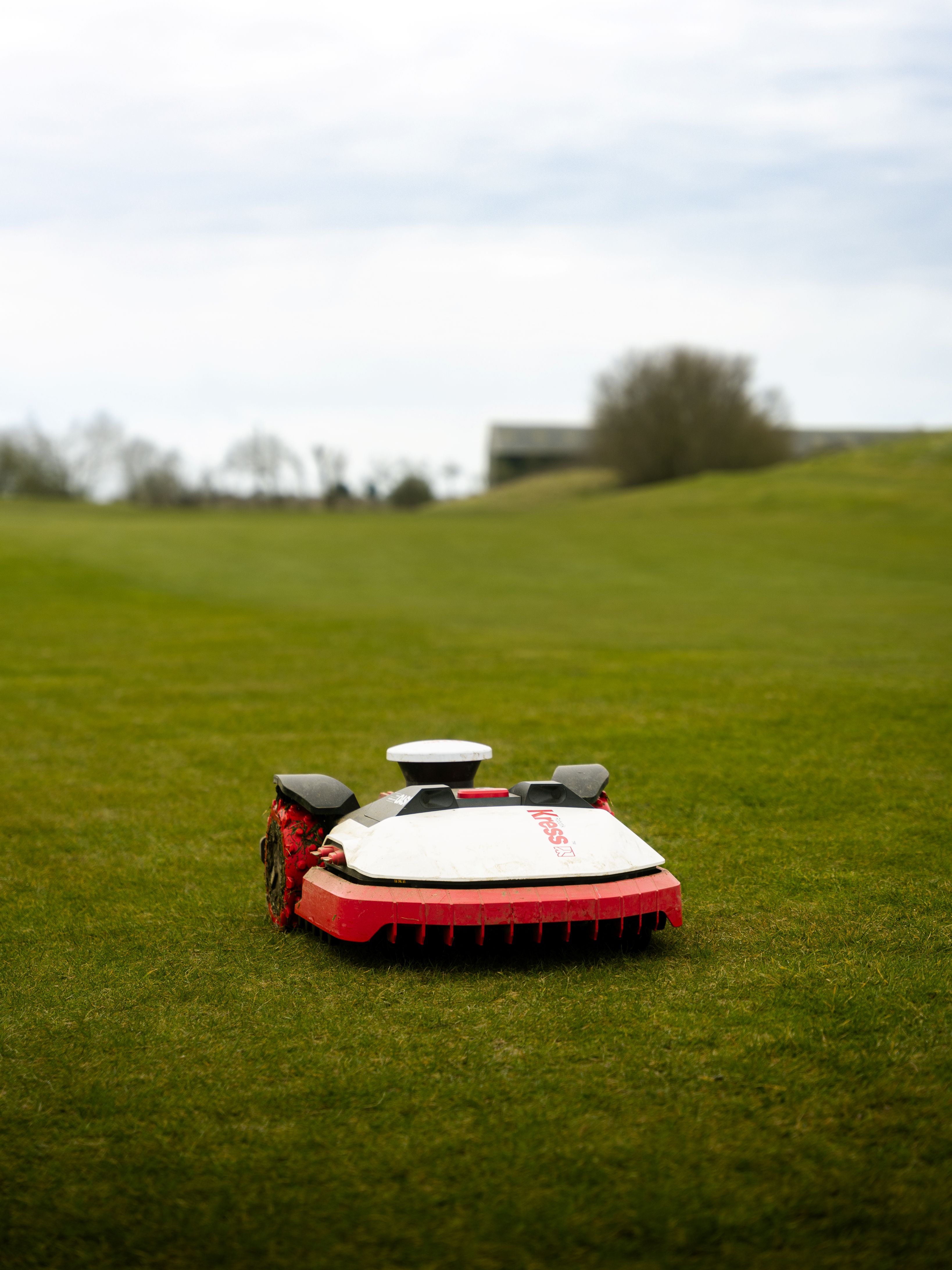
We’ve now got a couple of Kress mowers doing two fairways, two rough areas and we’re going to try and do the whole lot this year.
How have the Kress robotic mowers changed the way you maintain the course?
When I first looked into the Kress mowers, we were struggling with a rough mower which stopped working. A second-hand, five-year-old mower was about £30k grand, which was very steep for us. I had already been talking to Kress about their mowers and it got me thinking. Over the winter, we just decided this would be a good solution for us as we only have three greenkeepers at the moment. It seemed like the perfect time to get robot mowers working here. My plan now is to use this as a demo course so that everyone can see what we can do with these mowers, so I’m trying to cut all the rough this year and all the fairways with robot mowers. That’s the plan! We need 10 mowers to do all the rough and all the fairways.

For courses with small staff sizes, robotic mowers can help you get through the year and keep the course in as good a condition as we can get it. I’ve really enjoyed embracing the technology and getting used to all the apps.
Are the mowers replacing staff?
No, I hope to get more staff as soon as I can. What the mowers have done is given us a good opportunity to work with fewer staff, but also to be able to get more out of the staff with other tasks. Having the mowers is saving a lot of time cutting rough, and who wants to cut rough five days a week non-stop? Isn’t it much better to be in control of where you want to cut with a robot mower? It is the future, no matter how you look at it; this is the way it’s going to be, in my opinion anyway.
I talk to a lot of people about staff, and they do tell me getting staff is a problem, especially up in the Surrey area because the wages aren’t too attractive when the cost of living is so high. I talk to quite a lot of other people, even in Kent, and they are struggling to find staff to work weekends and get up early for the wages they can pay. If you’re struggling with staffing, tools such as robot mowers are solutions that we have to explore.
How do the robot mowers help with the cost of running the course?
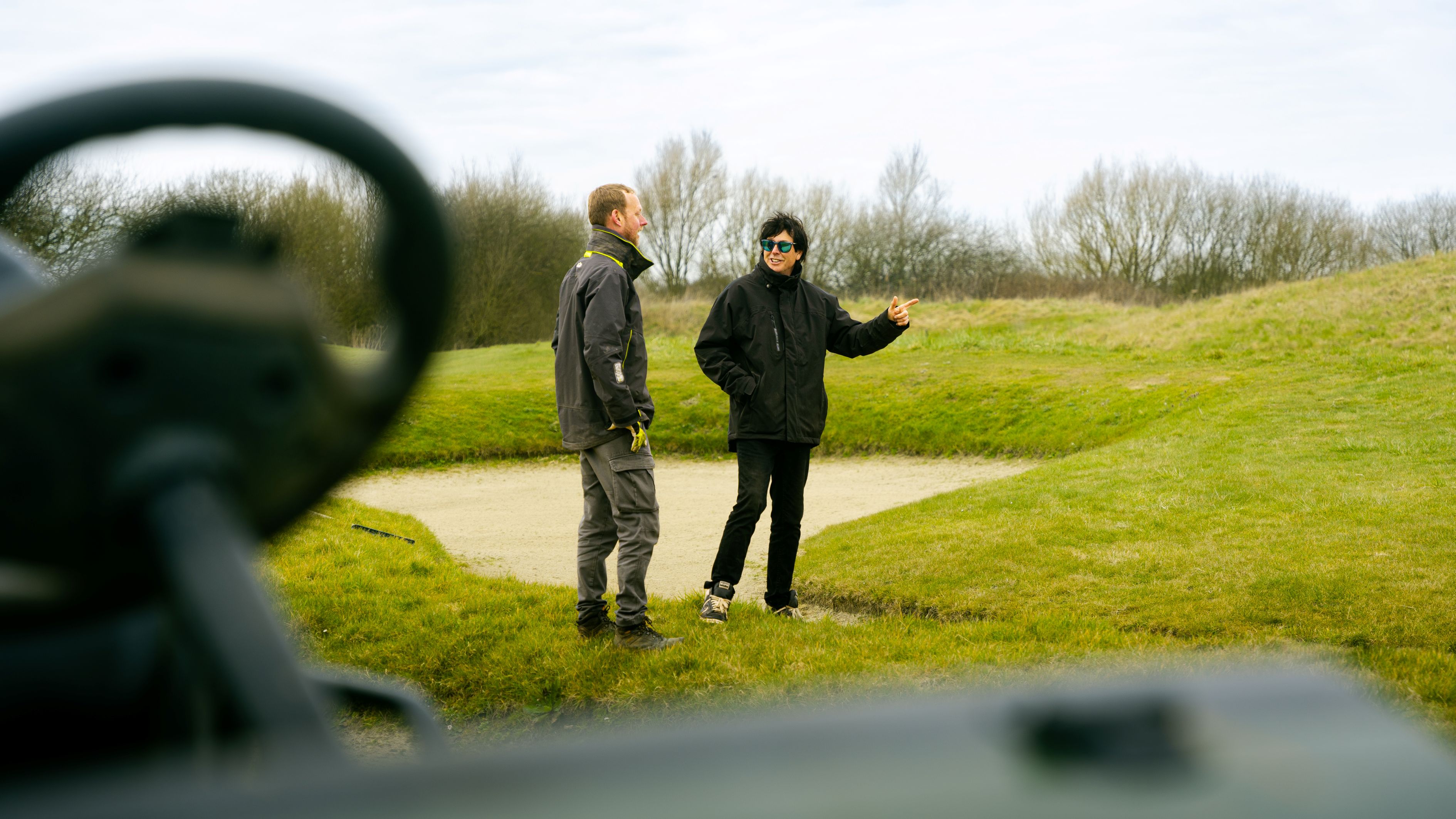
Budget wise, it really helps us. Two things we’re trying to achieve are to keep the course as cheap as possible and to keep it as a working class golf course. Membership costs at golf courses around the country are rising through the roof, but that’s because everything in greenkeeping seems to be so expensive now. I pay £1,450 at my local golf course and we charge £1,000 here. It’s great value for money, but I couldn’t do that if I was buying expensive equipment like a rough mower, or a fairway mower. Even a roller these days costs a lot of money, so robot mowers have given me more options for keeping the costs down.
What impact do the mowers have on sustainability?
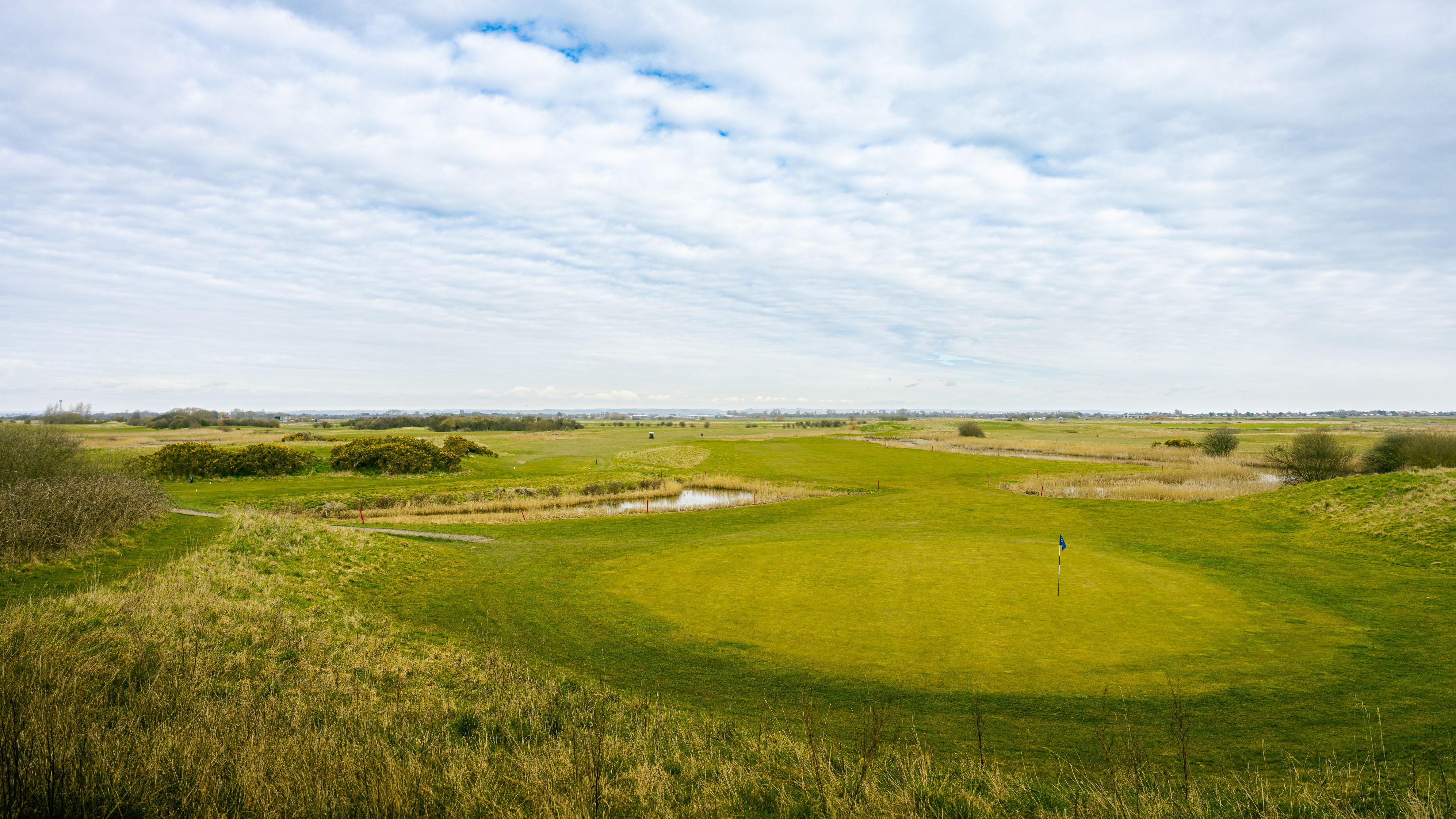
They really do help us with improving sustainability. Just think of the fuel and red diesel involved in running traditional mowers, and the man sitting on the mower breathing in fumes. That carbon footprint is pretty big. With the robots the grass never gets very long because you’re cutting it all the time. It’s easy to keep the grass at a uniform height and reduce fertiliser use. I try not to fertilise too much and look at it as a recycling: whatever clippings come off, if it mulches it, it just goes back into the soil into the swards and it all just recycles. Even with fairways, I try not to use too much fertiliser. Without a doubt, robot mowers are the future in sustainability.
How have the robot mowers managed the slopes?
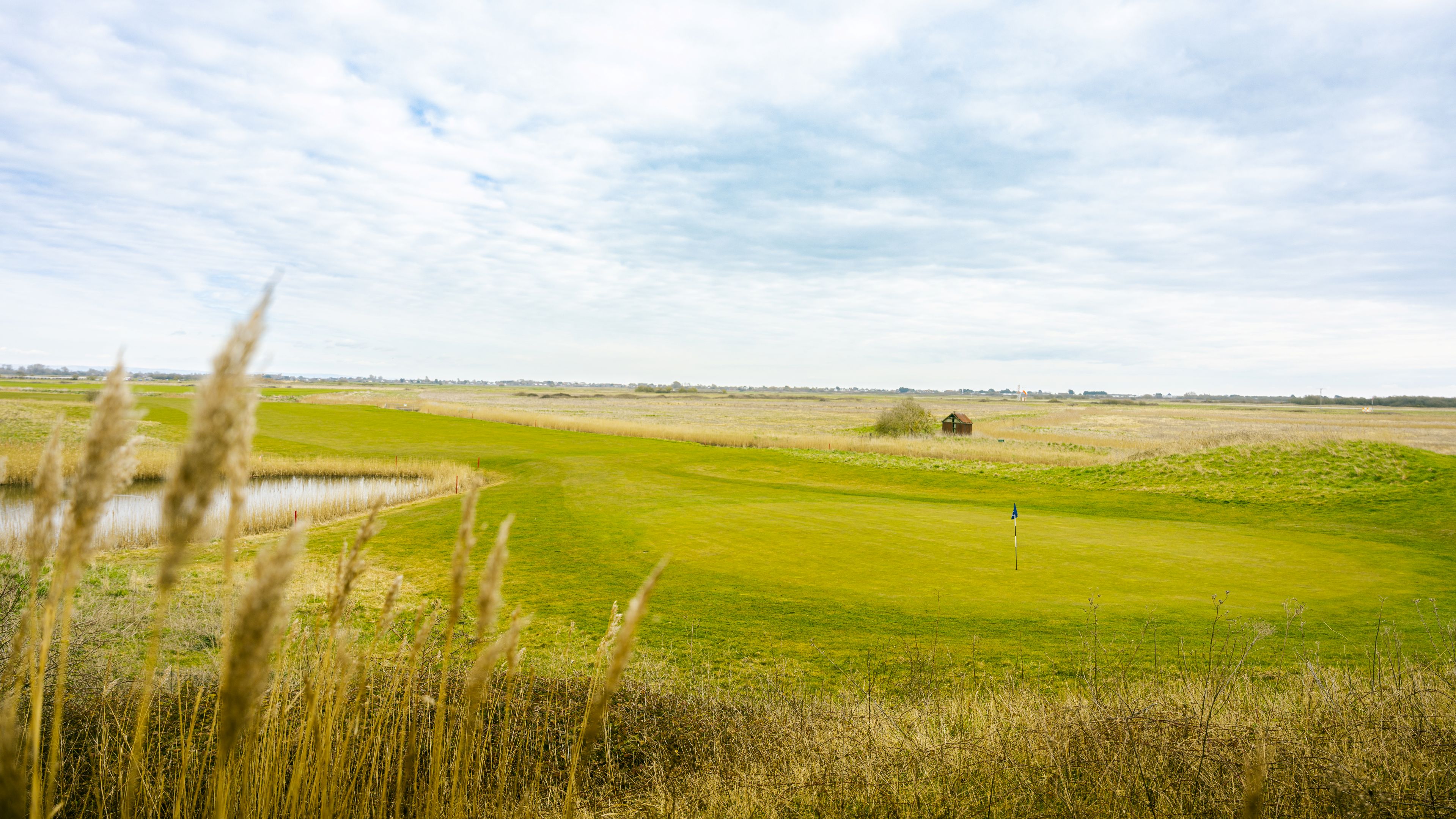
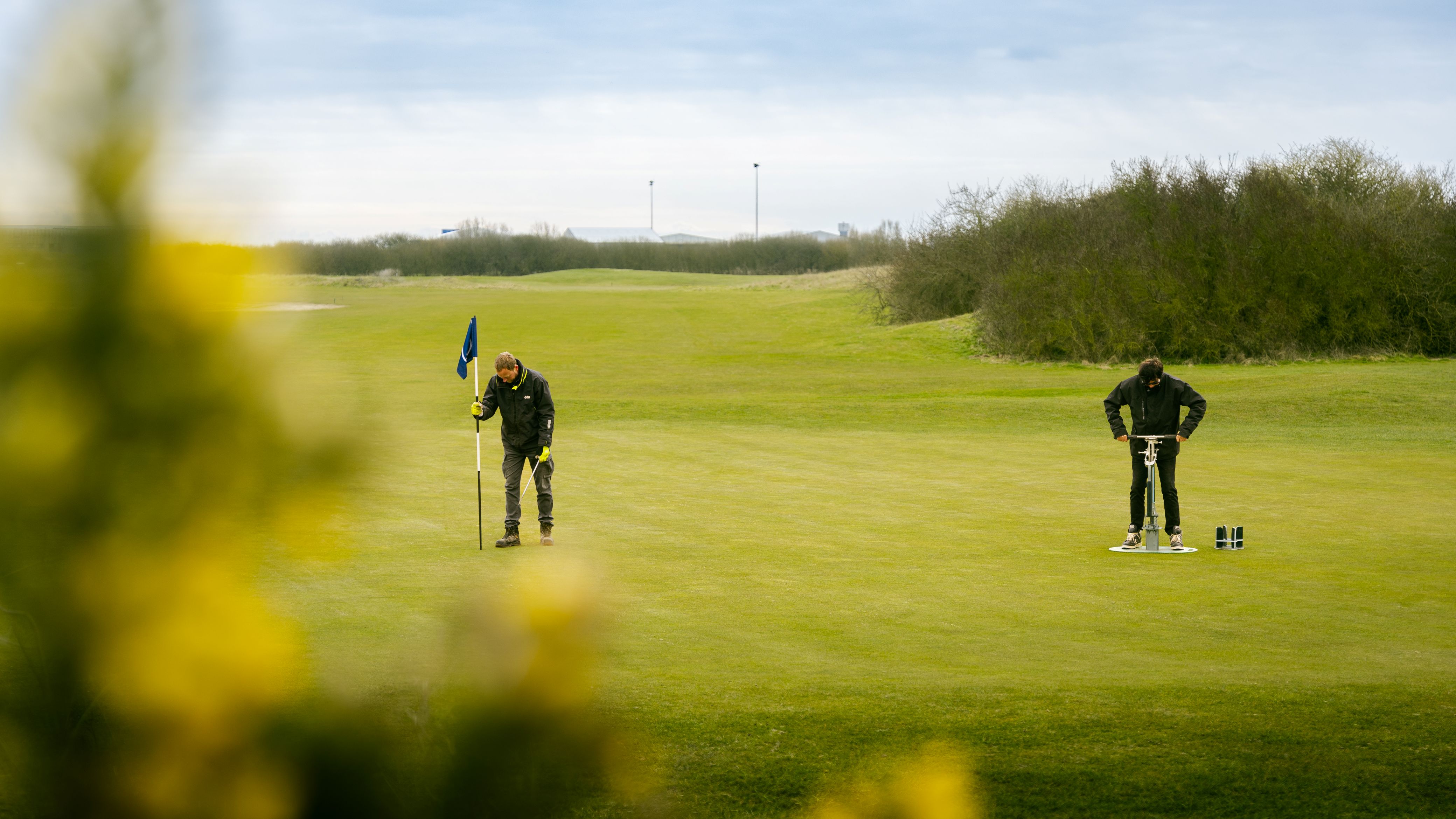
This course is quite flat so we don’t have any issues with slopes, but because the Kress mowers are smaller, they’re more nimble. I have seen the bigger robots and they can leave grass a little bit high in the dips, but these Kress ones haven’t left any issues like that. Robot mowers will probably become even smaller in time, going forward. Everyone asks me how they deal with the slopes and whether they fall over and we’ve had no issues whatsoever. We’ve even deliberately put it on some of the steeper banks and so far, so good.
How easy was the Kress robot mowers setup process?
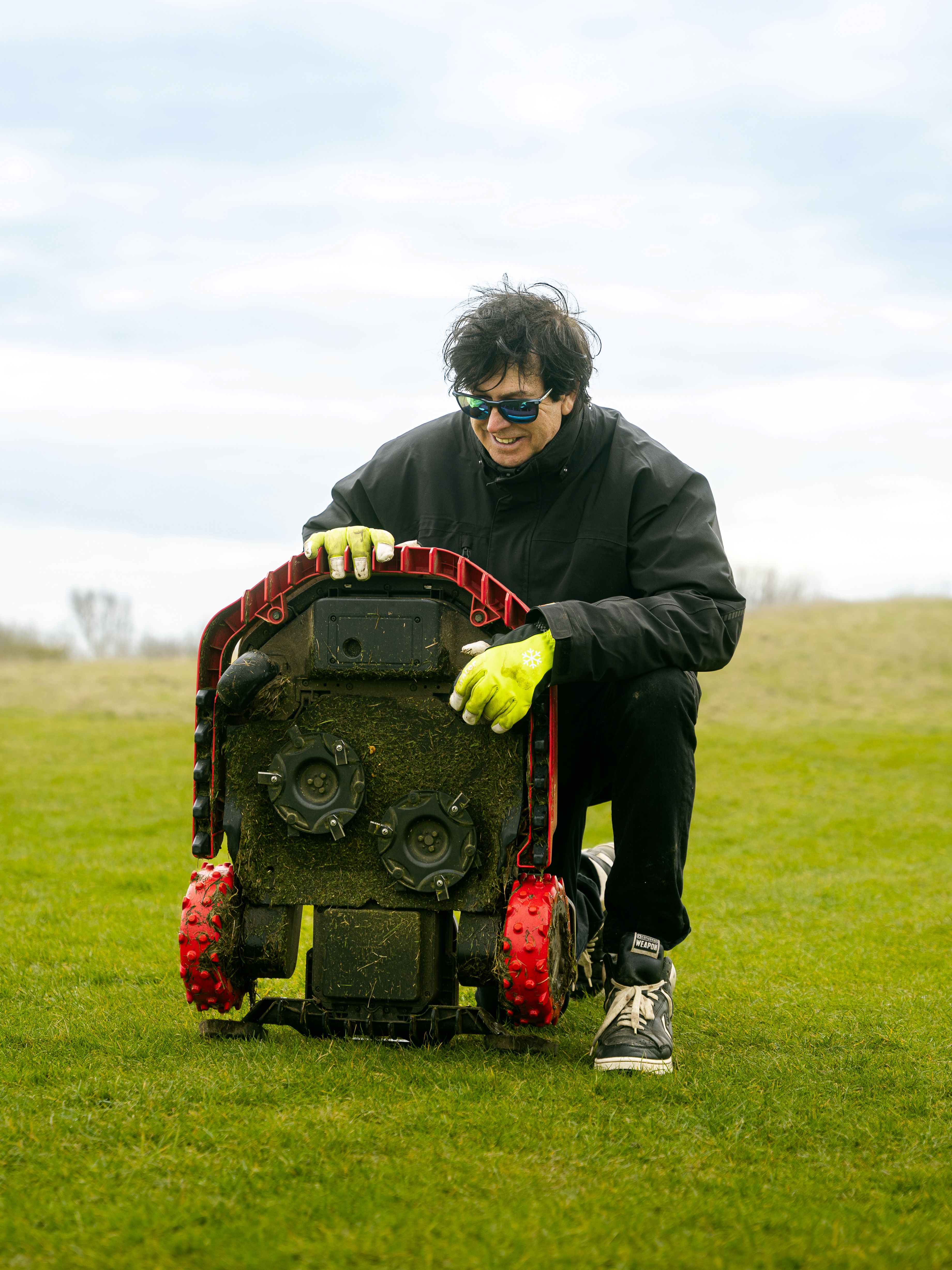
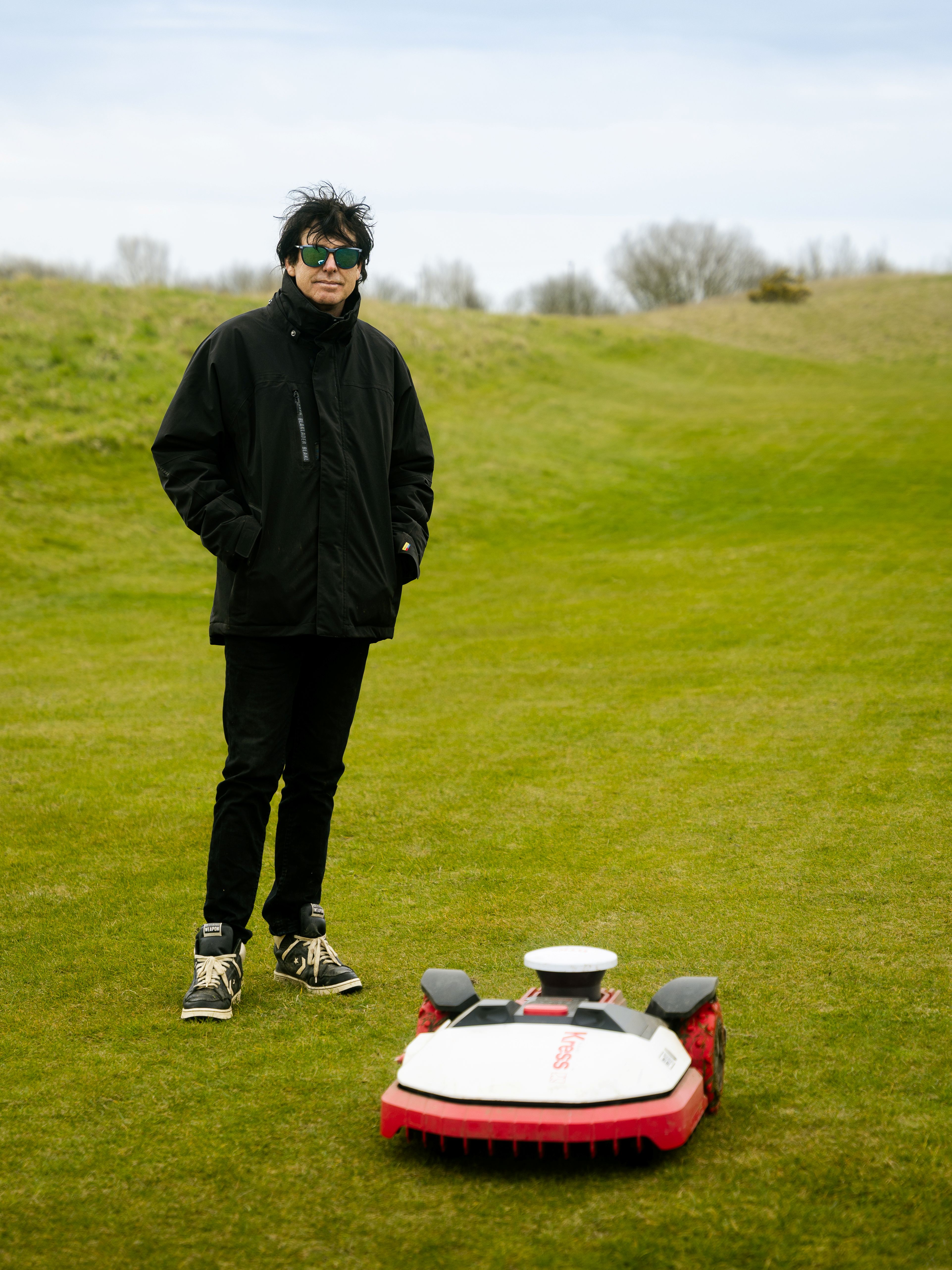
The hardest bit about the set-up is just going around mapping the course and then putting it on the app and programming exactly how you want the grass cut. Since we’ve had it here for a few months, it’s been running on the app. Now I can just leave the robot mower to it and it cuts in the night and during the day and I don’t even have to think about it. The golfers find it quite amusing and fascinating to see the mower going up and down. The whole setup process wasn’t too hard at all. We had someone come in and help us just to put the charging station up, sort out the electrics, and off you go! The only challenge for the future will be getting power to the furthest ends of the golf course. We’re going to try and see what we can do to get electricity out there: the easiest way of doing it, the cheapest way of doing it.
What lessons from Lydd and working with robots have you taken to your other clients?
For the smaller courses, if they’re struggling with rough mowers, even fairways, I will tell them that they should explore the idea of getting robot mowers. I’m trying to get them all to have a demo and see what they think, because it really is the way forward for the smaller courses. Maybe it’s even the smaller courses that should implement it first. The big courses have got all the mowers and the people they need. For courses like ours, who are struggling to get cheap enough equipment and people, this is our solution. But for me, another bonus is we’re using less diesel, which is much better for the environment and also saves us money. We get our diesel delivered every month, and towards the end of the month we were always running out and asking ourselves whether we can get more here on time, or siphoning it from vehicle to vehicle. Now we’re not going to have to do any of that anymore. The mechanic cost is going to go down too as we don’t need a mechanic full time anymore.
So for smaller courses, Kress robot mowers are that essential part of the sustainability drive that also really helps us financially going forward and basically keeps us going rather than closing down and becoming a housing estate.
What does the future look like for robotic mowers in golf?
There’s a misconception that the greenkeeping industry will come to an end and it’ll be robots doing everything. Really, we’re only trying to use it for what we can’t manage ourselves. For me, I haven’t been able to cut the rough – so I got a robot in to cut the rough. Then I realised I can cut fairways with robots too. Our usual fairway mower isn’t great and if it’s been wet on the course we sometimes can’t get out there to mow for months. For courses with worm cast issues, which we don’t have at Lydd, I try to encourage them to implement robots to help keep on top of that.
Robot mowers are there to help us. Of course, we will be changing the way we work. There won’t be a guy going around the rough five days a week any longer, although there will still be courses that want to do that. I’m not going to say that’s not how you should do it, but we can’t afford to do it that way, we’re going to do it this way.