
Agronomists from The R&A recently gave a presentation to Swiss greenkeepers about cutting-edge research on grass species management and the championship agronomy and sustainable practices designed to future-proof golf course performance across Europe. Here is a summary of what they talked about.
Members of The R&A Sustainable Agronomy team attended the Swiss Greenkeepers Association’s (SGA) inaugural autumn seminar this autumn at the Tissot Arena in Biel. The event brought together turfgrass professionals from across Switzerland, including delegates from the French, German and Italian-speaking regions.
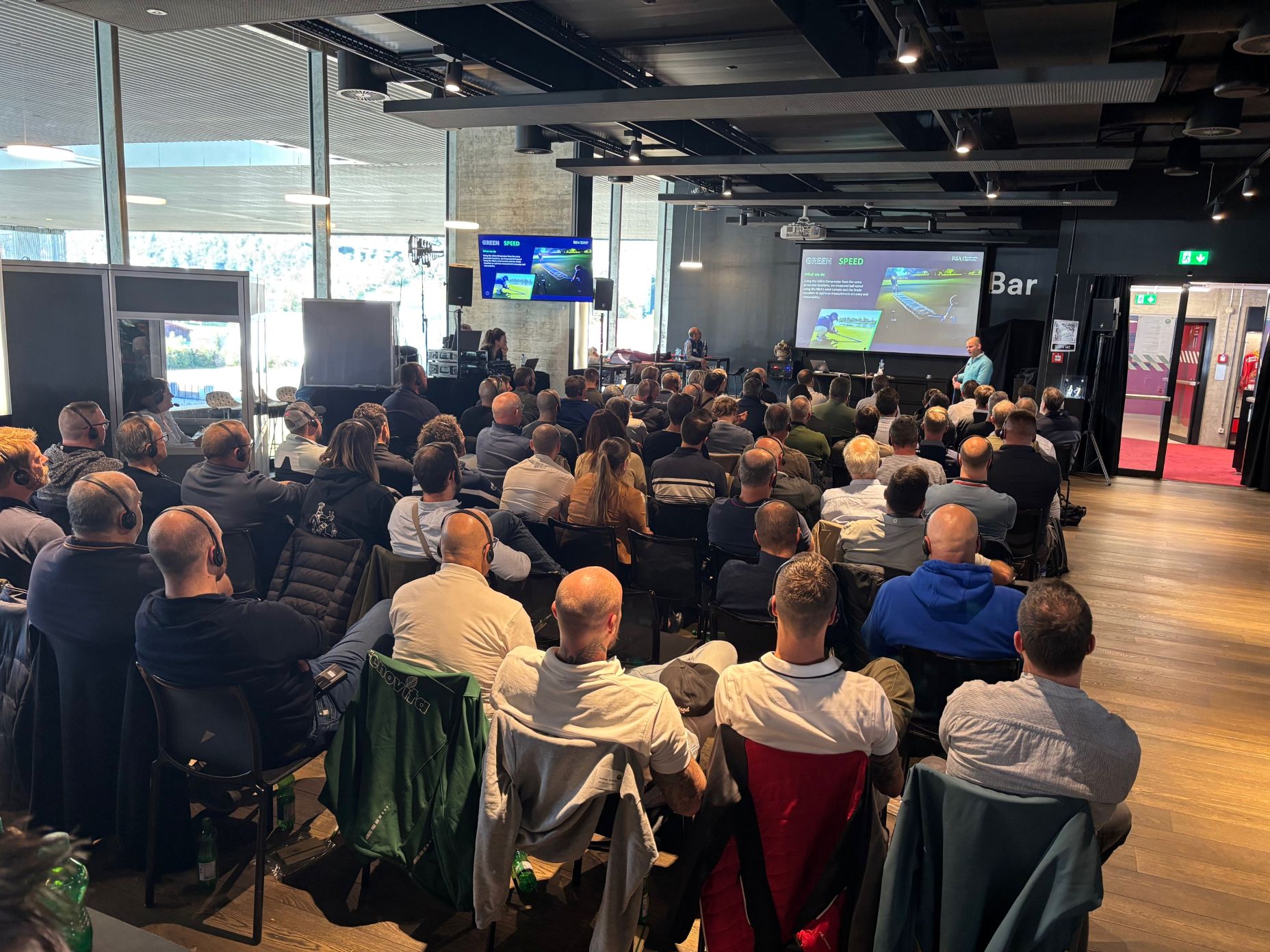
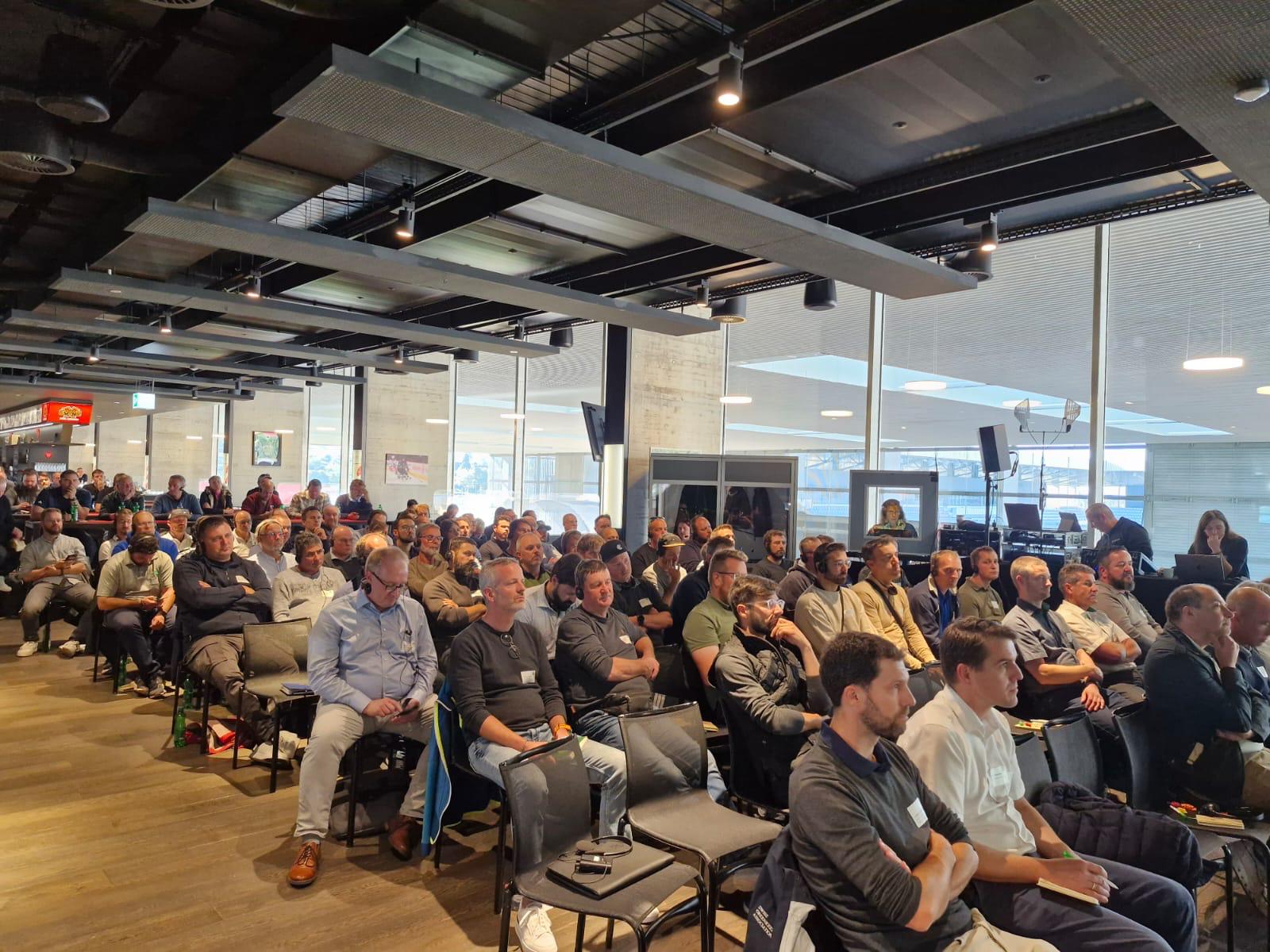
The seminar explored the latest research and practical developments in greenkeeping and course management. The event attracted a diverse audience of greenkeepers and turf professionals committed to improving sustainability and performance on European golf courses.
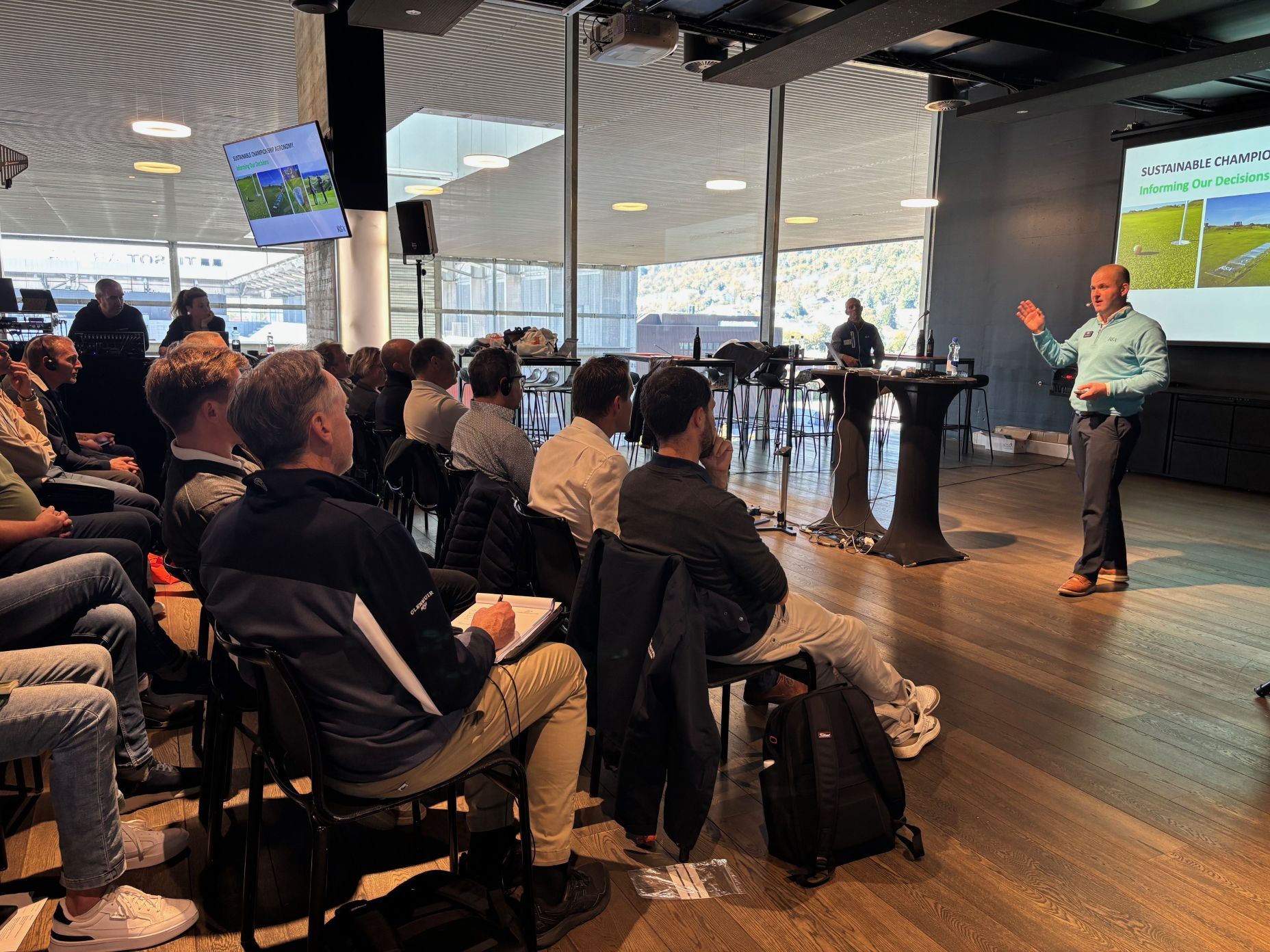
The morning session from R&A Sustainable Agronomy focused on ‘Disturbance Theory’, offering a clear and practical framework to help greenkeepers manage grass species conversion to optimise turf quality and playing performance under increasingly challenging regulatory and environmental conditions. This theory provides an understanding of growth strategies of the major turfgrasses to help turf managers make better decisions regarding greenkeeping practices to promote the finer grasses (fescue and bentgrass) in greens – particularly in cool-season environments across Europe.

“With the changing climate and tighter regulation combined with the need to provide high quality playing surfaces in an environmentally responsible way, one of the solutions is to optimise grass composition towards more resilient species,” commented Richard Windows, assistant director – Sustainable Agronomy Services at The R&A. “The Disturbance Theory was developed to improve turf managers’ understanding of grass composition change and we hope the session helped the delegates achieve their agronomy objectives.”
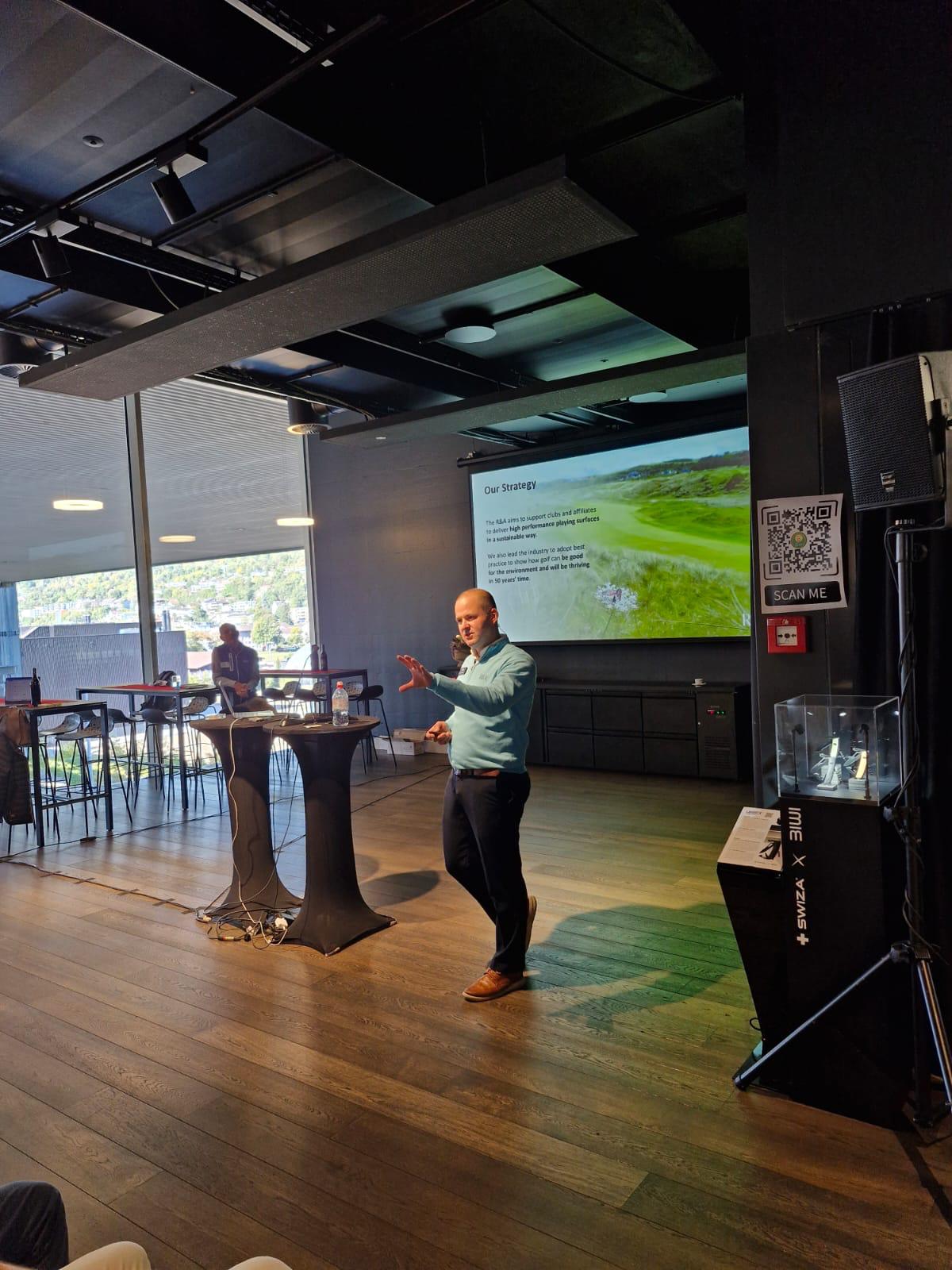
In the afternoon, the presentation ‘What Makes Good Golf Greens? Agronomy in Championships Around the World’ examined the measures and techniques used to deliver world-class playing surfaces at major championships and how these techniques can be utilised to optimise turf and playing performance for every golf facility. These include monitoring green speed, firmness, trueness and moisture using advanced USGA tools and smart sensors; managing organic matter content and clipping yield to balance performance and sustainability; and applying soil physical analysis to optimise infiltration rates and moisture retention for consistent year-round play.
“Through its championship agronomy programme, The R&A employs a data-driven methodology to achieve optimal playing conditions,” said Hector Forcen, central Europe agronomist for The R&A. “This includes precise measurements of green speed, firmness, smoothness and moisture content, using tools like the USGA Stimpmeter and GS3 smart ball. A critical focus is placed on the control of organic matter and the analysis of soil to inform decisions that enhance both playability and sustainability. This scientific approach ensures that the presentation of championship venues is consistently excellent and environmentally responsible.”
These insights reflect The R&A’s wider strategy to support golf facilities in achieving sustainable, high-quality playing conditions, helping ensure that the sport thrives for future generations.