
After a wet winter, moisture stress feels distant, yet the 2025 drought proves how fast conditions shift. As waxy soil coatings lead to dry patches that irrigation alone cannot fix, geenkeepers must tackle hydrophobic rootzones now, writes Dr Abigail Graceson, Technical Manager at Agrovista.

Following a notably dry spring and summer across much of the UK in 2025 many turf managers have recent experience of the consequences of moisture stress on turfgrass. Since then, conditions have changed considerably. Significant rainfall this winter has seen January 51% above the long-term average for England and Wales and 58% above average in Northern Ireland.
While irrigation and drought stress may seem like distant concerns, experience shows that these conditions can return quickly once spring and summer arrive. Periods of high evapotranspiration combined with limited rainfall can place pressure on turf surfaces making it essential that the rootzone is able to make the most effective use of available water.

Golf accounts for roughly two percent of water abstracted for industrial uses in the UK, equating to around 8.6 million litres per day. As part of the National Framework for Water Resources, the Environment Agency has set objectives to reduce non-household demand on abstracted water. Sports turf irrigation, including golf, therefore sits within a broader discussion around responsible water use.
Against this background ensuring that water is used effectively becomes increasingly important. Turf performance is closely linked to how effectively water moves through the soil profile. Rapid movement away from the playing surface alongside lateral spread through the rootzone helps to maintain firm playing surfaces and uniform moisture levels.
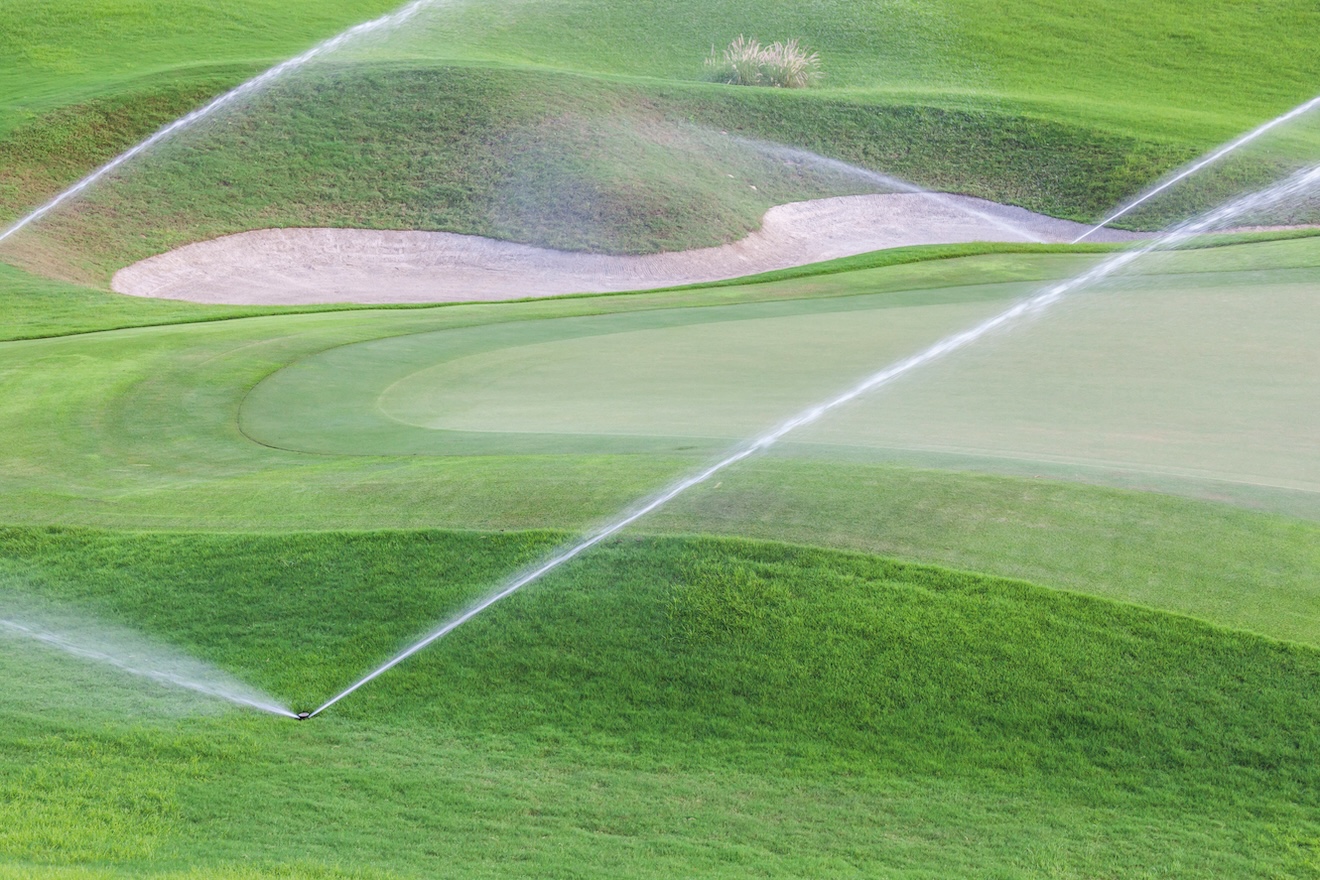
The soil particle distribution plays a major role in this process. Small particles such as clays pack tightly together creating smaller pore spaces which hold water against gravity and evapotranspiration. In contrast, larger particles such as sand create larger pore spaces which allow water to drain more quickly but also reduce overall water retention.
While sand-dominated rootzones are widely used in golf to promote drainage and consistent playing conditions, they can also be more susceptible to uneven wetting. One contributing factor is soil water repellence.
Over time soil particles can become coated with waxy organic substances derived from fungi and decomposing plants. This creates a hydrophobic barrier around soil particles which repels water causing it to pool on the surface or move through preferential pathways in the soil. For turf managers, this often appears as localised dry patch, where some areas remain dry despite irrigation or rainfall. Sandy soils can be more prone to this because their smaller surface area is more easily coated with the waxy material.
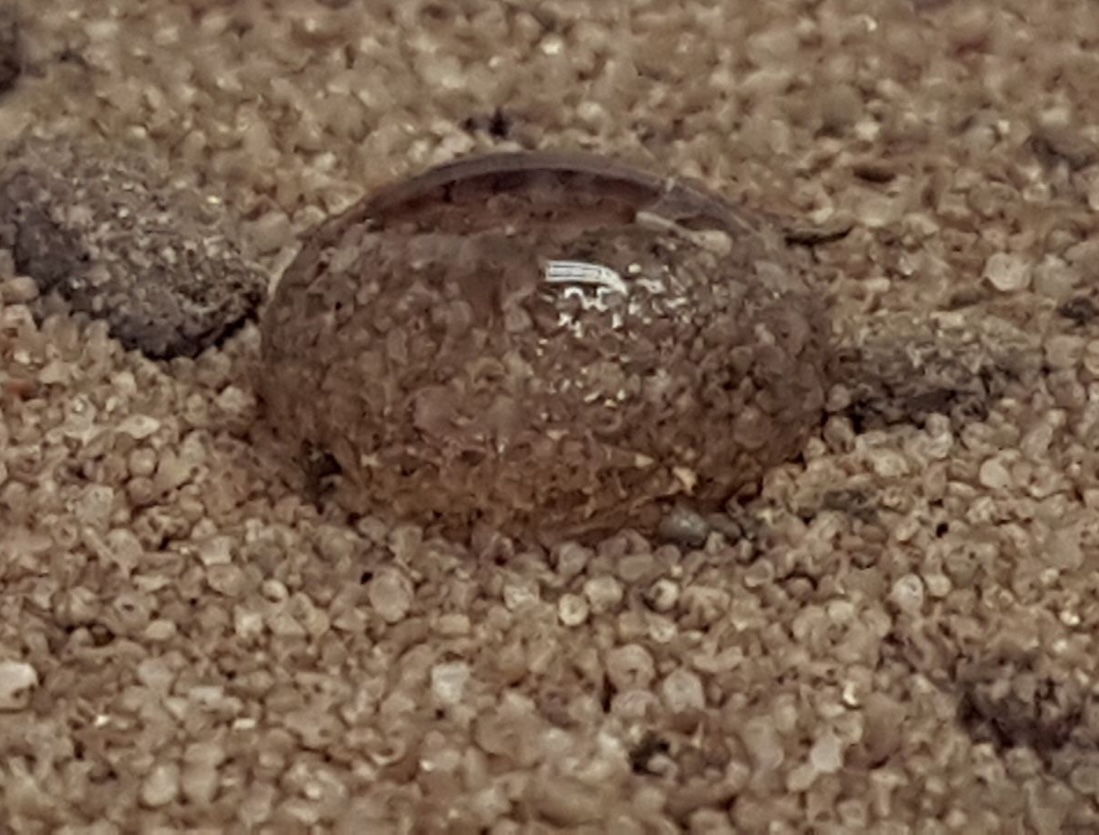
During extended dry periods microbial activity declines reducing the natural breakdown of hydrophobic waxes. Cultural practices that support soil microbial communities which assist in this natural breakdown can help reduce the development of water repellence.
Where hydrophobic deposits have already developed, preventative management is far more effective than reacting once localised dry patch becomes visible. In addition to longer-term strategies that support soil microbial activity, certain surfactant chemistries help to remove waxy deposits from soil particle surfaces. Surfactants also reduce the surface tension of water, allowing it to move more freely through soil pore spaces and distribute more uniformly throughout the rootzone.
While winter rainfall still feels plentiful, dealing with water repellence now means turf surfaces stay healthy and playable even when the dry spells inevitably arrive.
For more information, visit: amenity.agrovista.co.uk