
From dawn pump checks to fighting off ants in valve-in-head sprinklers, Walton Heath Golf Club’s irrigation technician, Alex Lungu, tells John Kidson how he keeps water flowing across the venue’s 1,700-plus sprinklers, and why staying curious matters more than any tool in his kit.

What does a typical day look like for you as the irrigation technician at Walton Heath?
My day starts with checking over the pumps and recording our water usage overnight. We keep detailed logs for both automatic and manual watering, this way we can compare against several data points to create a picture of water usage patterns. It really helps our decision-making process.
After all daily checks are done, there is a briefing with the course manager about watering needs and expectations for the day, and then I head out onto the courses. You’ll usually find me kneeling over a sprinkler, either double checking arcs, timing soaking times or flushing.
In wintertime, I spend most of the days planning improvements, checking stock and training people.
What are the main tasks you’re responsible for on a day-to-day basis?
As the role name implies, my main job is to ensure access to water is unhindered: that means the infrastructure works correctly, that we have sufficient water for it and that we make the right decisions about how we use it. This means that my day-to-day life is always changing and evolving: it could be that I’m out trimming sprinklers, tidying up valve boxes, checking our water levels or flushing sand out of nozzles.
Irrespective of what my daily to-do looks like, I’m always aware about the importance of efficient communication, so I try to keep everyone in a loop about what is happening. I get the same treatment myself; the feedback I receive from the teams plays a role in prioritising tasks.
How much of your role is reactive, such as fixing issues, versus planned maintenance and system management?
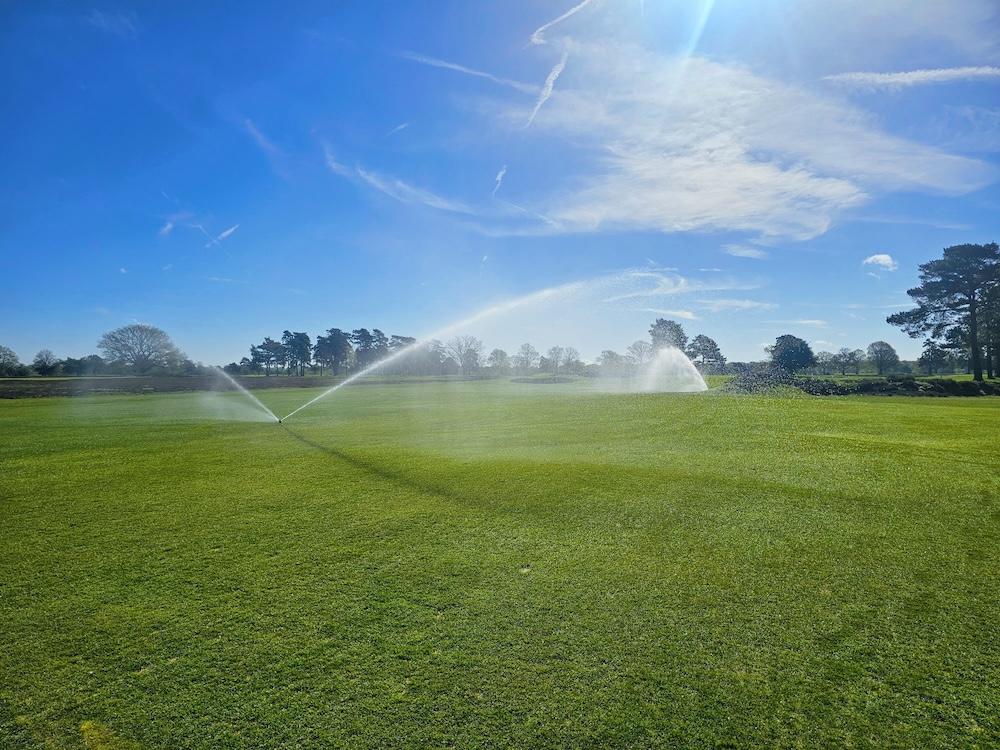
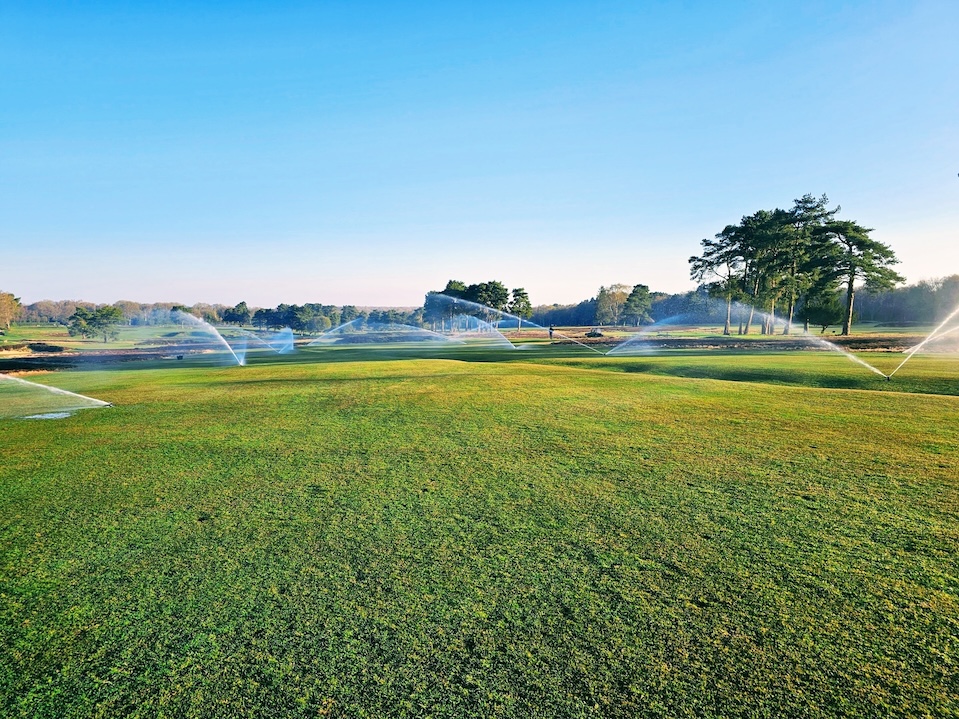
As the system evolves, and according to the time of year, my role goes through different phases: in wintertime, we are in upgrade mode, where we expand and improve, but going into summer there will be a higher demand for action to reinstate / repair the infrastructure. Some of it is expected, as we pressurise miles of pipework and 1,700-plus different sprinklers, there is bound to have some issues arise.
During the summer season, the role tends to become more about anticipation than reaction. With the last season proving so dry, our focus shifted towards advanced planning for different dry weather scenarios, so during that time, the focus is on keeping the right balance of moisture and water availability.
Are you solely focused on irrigation, or do you also look after other water-related areas around the club?
We don’t have any water features, so my only focus is on irrigation, in any of its forms, be it looking after the reservoir, our borehole, or mains supply.
During the peak summer months, how does your workload change?
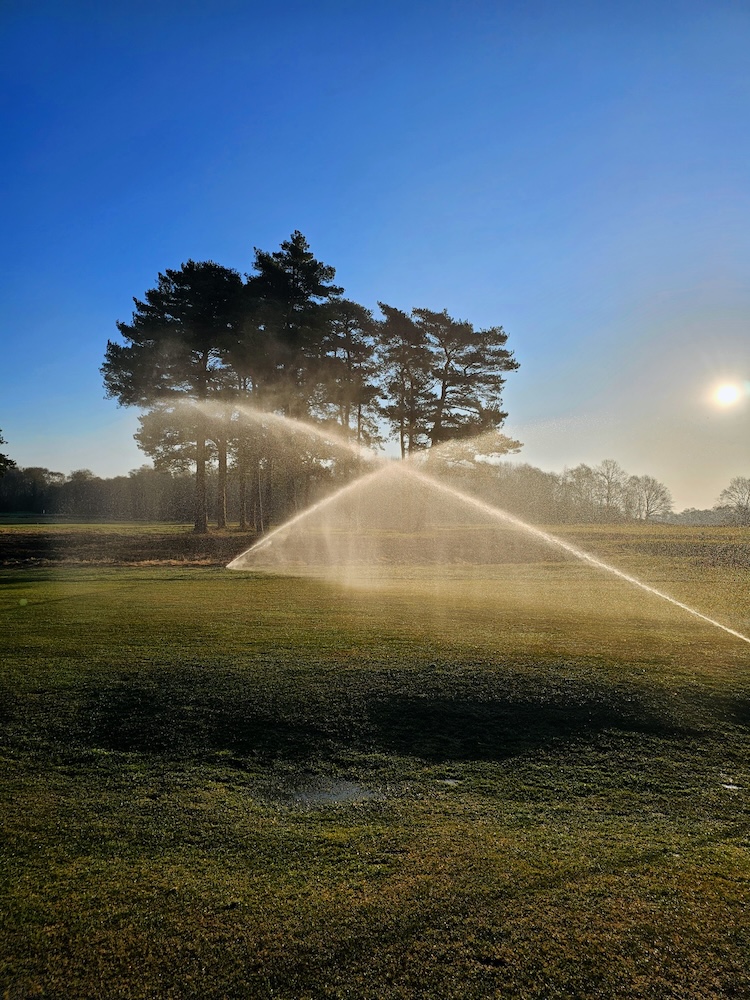
The summer months are for data collection, interpretation and prediction, but also water availability management. The heath can prove challenging to manage in dry spells of weather, as there is usually a prevailing wind accompanying those times, due to our altitude and landscape. It is then when it becomes crucial to record what is happening, compare with previous seasons, try new ideas, all whilst making sure the water we use is not wasted.
What are the most common issues you deal with on the system?
Walton Heath is very fortunate to have had a new efficient irrigation system installed not too long ago, so we don’t yet have the sort of showstopper issues one expects from an older system.
The most common issue, although not technically challenging, is fighting the ants that seem to find pleasure in nesting inside our valve-in head sprinklers. And with more than 1,200-plus out on the course, it is certainly the most time-consuming task for me.
How closely do you work with the course manager and greenkeeping team when it comes to irrigation decisions?
My work is influenced by many factors, but its fundamental role is to support agronomic decisions. In that respect, we have daily briefings in which the course manager as well as the head greenkeepers, who discuss their expectations, and I provide them with realistic solutions. I also try to incorporate the greenkeeping duties in my daily plans, to anticipate their needs, and rely on feedback from the senior leadership.
Apart from the daily discussions, I keep a diary of the most important decisions of the day, and I also share monthly reports, covering essential information.
What tools or technology do you rely on most in your role?
Most of my work is made easier by the mobile apps I use, to control irrigation and perform field tests. The diagnostics capabilities of this generation of irrigation systems are really good, they help speed up the troubleshooting process a lot.
Then there are the typical tools one would find in this field: water pump, clamp meter, an assortment of wire strippers, pipe wrenches, pipe cutters and so on. But the most unexpected tool in my bag is probably a label maker. I use it all the time on cables and key areas around the pump set. I mark down refill rates, set points and capacities so there is easy access to critical information.
What part of the job do you enjoy the most?
The most pleasing part of the job, or any job for that matter, in my eyes, is learning something new or figuring something out, the lightbulb moment. It is so satisfying when the pieces of a puzzle finally fit, and a problem that was bugging you has now found its resolve.
And the sunrises are pretty cool too, I guess.

What’s the most challenging part of being responsible for irrigation on a course like Walton Heath?
The most challenging and most exciting part is ensuring the system grows old with grace. It sounds poetic and a cliche, but as our system ages, it is important it does so with a good tolerance to faults. That means we must find creative ways to guarantee system redundancy, whether that means duplicating critical components, or training more people to allow continuity of operation.
Have you seen the role of an irrigation technician change in recent years?
My experience and exposure to the irrigation world is quite limited, but I have had great opportunities to meet industry veterans through workshops, seminars, meetups and the dedicated irrigation WhatsApp group, and my observation is there is now a bigger emphasis on water procurement and storage, with a lot more compliance factored in. Our water resources are becoming the most important aspect of irrigation now, and they demand the highest level of scrutiny, whereas 25 years ago, the irrigation field’s biggest concern was to ensure a reliable infrastructure.
For someone looking to get into a similar role, what skills or mindset do you think are most important?
Stay curious, ask questions, and build a strong community around you. The biggest advantage of the industry is its people, and I get a lot of great advice from a lot of folks willing to have a chat.
John Kidson runs JK Irrigation, which provides irrigation solutions to golf clubs. Find out more at www.jkirrigation.co.uk