
Achieving the optimum bar pressure is essential in an irrigation system. But what is it, what should you be aiming for, how do you achieve that, what factors around the course affect it and what happens if you don’t hit it? Here, irrigation expert John Kidson explains what you can do to get the best out of your system.
As an irrigation engineer and someone who’s spent years in the field, I often get asked about bar pressure and why it changes around a course or sports ground. It’s one of those things that can make or break your irrigation system, so I wanted to share a bit about how it works in practice.
What is bar pressure?
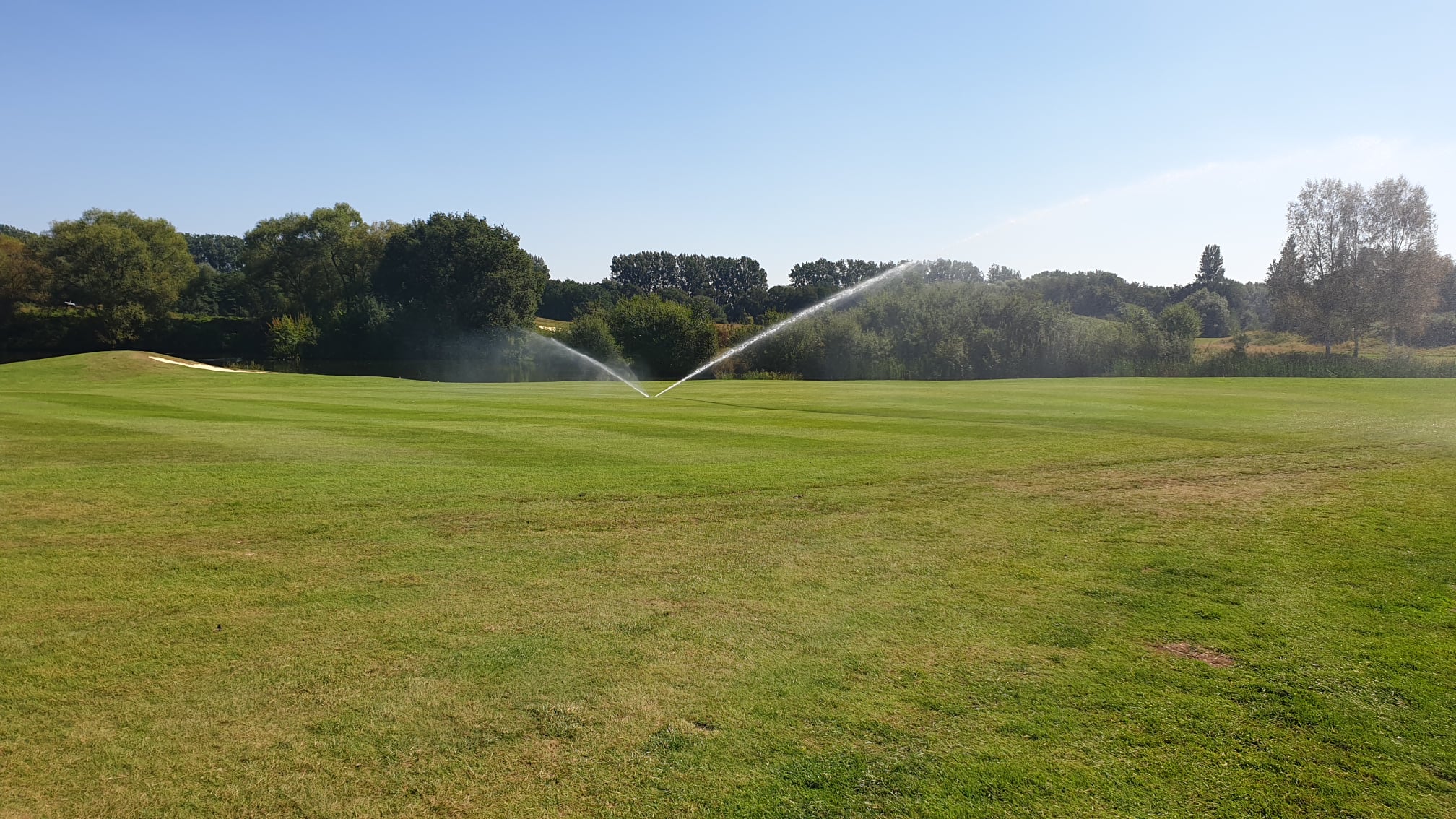
Bar pressure is simply the pressure of the water in your irrigation system, measured in bars. In most cases, you will want your sprinklers to operate somewhere between five and eight bar for decent coverage. But it’s never quite that straightforward because the landscape and pipework play a big part in what pressure you get at the sprinkler head.
How elevation affects pressure
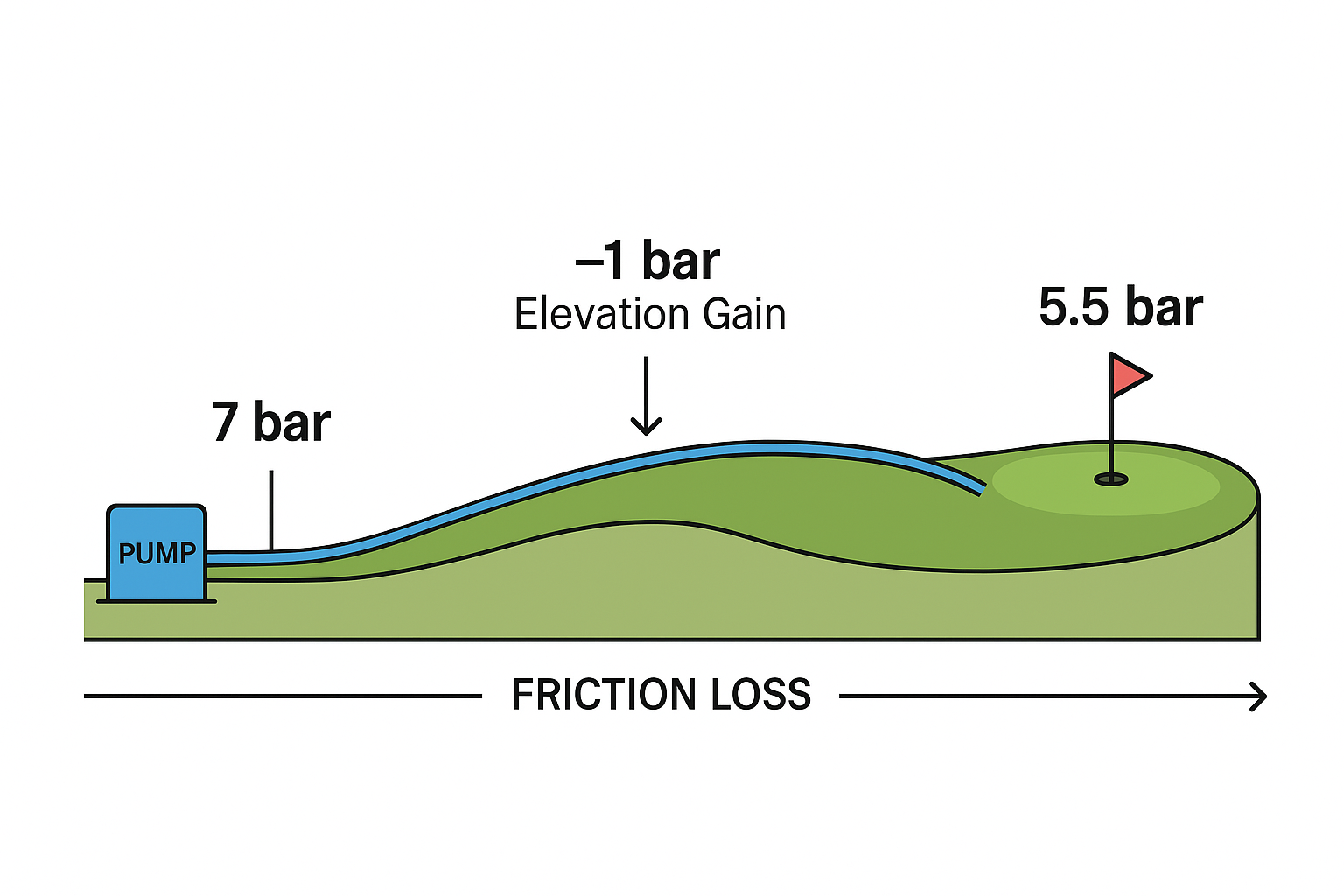
When you’re pumping water uphill, you’ll always lose some bar pressure because gravity is working against you. A good rule of thumb is that for every 10 metres you go uphill, you lose one bar of pressure. So, if you’re starting out at eight bar from the pump and you’re irrigating a green 10 metres higher up, you’ll end up with about seven bar at the top.
On the flip side, going downhill boosts your pressure by one bar for every 10 metres of descent. That’s handy if you’ve got a big slope, but it can be a headache if your pressure gets too high at the bottom – potentially causing leaks or damage if you’re not managing it properly.
Friction loss in the pipes
Even on the flat, you’re going to lose some bar pressure as the water travels along your pipes. This happens because the water rubs against the inside of the pipe, what we call friction loss. Longer pipe runs and narrower pipes mean more friction, and the faster the water is flowing, the more you’ll lose.
For example, a 100-metre run of pipe can easily drop your pressure by half a bar or more, depending on the pipe size and flow rate.
A real-world example
Let’s say you’re starting with eight bar at the pump and you’re irrigating a green that’s 10 metres higher up and 100 metres away.
First, you lose one bar because of the height difference.
Next, you lose another half a bar to friction over the 100 metres of pipe, although if it’s a small bore and a newer poly pipe system, it’s much less.
So, at the sprinkler head, you’ll end up with about 6.5 bar. If your heads need 4.8 bar minimum, you’re fine. But if you wish to run multiple heads, you may start to see poor coverage if you can’t maintain the flow and pressure.
If you’re going downhill, it’s the same story in reverse – you’d gain a bar on the descent.
How to manage these pressure changes
There’s no single fix, but here are a few things I always keep in mind:
• Use bigger pipes for longer or uphill runs to keep friction down
• Don’t try to push too much water through one zone at a time
• Put in pressure regulators if you’re dealing with steep drops, irrigation products within golf and sports tend to range between 10 and 16 bar max rated pressure.
• Nozzles and sprinkler bar pressure have a big effect, so undertaking an audit of the current poor coverage areas will help you understand the reasons. Quite often, smaller nozzles help create more pressure and coverage in low flow, bar pressure areas.
Final thoughts
Pressure changes are part and parcel of any irrigation system, especially on a golf course or sports pitch. Understanding how bar pressure works and making small tweaks can really help you get the best out of your system.
Contact John Kidson @JKIrrigation on all socials