
Measuring green speed is hard enough on a calm day. On an Open links, The R&A has a clever solution to the wind.
The organisers use a clear plastic tunnel. It is between 10 and 20 feet long and only a few inches high. It carries the R&A’s logo, and has small ridges along its sides roughly every six inches. One person holds the stimpmeter at one end so that the ball runs through an opening and, ideally, emerges from an identical one at the other end without being pushed off line by the breeze.
The stimpmeter itself is a simple tool. It was devised in the 1930s by Edward Stimpson and was originally made of wood. Today’s versions are aluminium, 36 inches long, with a V-shaped track that keeps the ball running straight once it passes a small notch near the top.
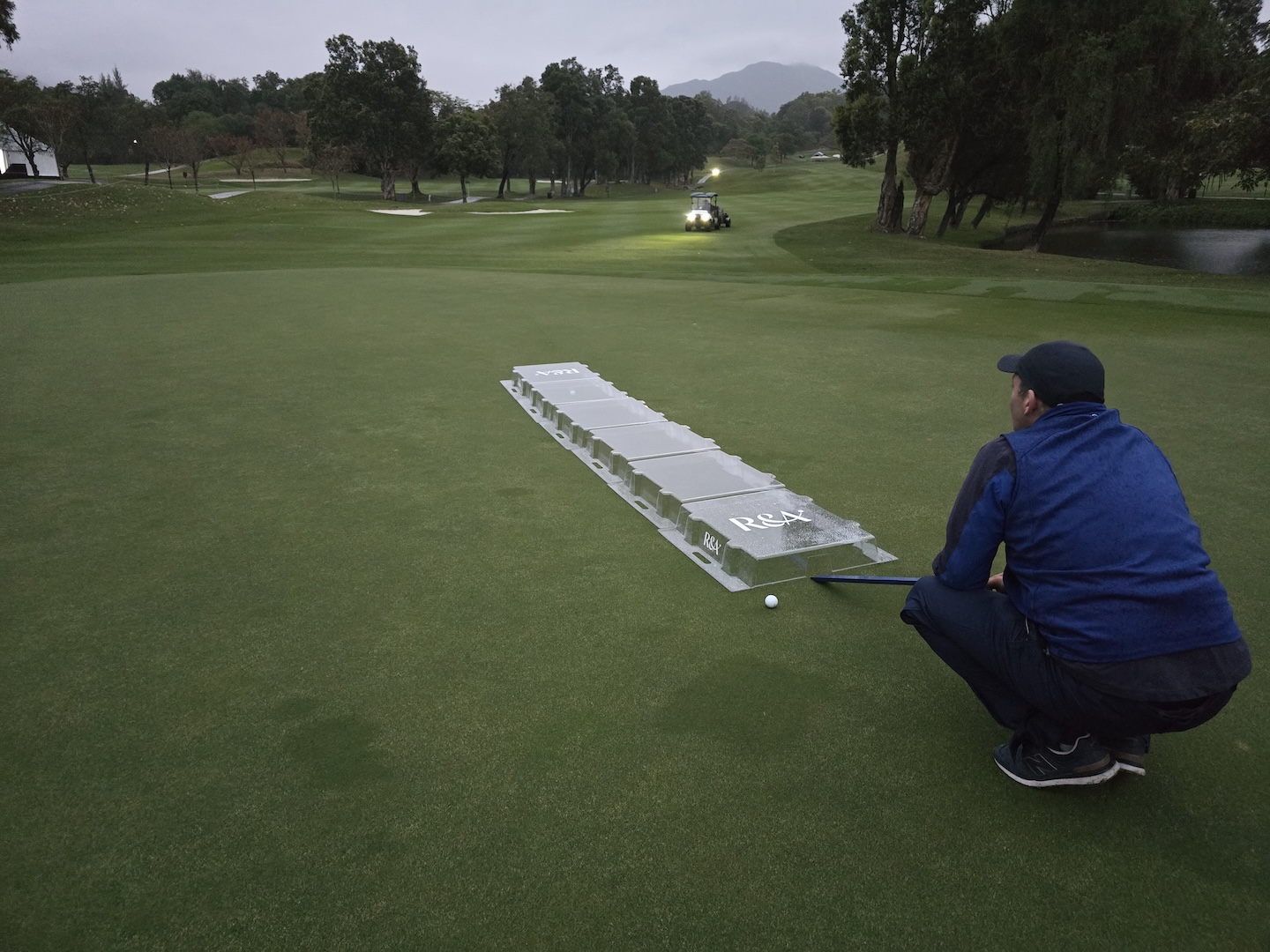
To use it, a greenkeeper first finds a flat patch of green, then rolls three balls down the ramp and measures how far each travels. They take the average, then repeat the process in the opposite direction, starting from the point where the first three balls came to rest on average. The two averages are added together and divided by two, giving the reading.
Links courses make this harder, because flat areas on greens are scarce and the wind is always a factor. Lowering the release point on the stimpmeter reduces the distance the ball travels, which helps with the first problem, but the wind needs more.
The numbers show how different an Open is from a regular tour event. Through the first three rounds at Royal Troon in 2024, green speeds ranged from 10.7 to 10.9, against about 12 at a typical PGA Tour event. At the previous Open at Troon, in 2016, speeds were slower still, at under 10.
The slower speeds are partly a necessity. Keeping greens at a modest pace allows play to continue in the high winds that go with links golf.