
Consistency is one of the defining measures of golf course quality with golfers expecting greens to perform to the same high standards every day, regardless of weather or seasonal pressures. For course managers, delivering that consistency requires not only strong turfcare practices, but the right equipment.
That’s why precision rolling is an increasingly integral part of greens maintenance programmes — whether it is speed, smoothness or firmness, it is an effective way to improve trueness, ball roll and playability, often allowing clubs to maintain desired green speeds.
What constitutes a good roller?
A good roller should support the wider turfcare programme. The best machines allow greenkeepers to maintain smooth, fast putting surfaces without relying solely on lower heights of cut, helping reduce stress on the plant and supporting healthier turf throughout the season. Let’s see how Toro does it.
One of the most important qualities of a good greens roller, like the new Toro GreensPro e1700, is consistent rolling performance.
In Toro’s new model it is delivered by a combination of features: a larger roller — now 69-inches wide — for uniform pressure without unevenness or tracking, and Toro’s Precision Pass Alignment which helps operators line up each rolling pass accurately with the touch of a button.
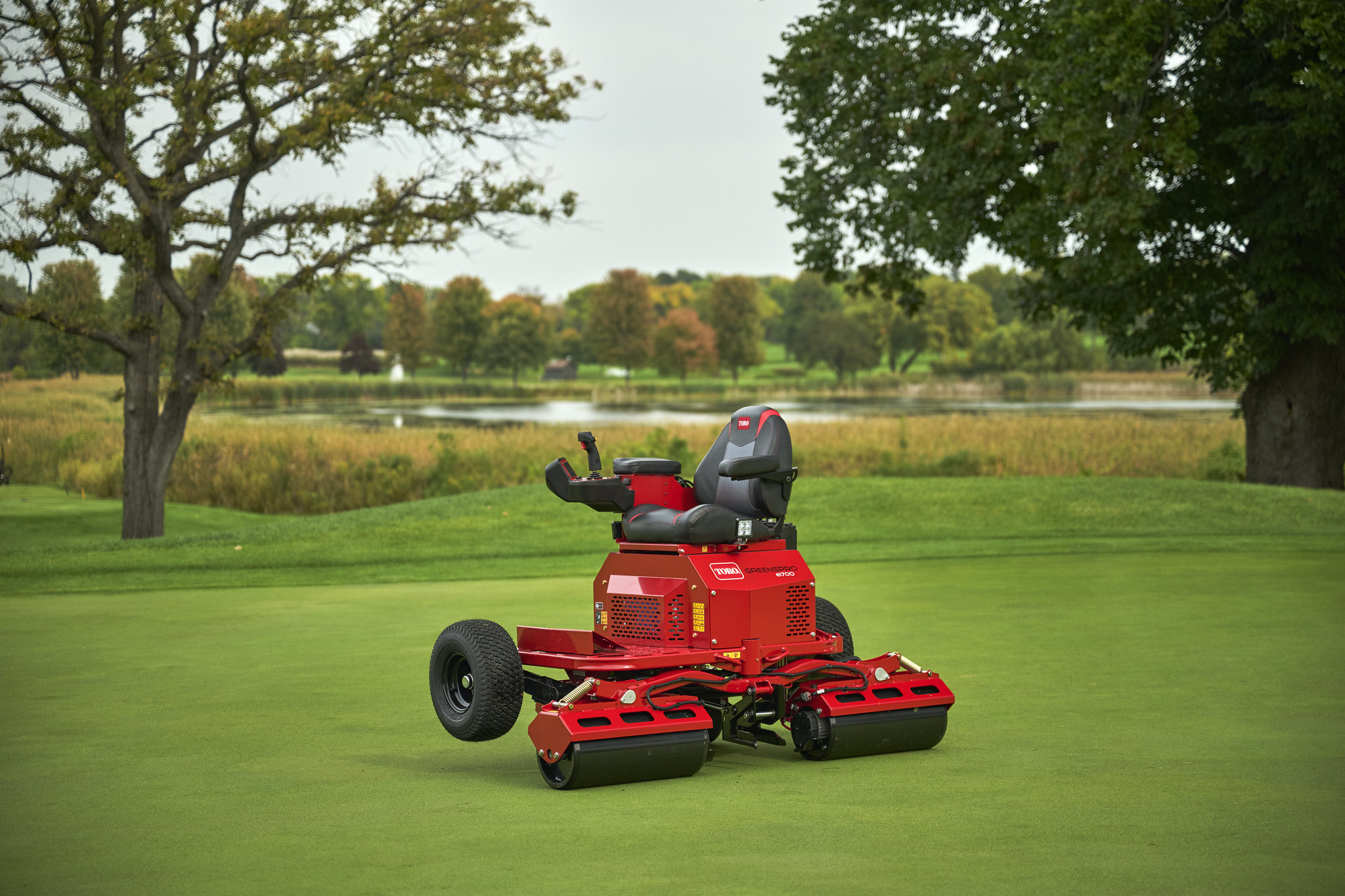
This technology means that rather than relying solely on operator judgement to position the machine for the next run across the green, the system helps guide alignment to maintain precise coverage and reduce missed strips or overlap.
Jon Cole, divisional business manager at Reesink Turfcare, says: “Traditionally, achieving perfectly aligned passes has relied heavily on the experience and judgement of the operator, particularly in changing light conditions or on more complex green shapes. Toro’s Precision Pass Alignment helps remove some of that variability, allowing for a cleaner and more uniform finish with less effort.”
This technology and the wider roller combined supports efficiency. By getting more work done on each pass, simplifying alignment and reducing the likelihood of rework, operators can complete rolling programmes more quickly and confidently.
Jon continues: “For course managers focused on delivering consistent green speeds day after day, repeatability is a major advantage. Uniform coverage helps ensure the entire putting surface reacts the same way, contributing to truer ball roll and improved playability.”
Why ease of use will always be an important factor in modern turf equipment
Ease of use helps greenkeeping teams maximise efficiency during tight maintenance windows and the new Toro GreensPro e1700 helps staff work quickly and confidently.
A key part of that is the Point-and-Go joystick control system which simplifies machine operation compared with more traditional steering and control layouts.
Jon explains: “The joystick control allows operators to manoeuvre the roller smoothly around greens, collars and tighter turning areas with minimal effort meaning operators can focus more on maintaining consistent rolling patterns and surface quality rather than constantly adjusting steering inputs or correcting alignment.”
Why does electric technology matter?
Electric technology widens the working window thanks, in the main, to being virtually silent, as well as having fewer emissions, less fuel consumption and improved operator experience, the Toro GreensPro e1700 helps clubs produce smoother, faster and more predictable putting surfaces while aligning with broader operational goals around sustainability.
For many course managers, modern course conditioning is no longer just about keeping up appearances. It is about creating reliable performance every day while managing resources smarter and protecting long-term turf health. In that environment, equipment that combines precision, efficiency and sustainability is becoming increasingly valuable — and electric rolling technology is quickly establishing itself as part of the future of greens maintenance and an essential tool for guaranteeing consistency in course conditioning.